
Travel Lift Haul-Out
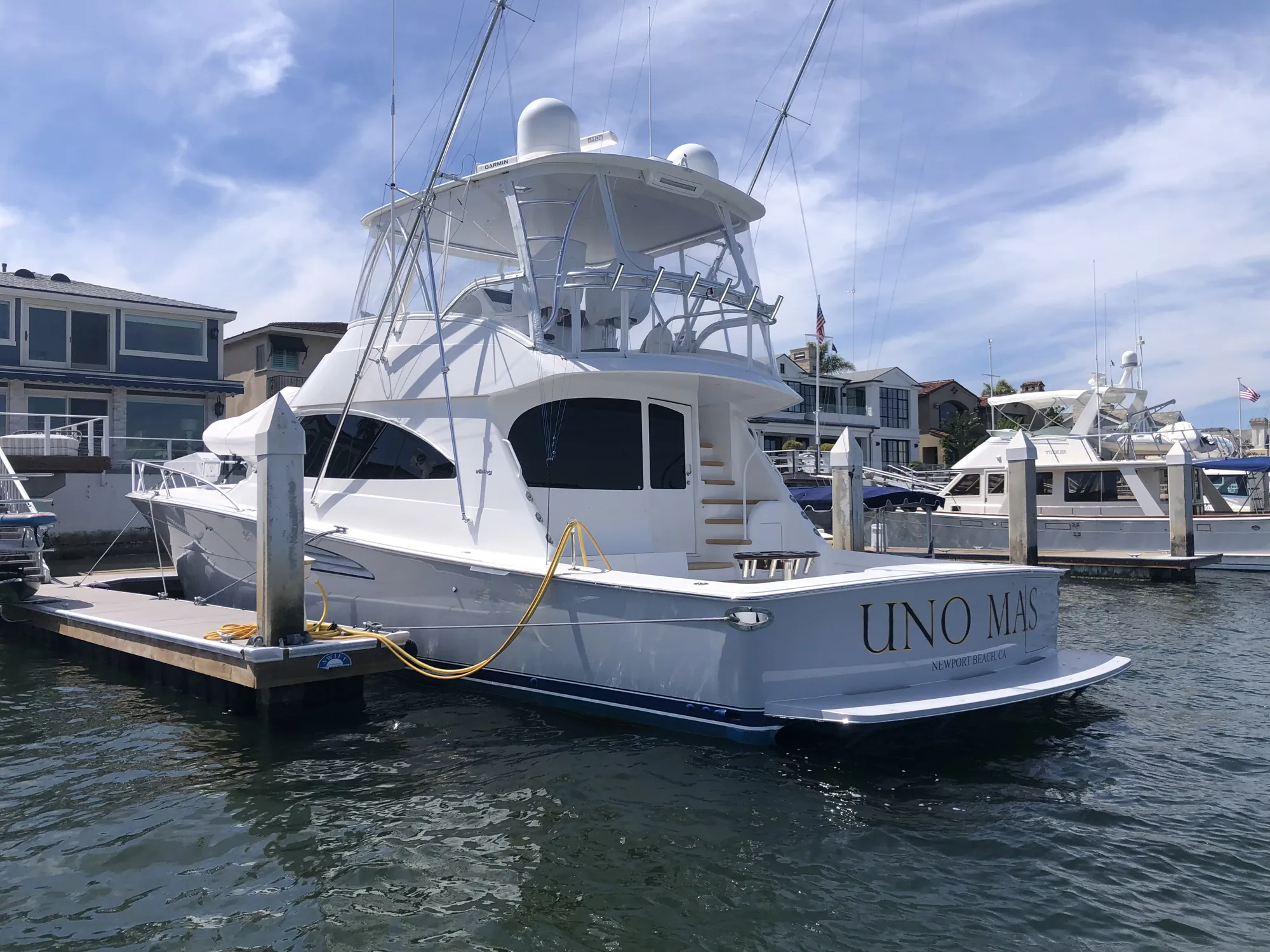
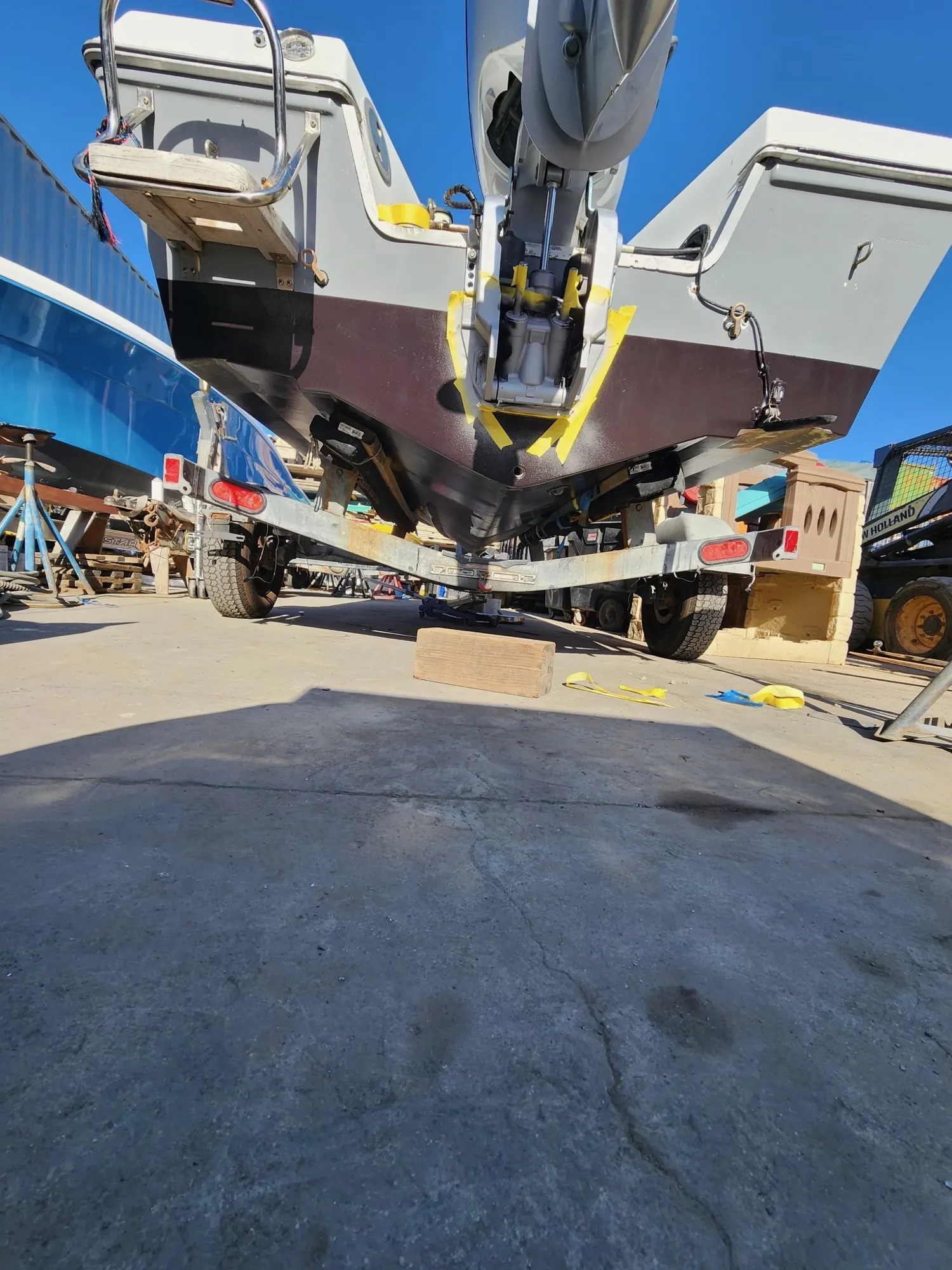
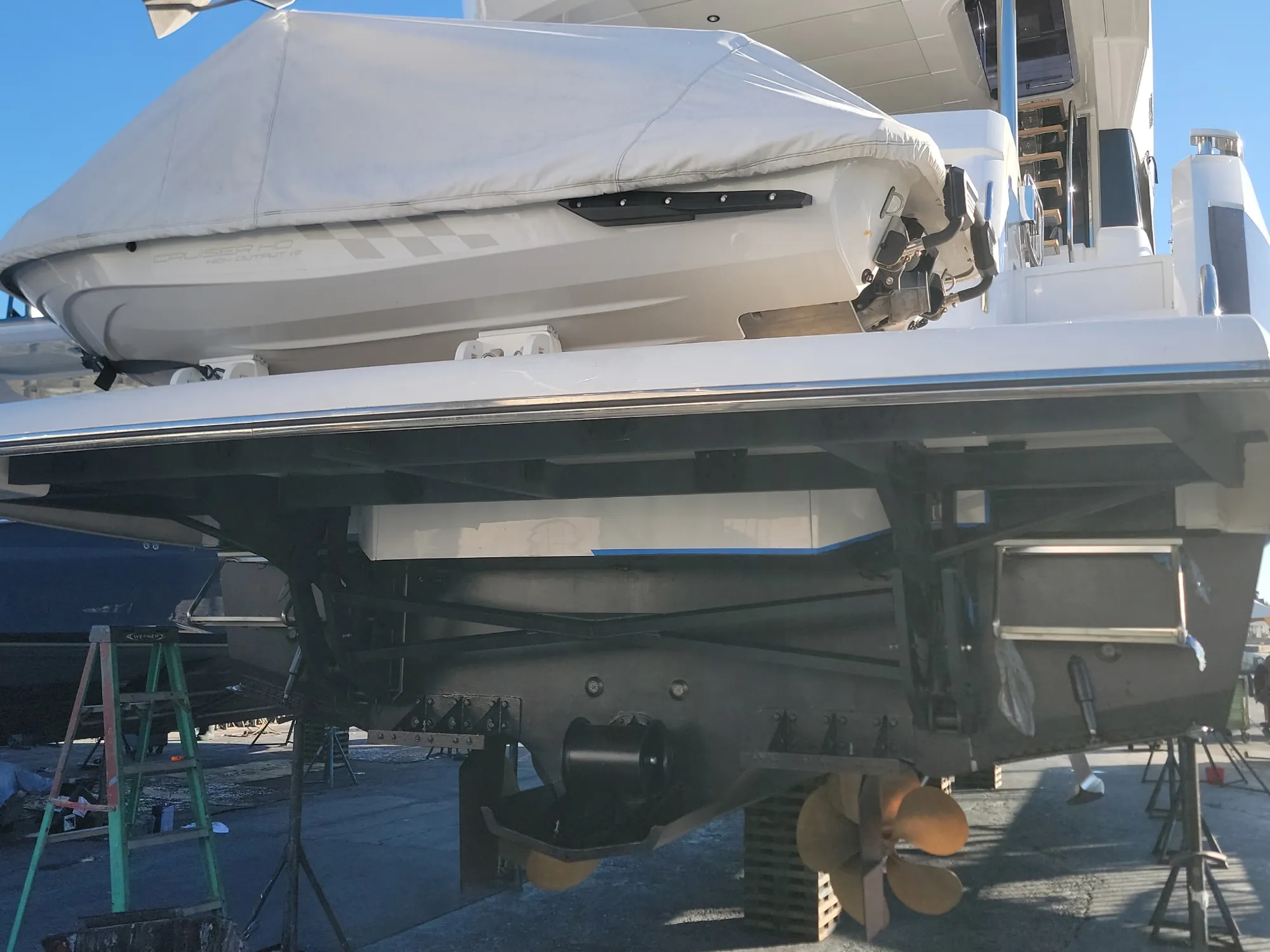
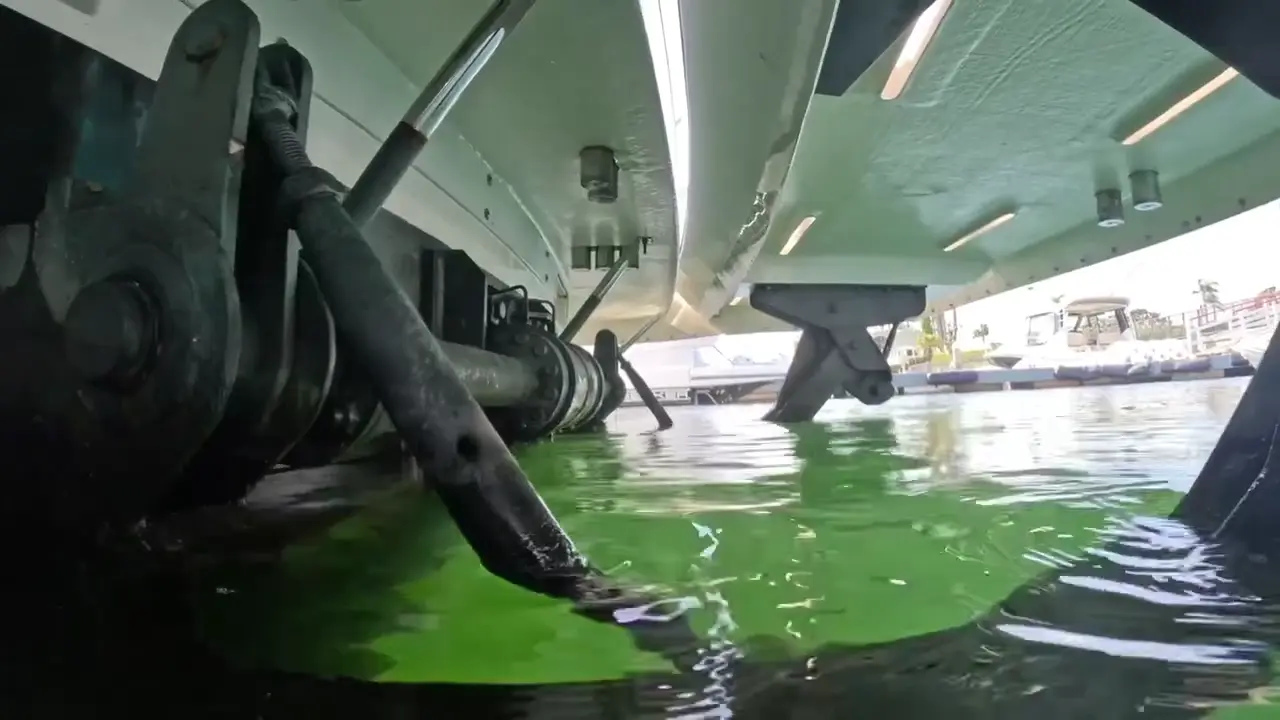
Sportfisher lifted on a travel lift, twin bronze props and rudders fully exposed. Most pleasure boat owners only see this view once or twice a year, the right time to plan paint, zincs, and prop work as one job.
Loading…
From Below the Waterline
Our divers document every job. Real photography from beneath the waterline across Southern California's harbors.

Sportfisher lifted on a travel lift, twin bronze props and rudders fully exposed. Most pleasure boat owners only see this view once or twice a year, the right time to plan paint, zincs, and prop work as one job.

Twin sterndrives both showing widespread aluminum corrosion. When both drives go at once it usually points to a shore-power or bonding issue, not just missed anode service.

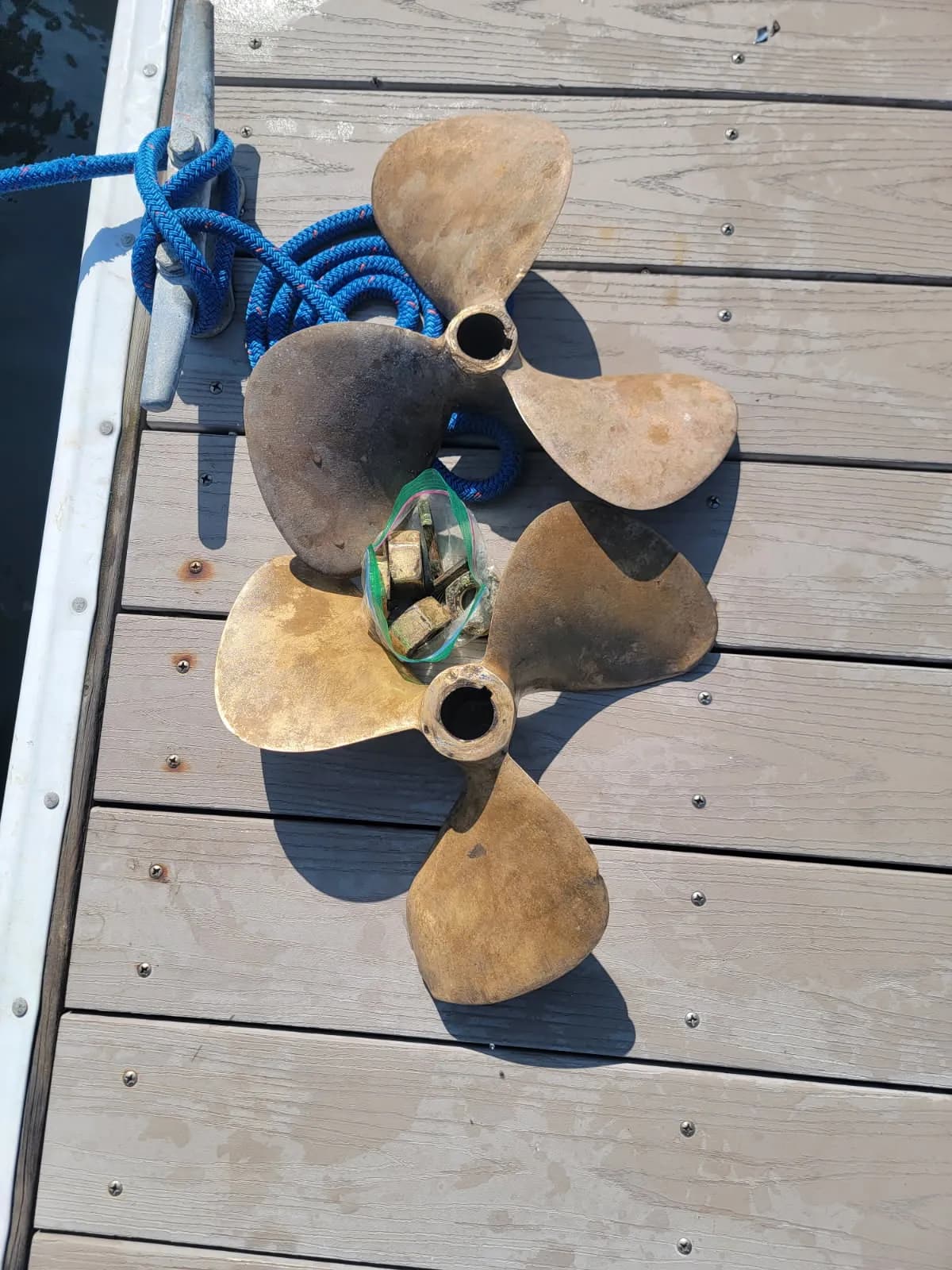
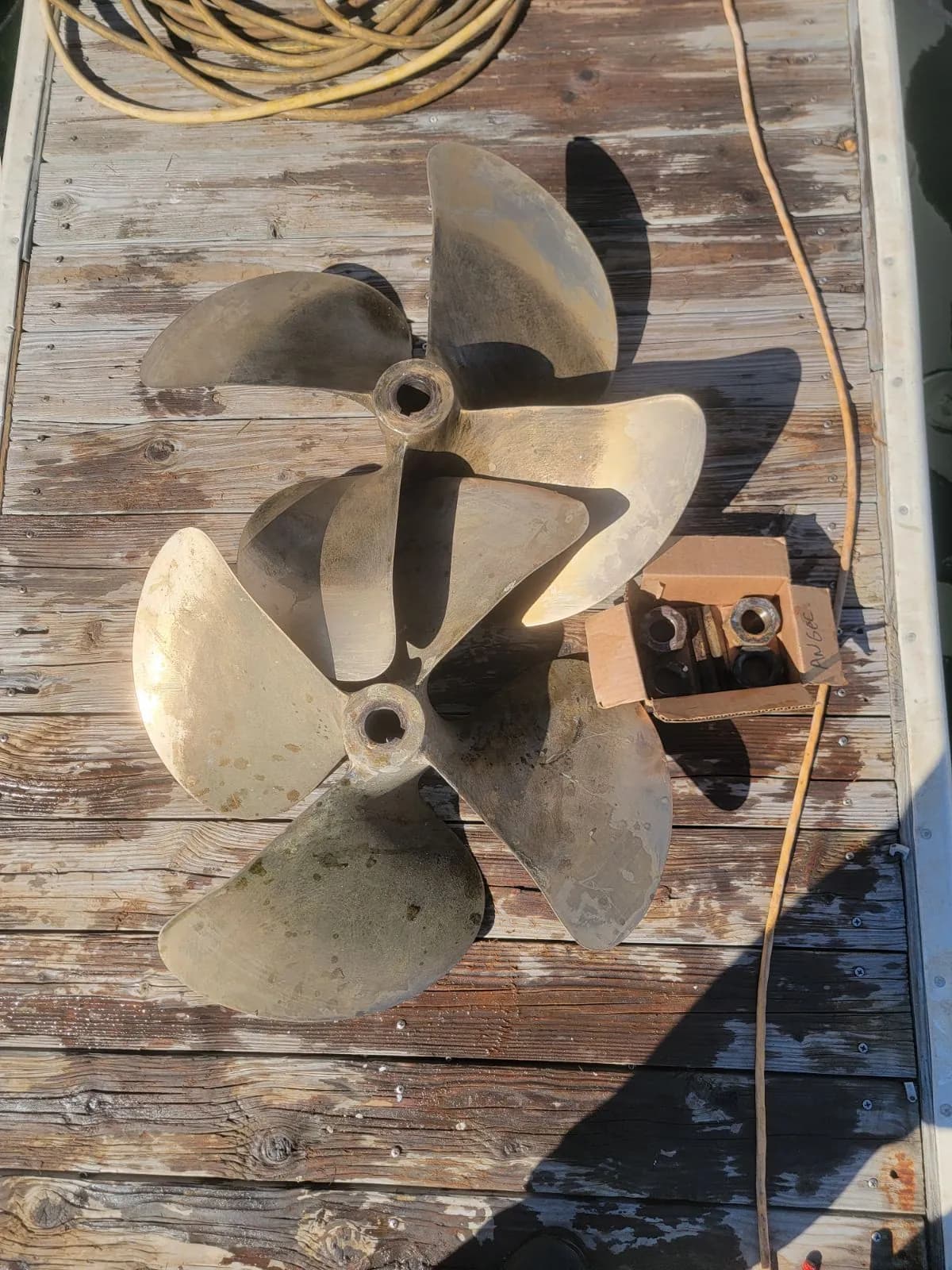
Two five-blade bronze props removed from their shafts, ready for inspection. Pulling props is the only way to check the keyway, taper, and shaft condition under them.

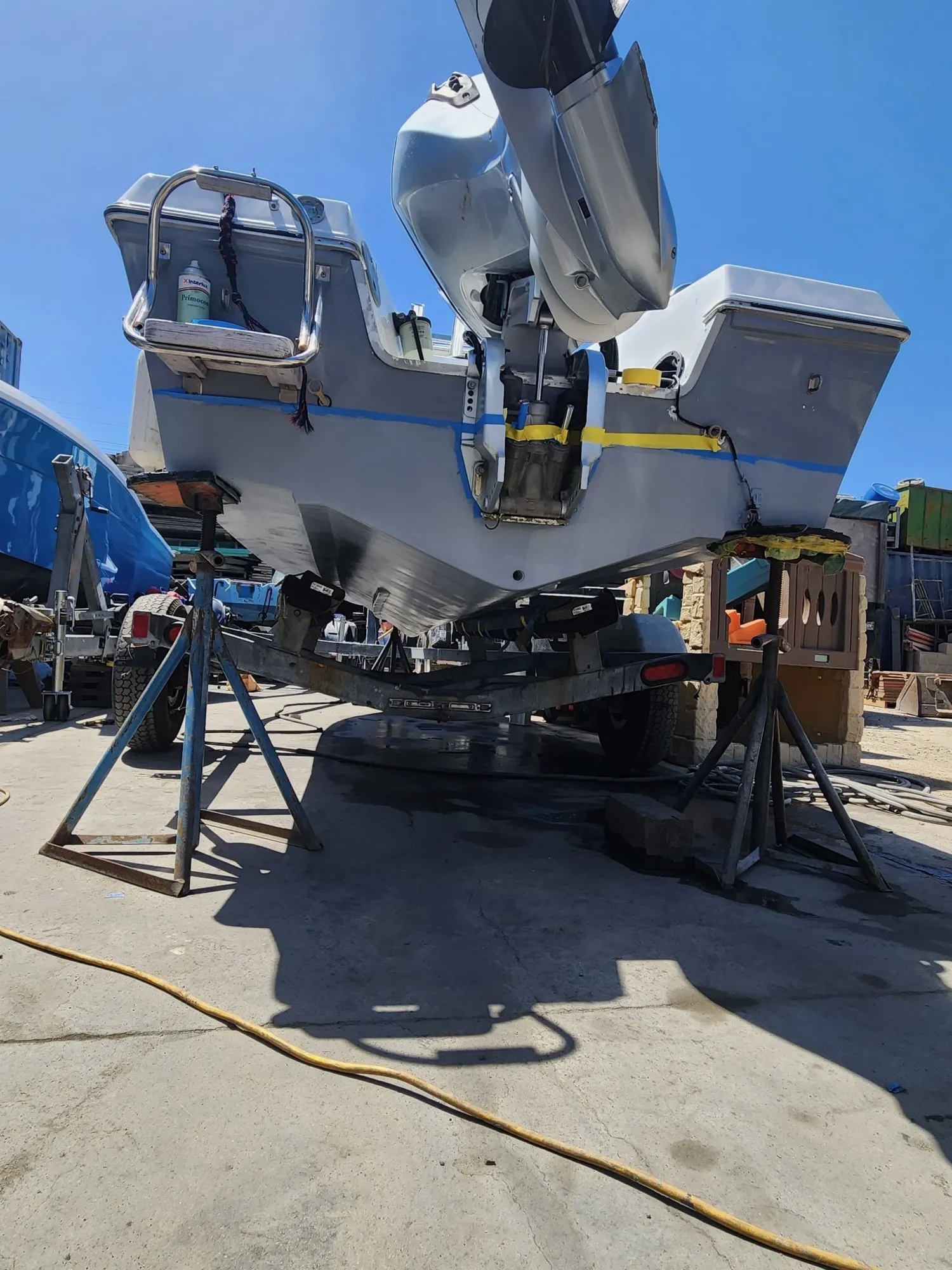
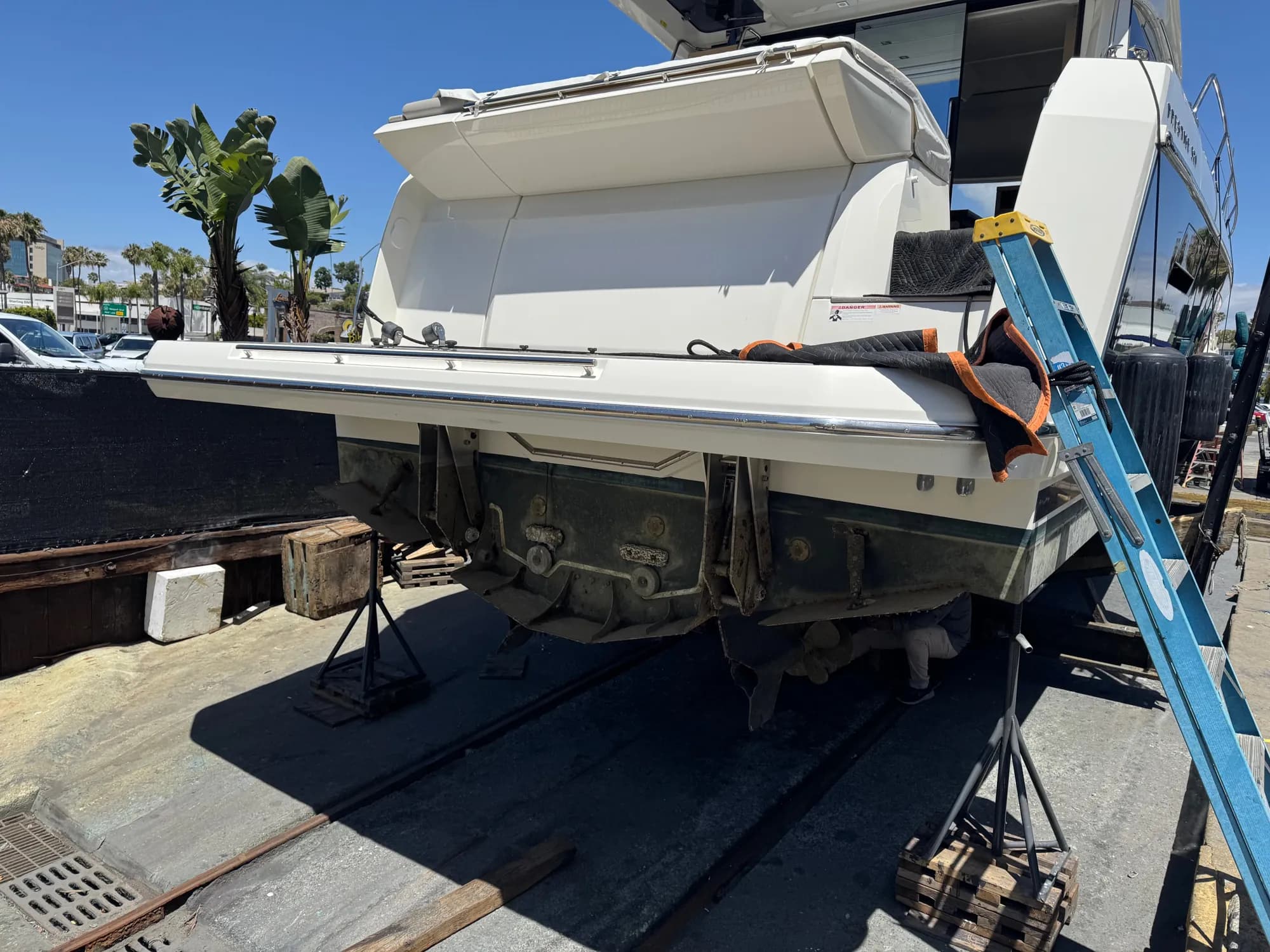
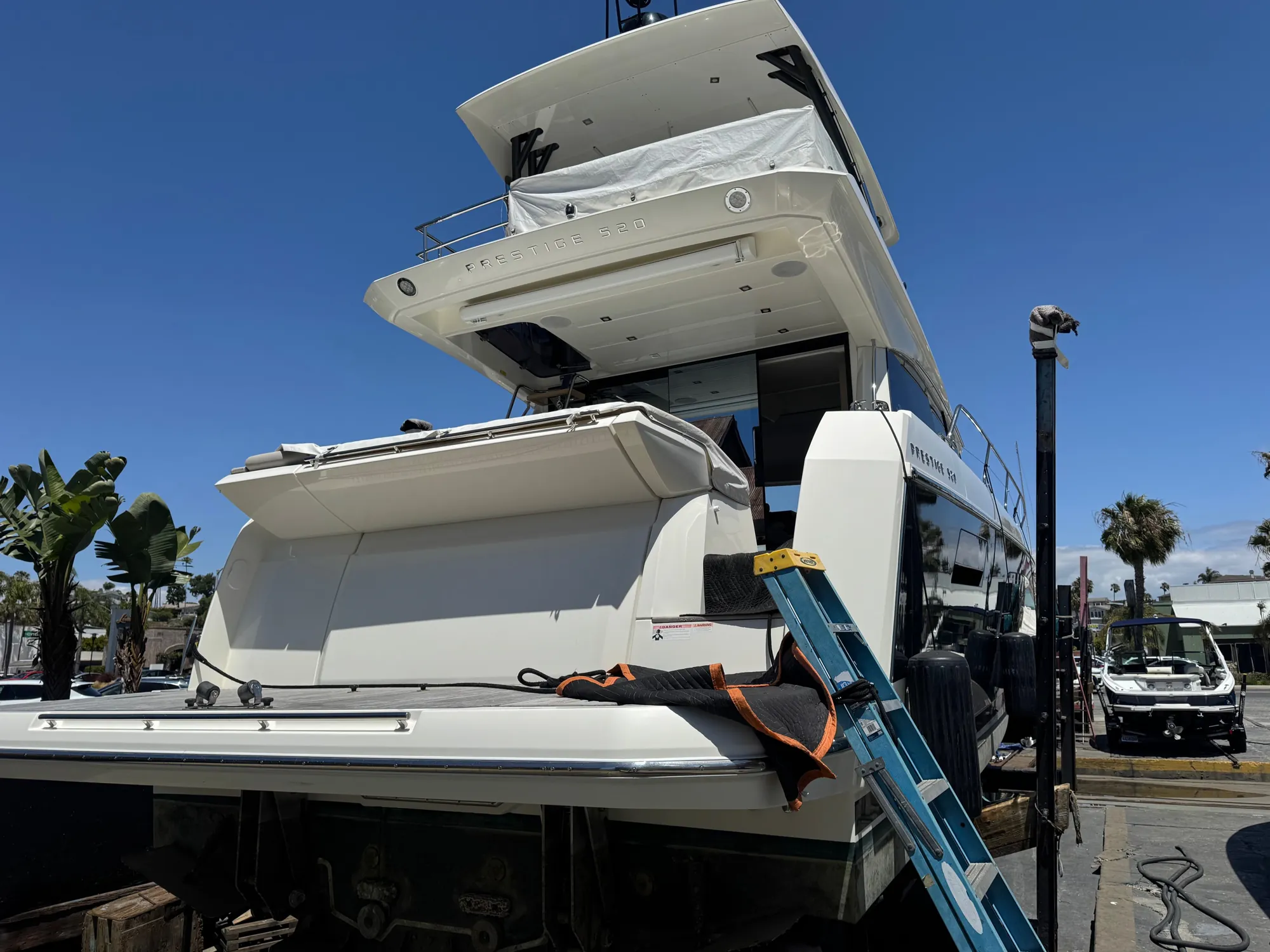
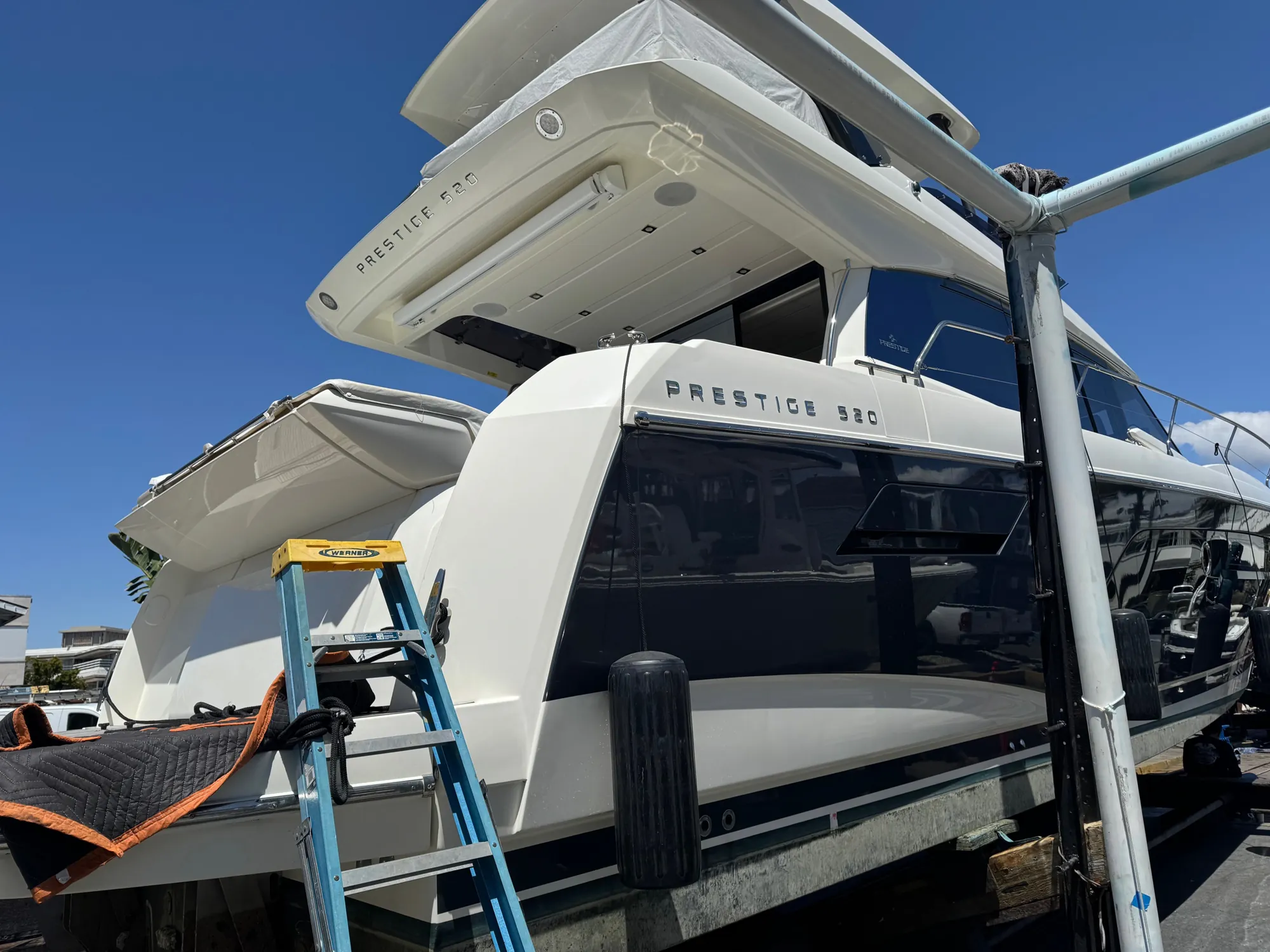
Yacht propped up on boatyard stilts after haul-out, hull, props, and rudders exposed. Out-of-water inspections like this catch issues, hairline cracks or worn running gear, that are impossible to see in the slip.

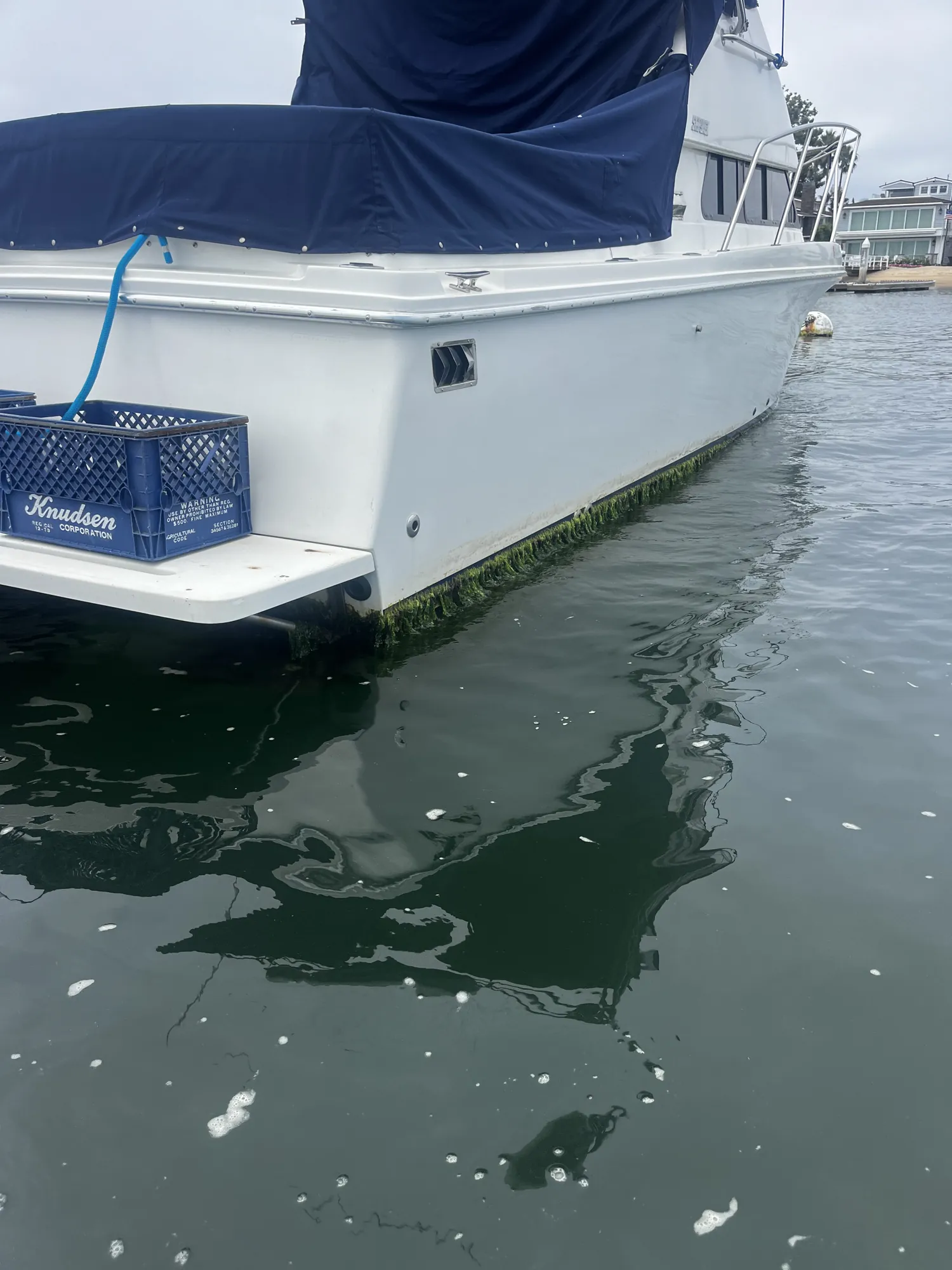
Heavy growth riding right at the waterline. When the bottom paint stops working, drag goes up and fuel economy suffers, and the paint itself starts to fail prematurely.

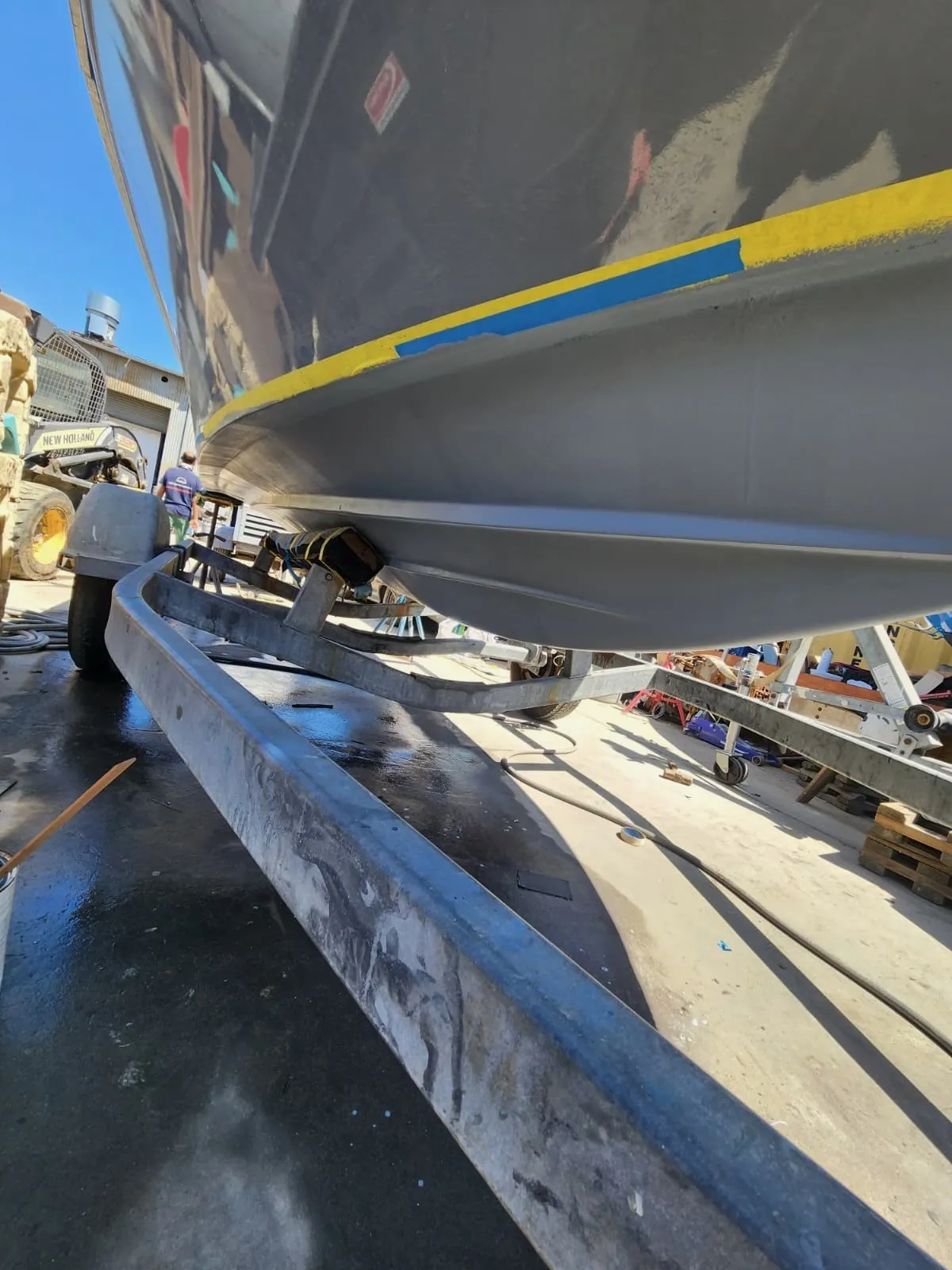
Fresh bottom paint with a clean masking-tape boot stripe, ready for the tape to come off. The crisp waterline is both cosmetic and functional, it tells you the application was done with care.

Powerboat in the rack, stern lowered, ready for hull work. Getting a boat blocked correctly so the running gear hangs free is half the job at the yard.

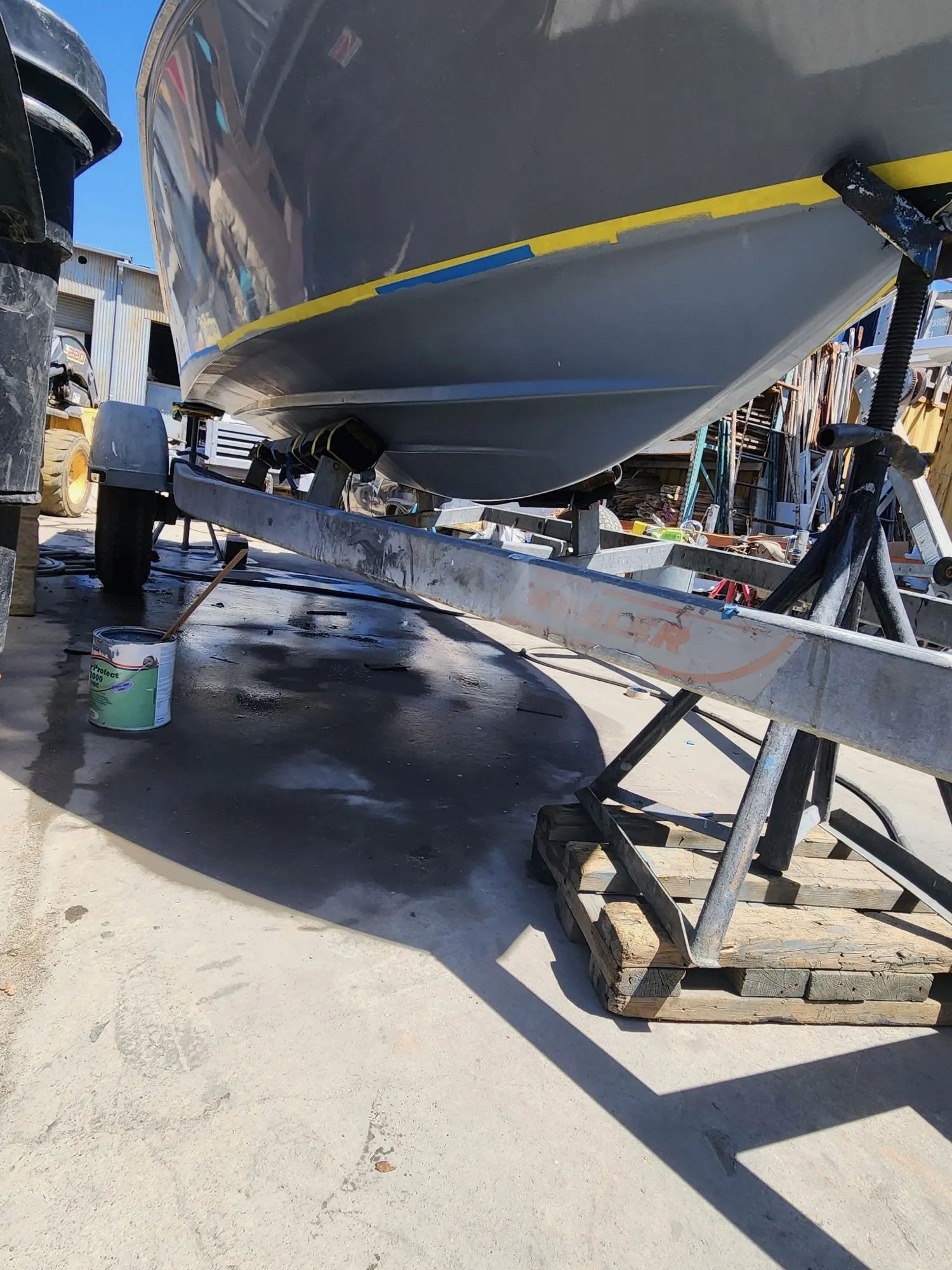
Hull on jack stands with bottom paint going on. Once the boat is on stilts, the painter can move freely under the keel and reach every inch, which you cannot do at the dock.

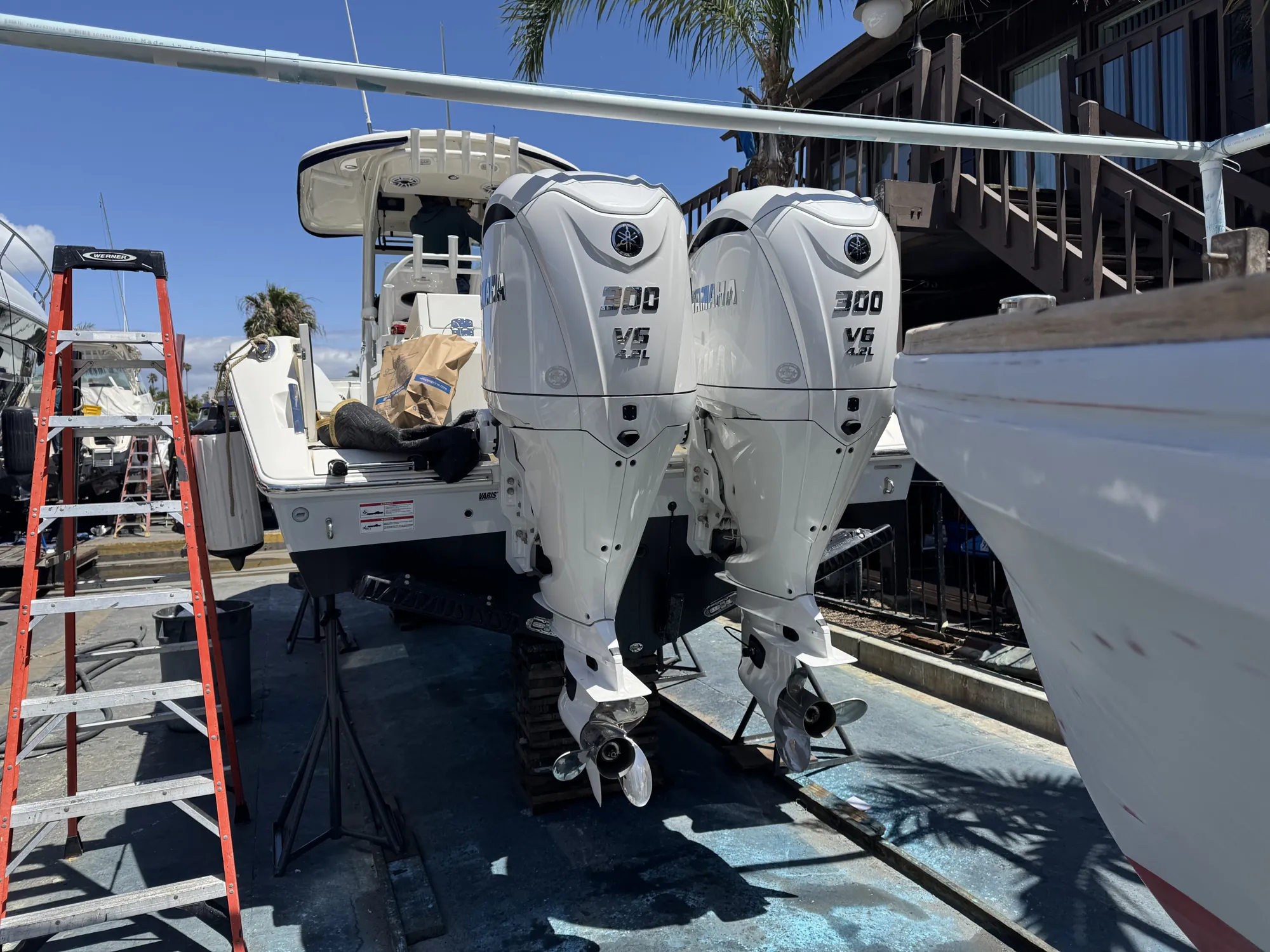
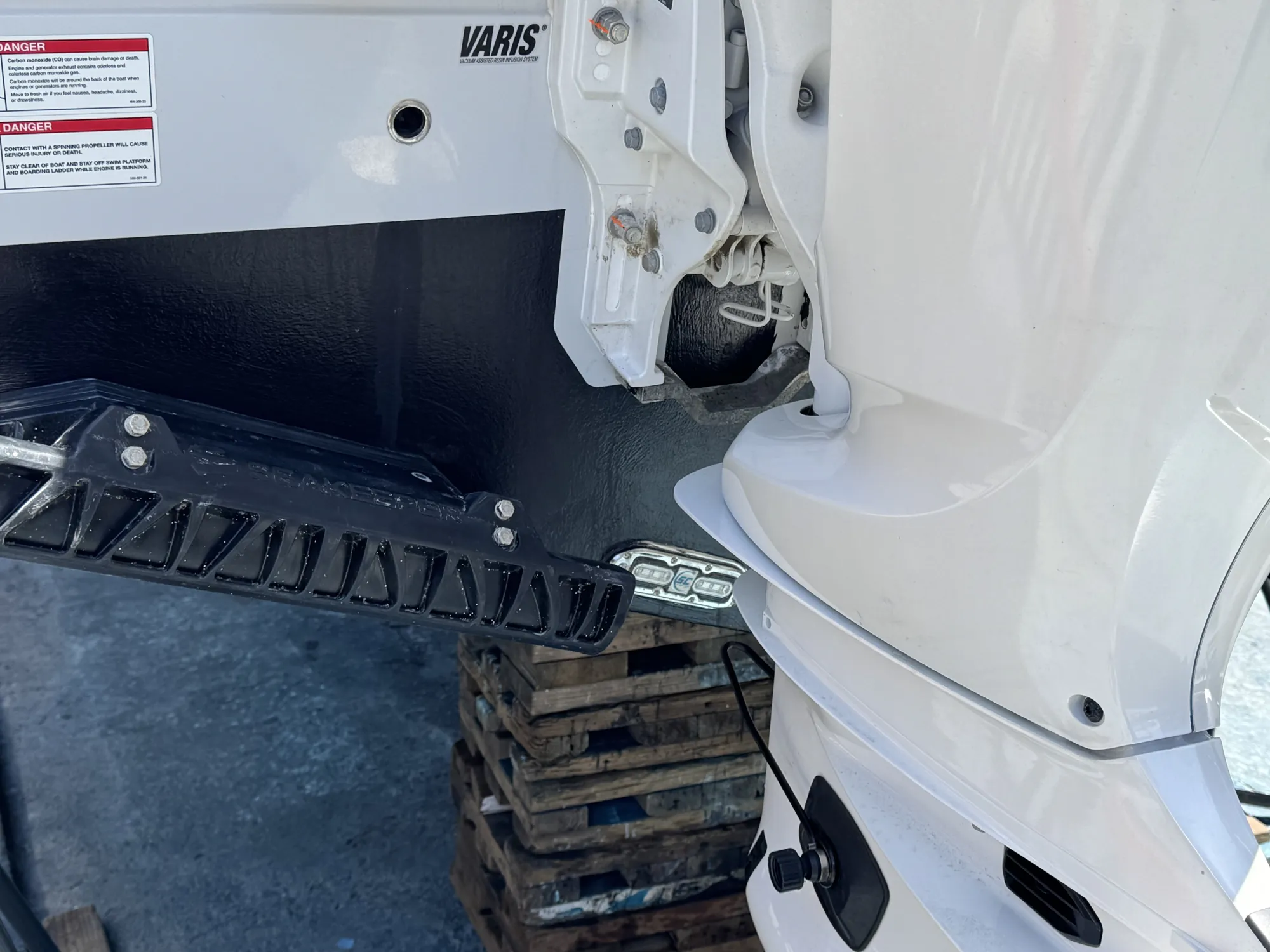
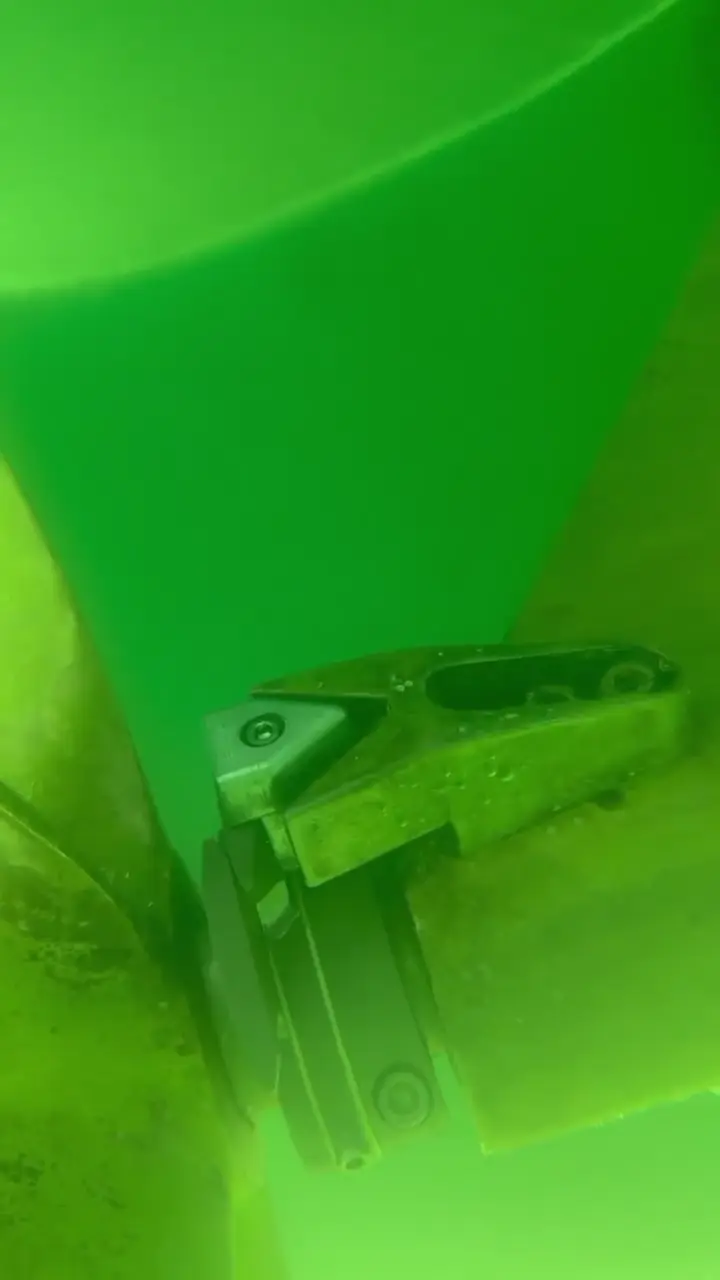
Triple outboards on a center console after pull-out, lower units exposed. This is the easiest moment to inspect skegs, trim tab anodes, and gearcase seals.

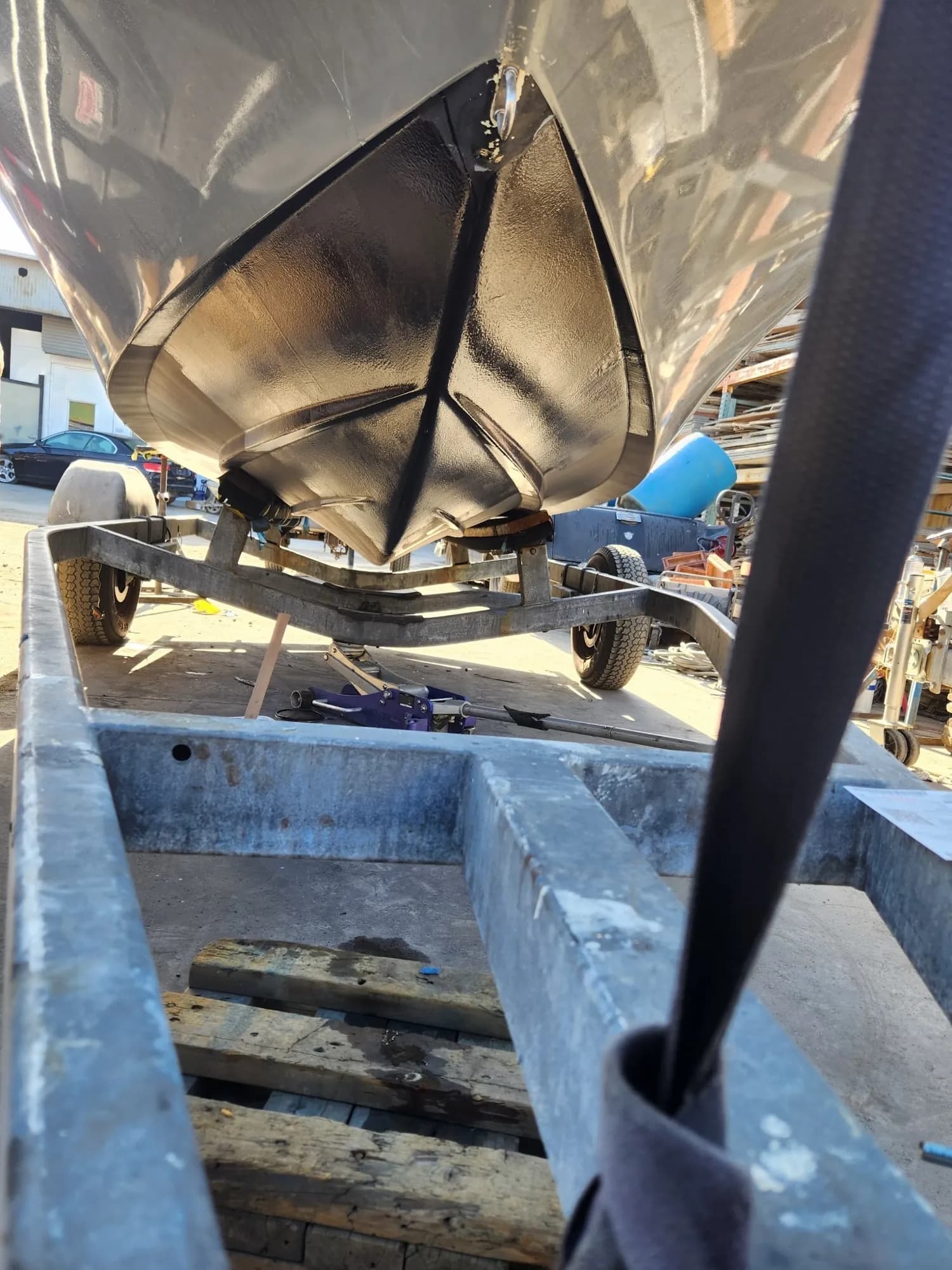
Bow seen from underneath while on stilts. Looking up the centerline like this is the best way to spot uneven paint coverage, blisters, or osmotic damage along the keel.

Stern blocked up at the yard with bottom prep underway. The rough patches show where old paint and growth have already been knocked back to a sound layer.

Bottom paint finished and ready to splash. A clean even coat from waterline to keel is the difference between a hull that stays clean for the season and one that fouls early.

Diver working under the hull during a routine cleaning. Scheduled in-water cleanings keep growth from getting a foothold and let the bottom paint last its full service life.

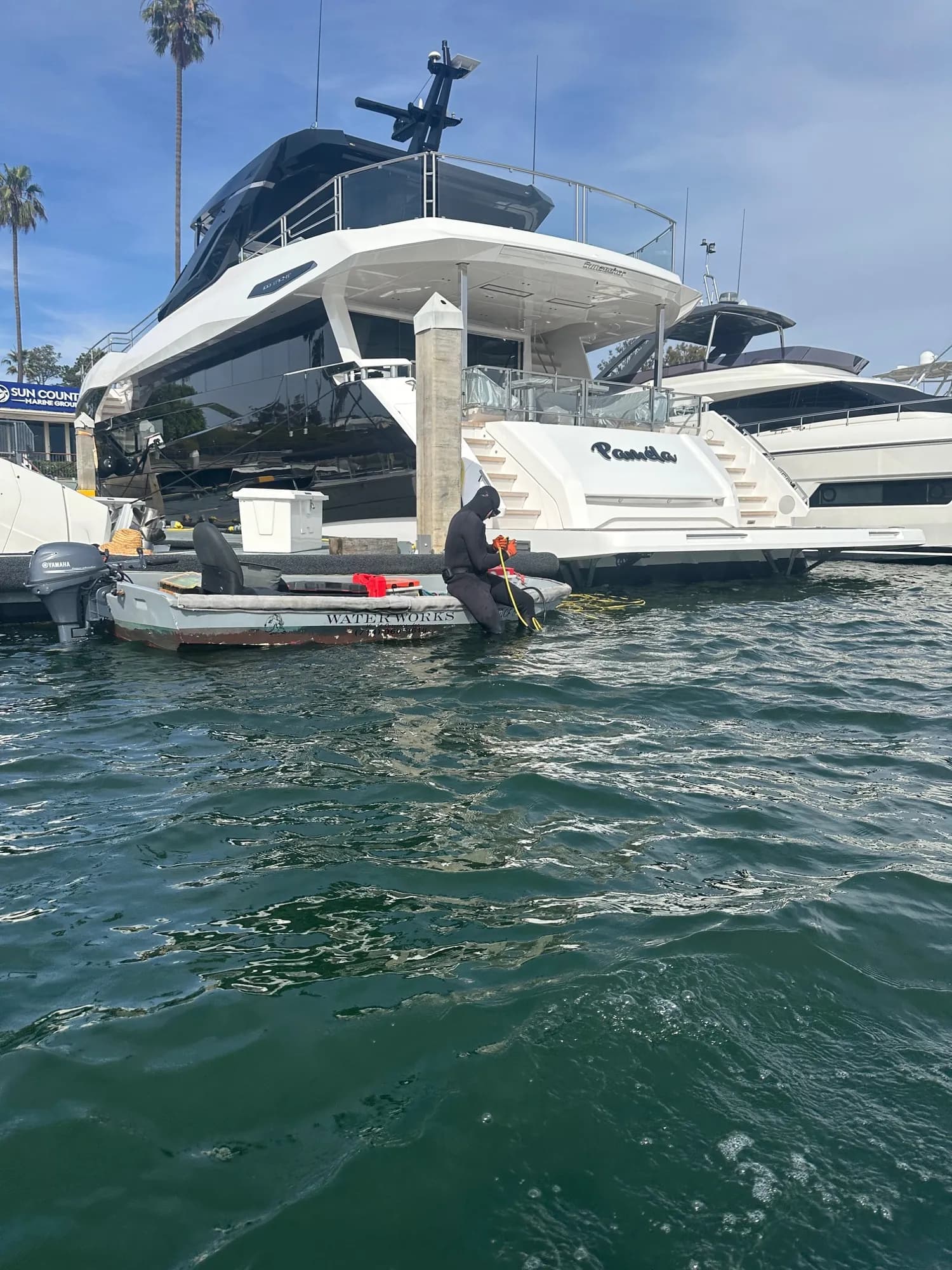
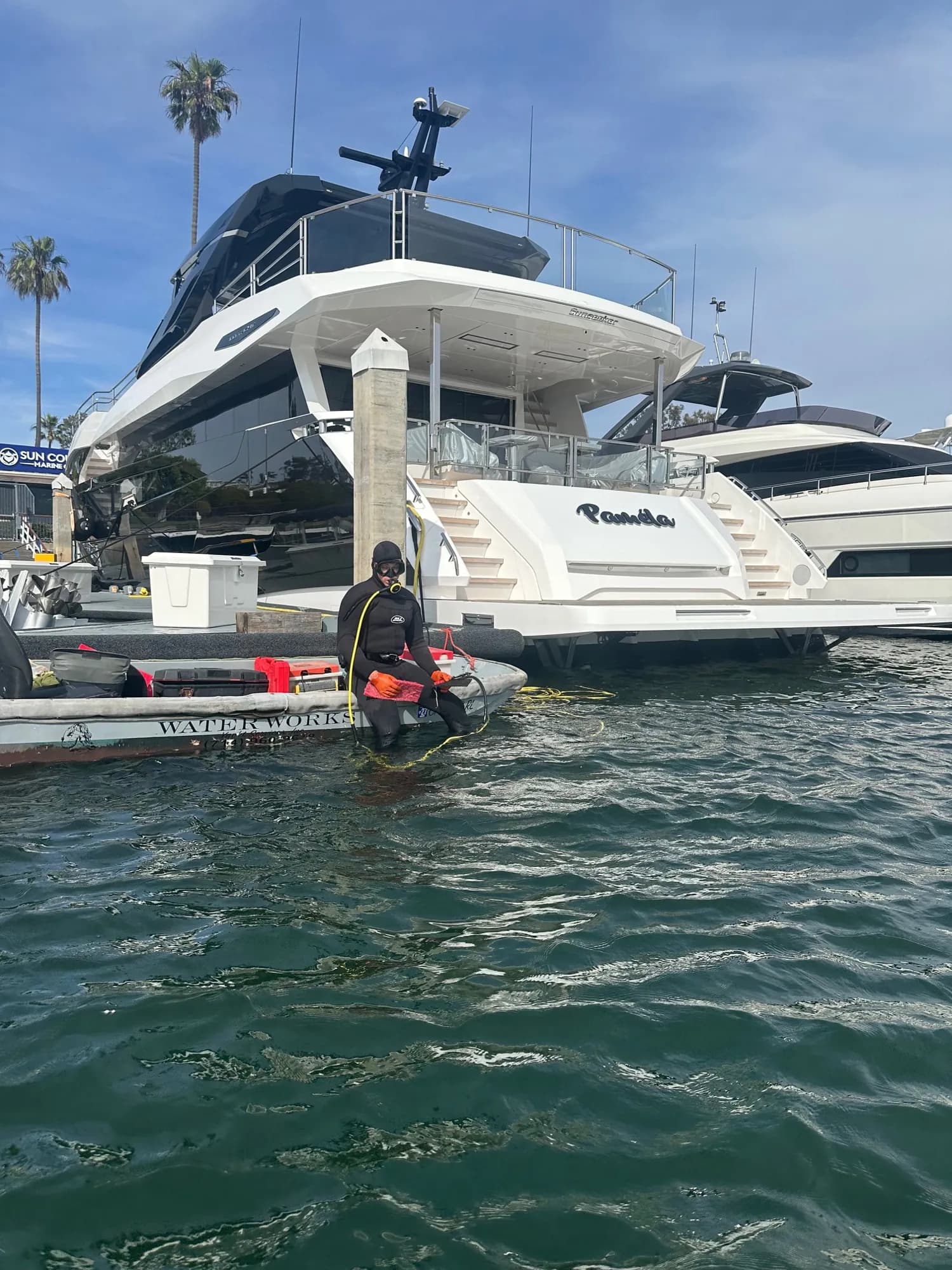
Diver alongside a yacht during scheduled service. Most of our work happens while the boat stays in the slip, no haul-out required for routine cleanings and inspections.

A yacht at the slip during a scheduled service visit. The vessel stays in the water, the diver works under it, and the owner gets a written report when we are done.

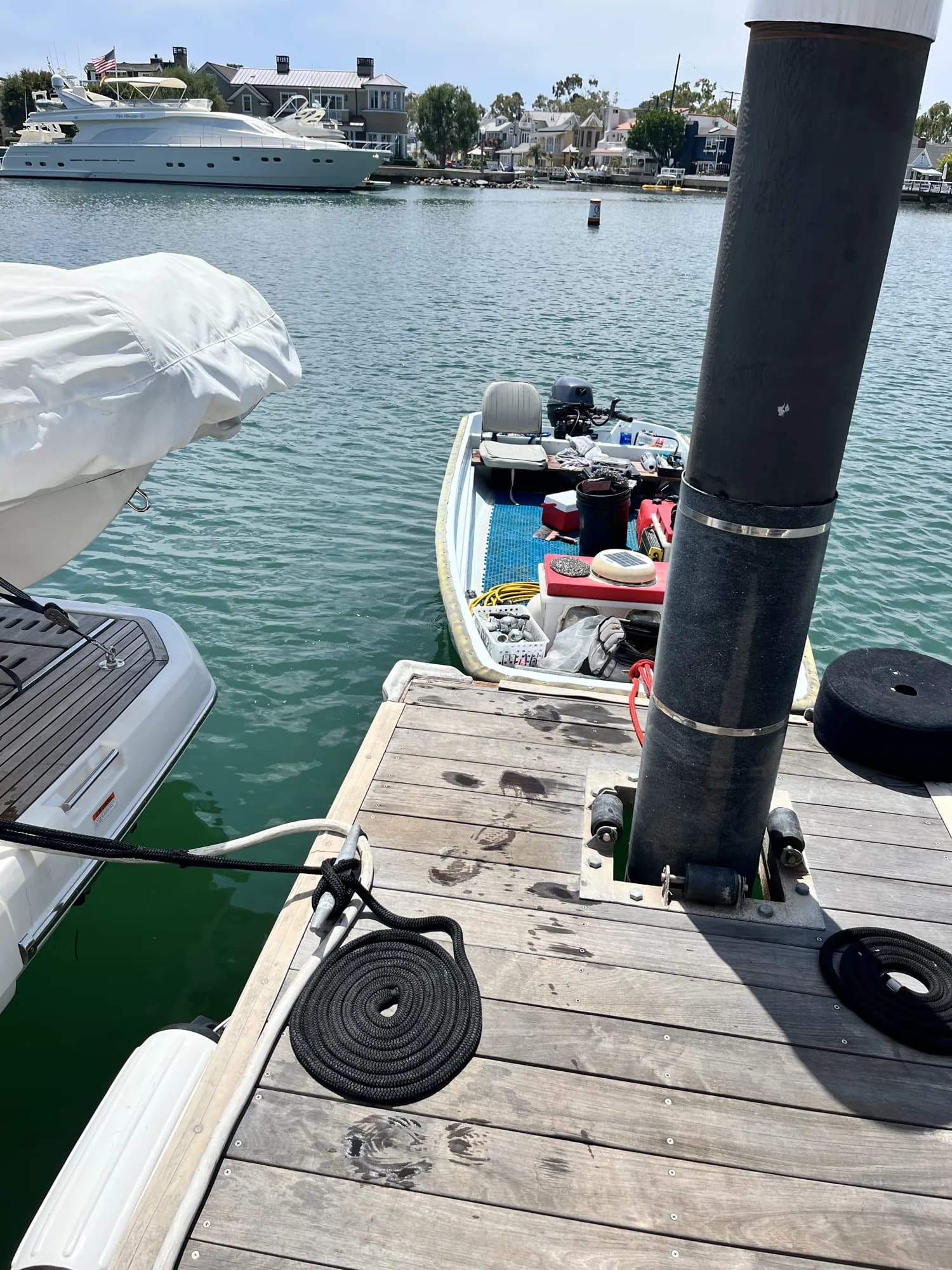
Bow view at the slip. Visual inspection above the waterline is part of every service call, looking for fender wear, hardware corrosion, and bonding issues that often start topside.

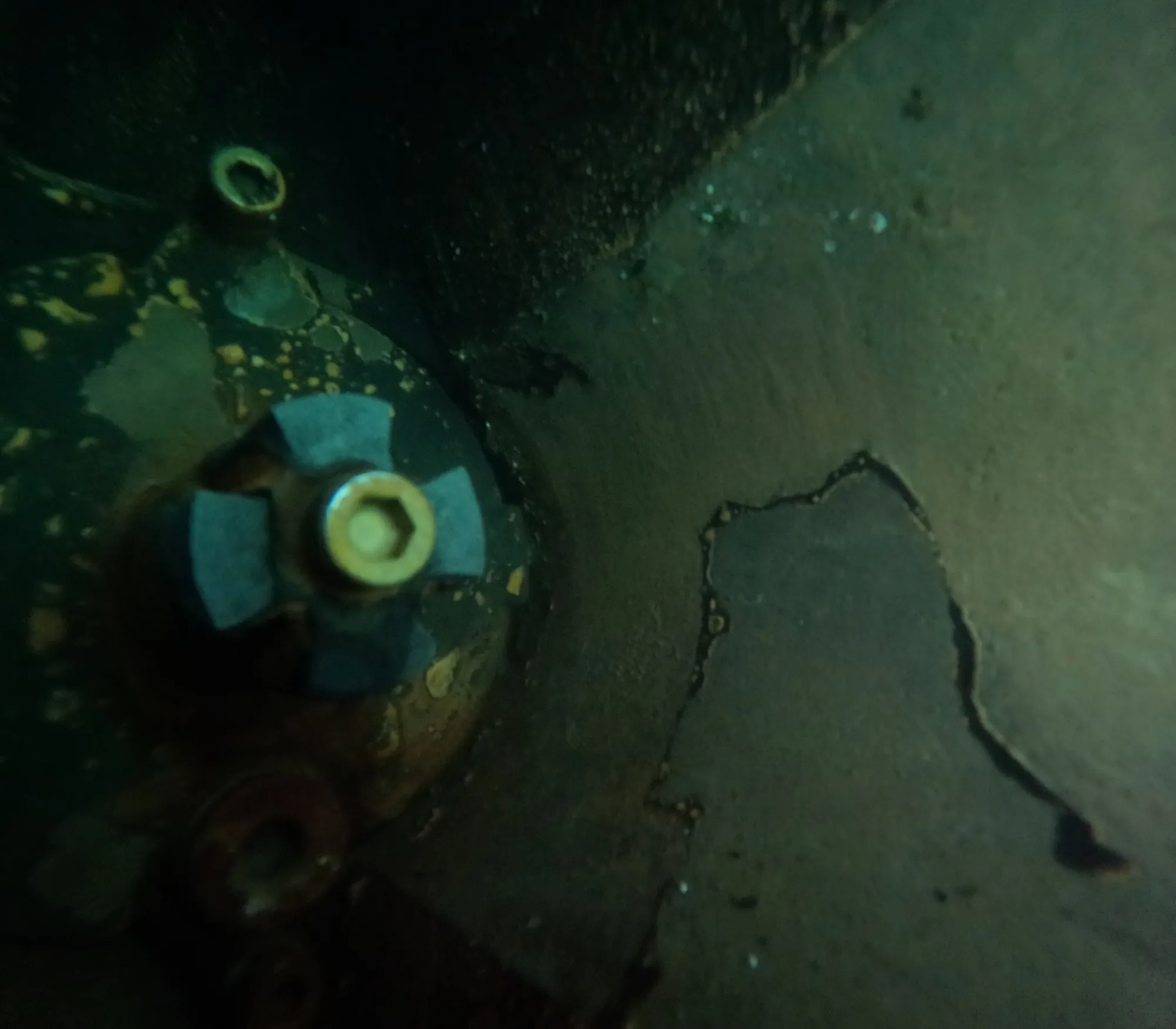
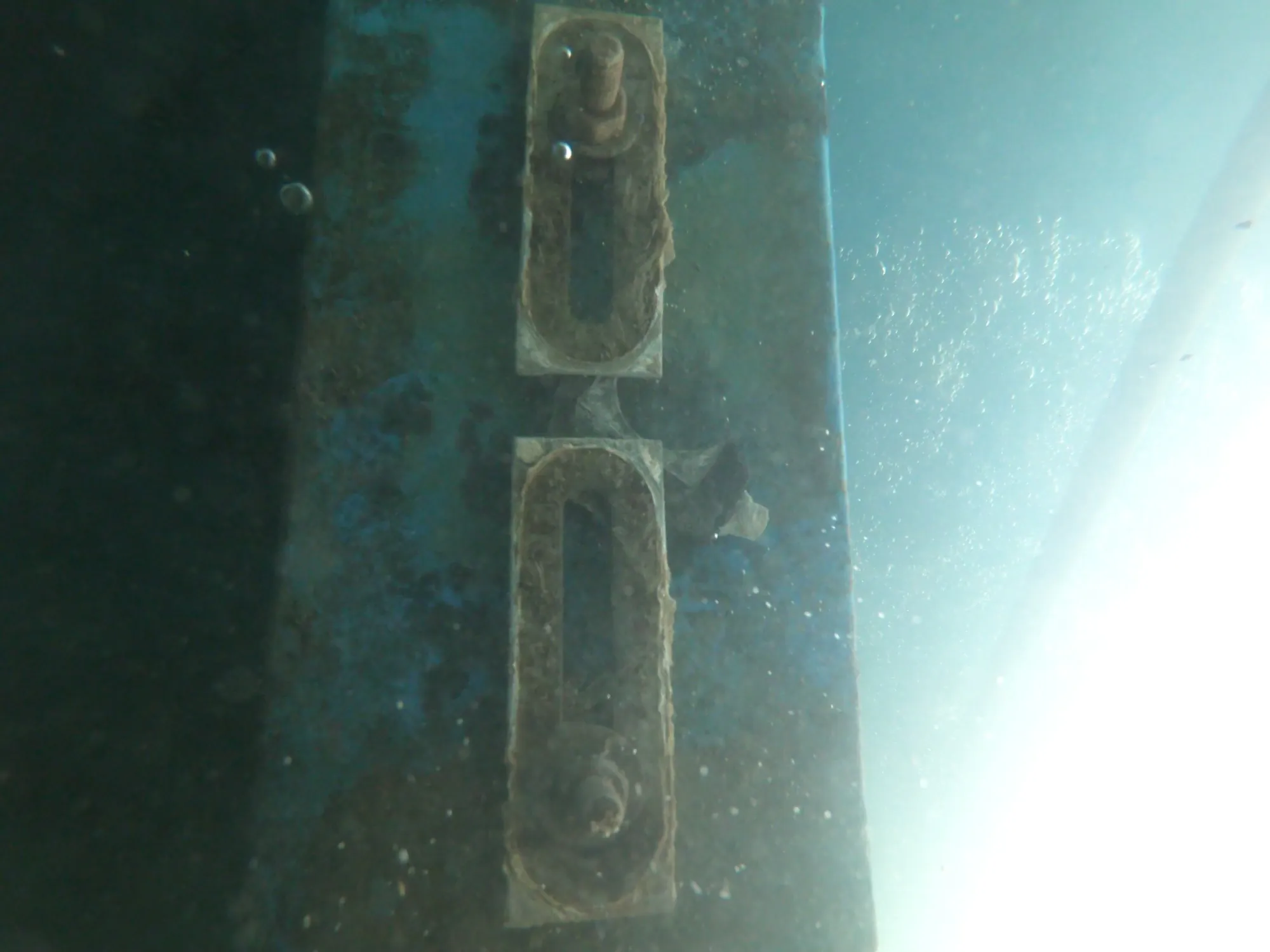
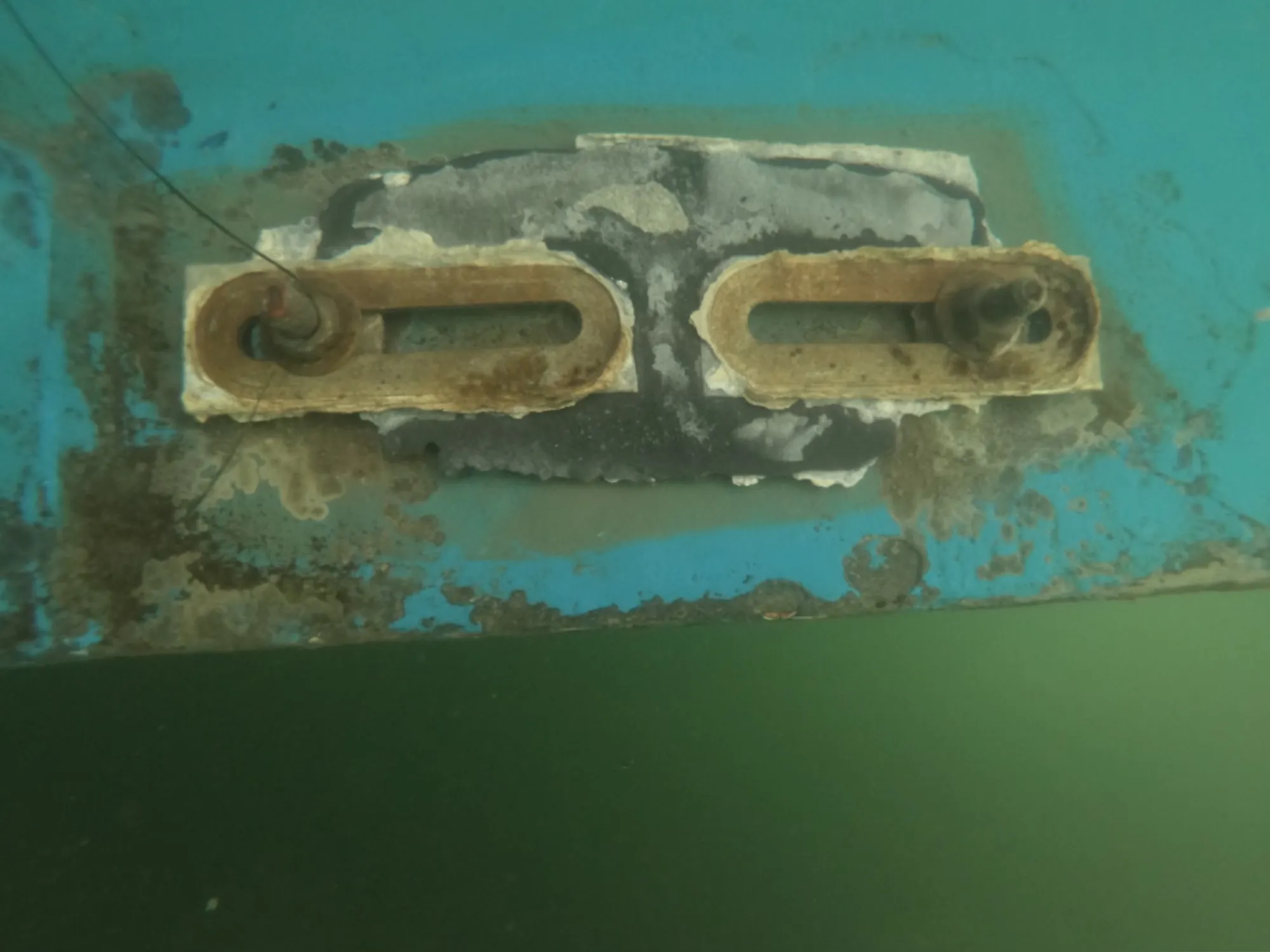
A trim-tab anode pair completely consumed, mounting plate exposed. Once the zinc is gone, galvanic corrosion attacks the metal it was protecting next, which here would be the trim tab and the fasteners.

Two shaft-collar anodes worn down to nothing, only the steel mounting hardware remains. From here on, the shaft itself becomes the sacrificial metal, and that is a much more expensive replacement.

Sterndrive lower unit with severe electrolysis damage. Without a working anode in circuit, stray current eats the aluminum, leaving the chalky white pitting visible across the housing.

Trim tab pulled off and laid flat, the entire surface lost to corrosion. A regularly serviced anode would have absorbed this damage instead.

Aluminum sterndrive lower unit eaten by galvanic corrosion. White, flaky pitting like this is the giveaway, and it does not stop until the anodes are restored and the wiring checked.

Fresh anode bolted to the anti-cavitation plate of an outboard. Clean, full thickness, and ready to do its job for the next service interval.

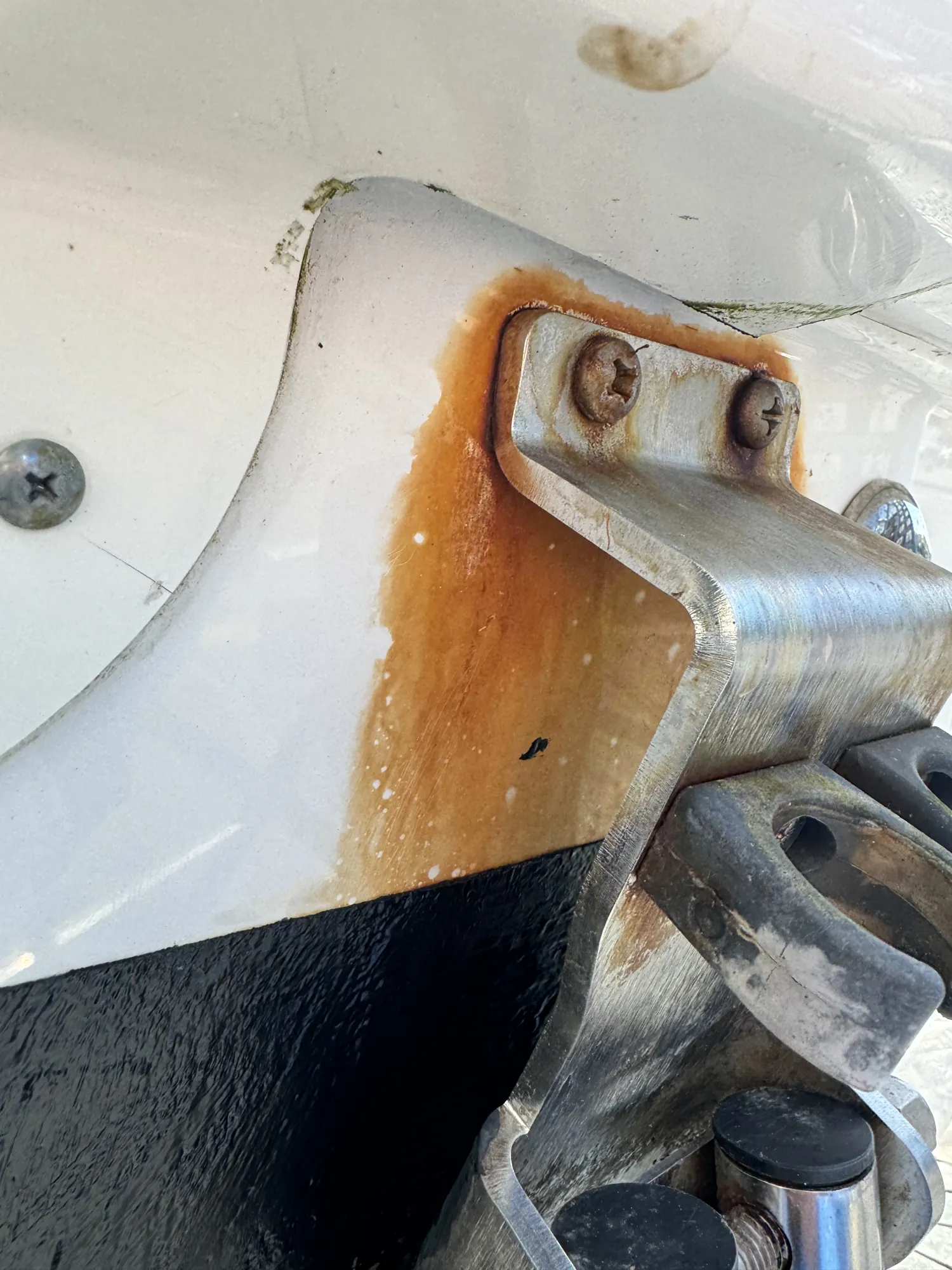
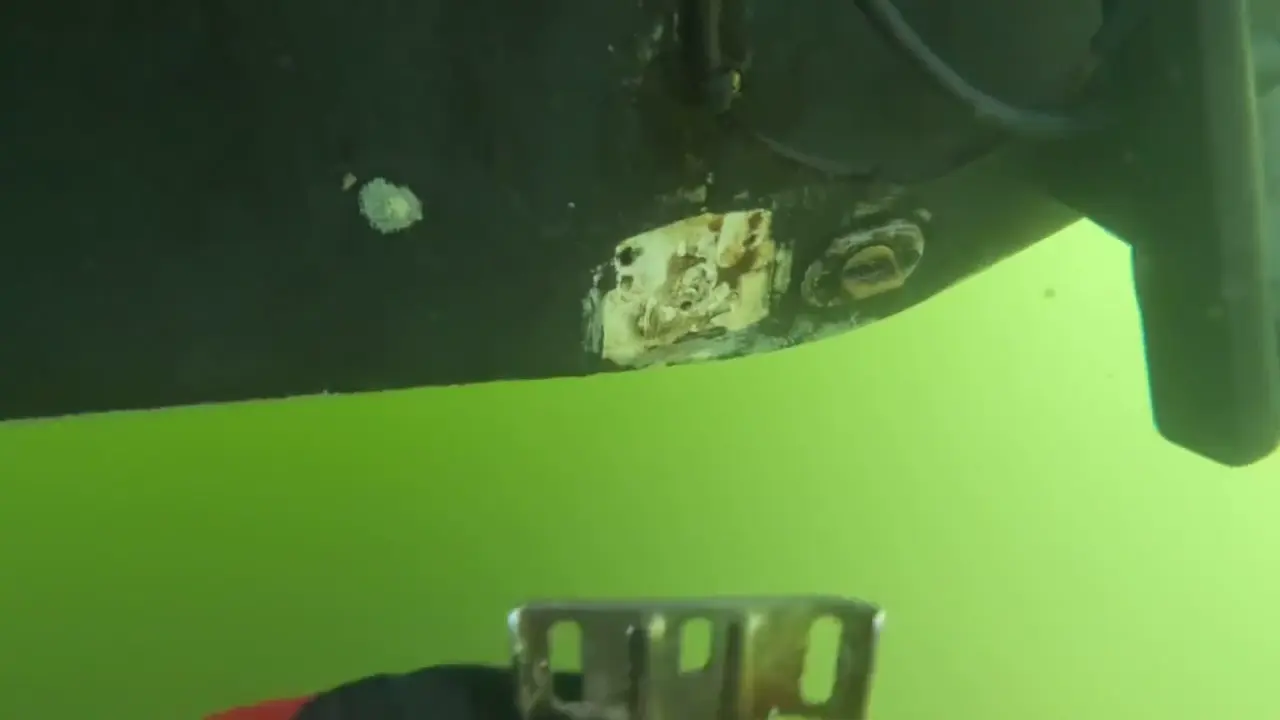
Stainless trim-tab bracket bleeding rust into the gelcoat. Often the screws and bracket are doing the protecting because the anode is missing or undersized.

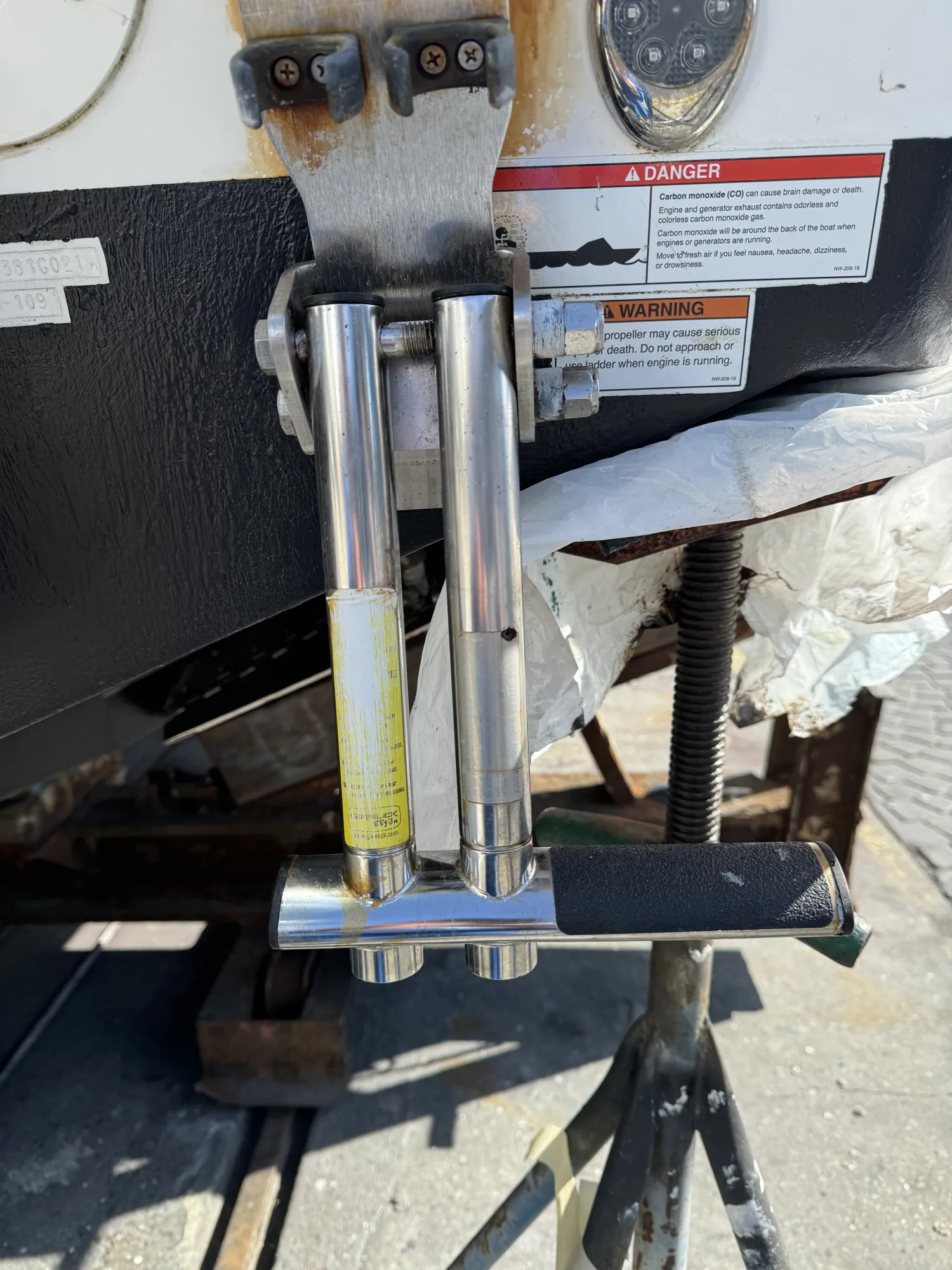
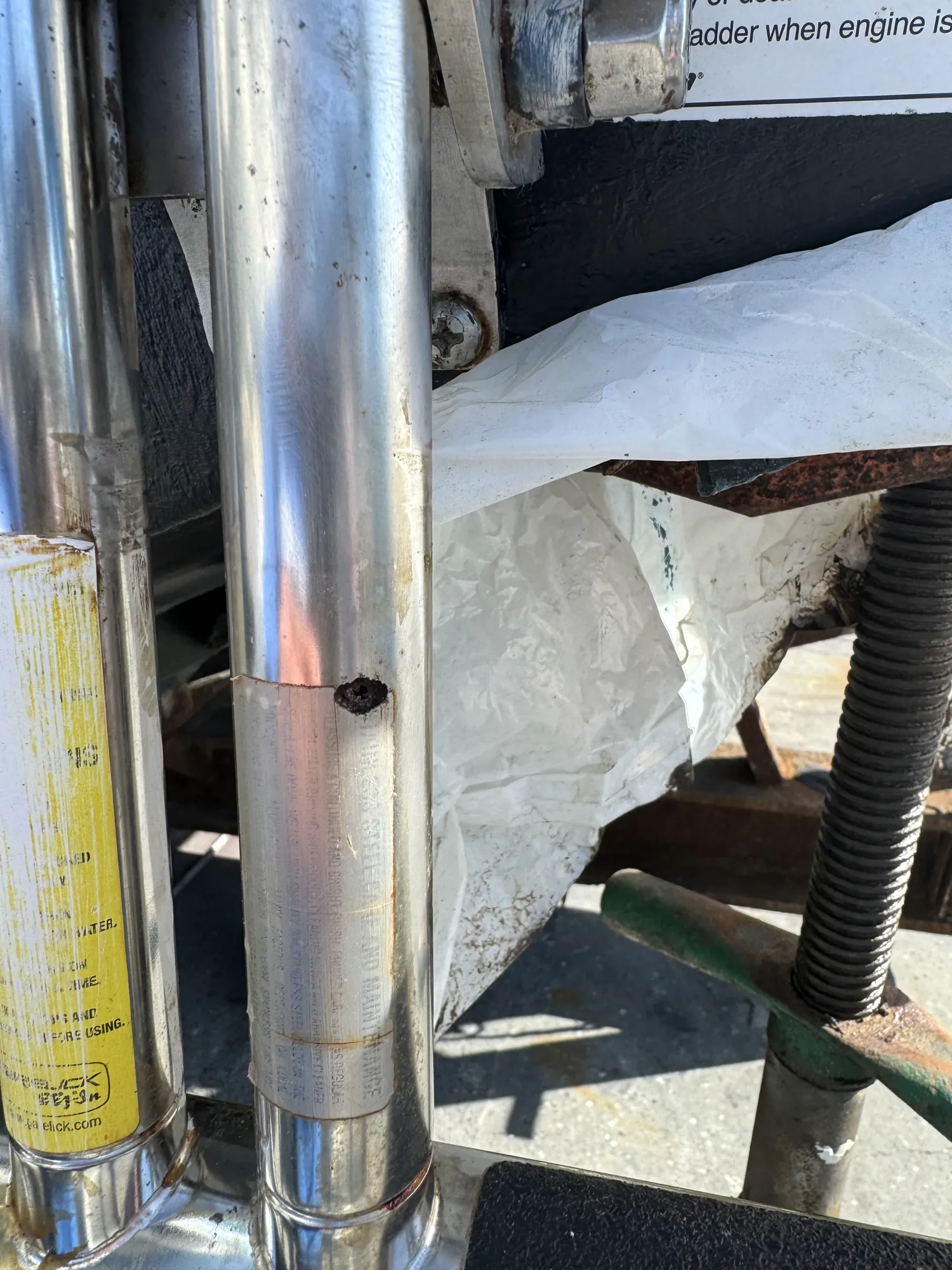
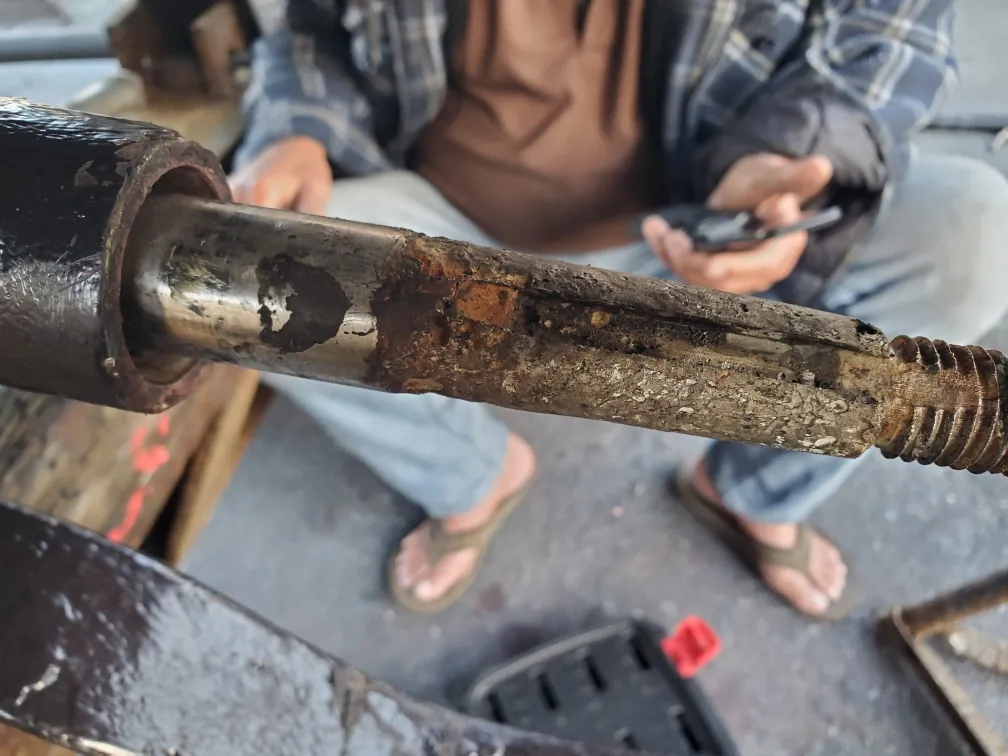
Outboard hydraulic steering ram with through-pitting from electrolysis. A healthy anode and an isolated bonding system would have prevented this hole.

Polished steering rams pulled from an outboard for inspection. Smooth at first glance, but close inspection reveals corrosion pits that mean it is time to replace, not polish.

Outboard trim ram assembly removed. Calcified white deposits and corrosion show how aggressively saltwater attacks unprotected aluminum once the anodes are spent.

Pair of trim rams pulled from a corroded outboard mid-bracket. Side-by-side comparison helps decide what can be saved and what needs to come out for good.

Outboard tilt ram with epoxy patch over a corrosion pit. A field repair like this is a holding action, the next service window should plan for full replacement.

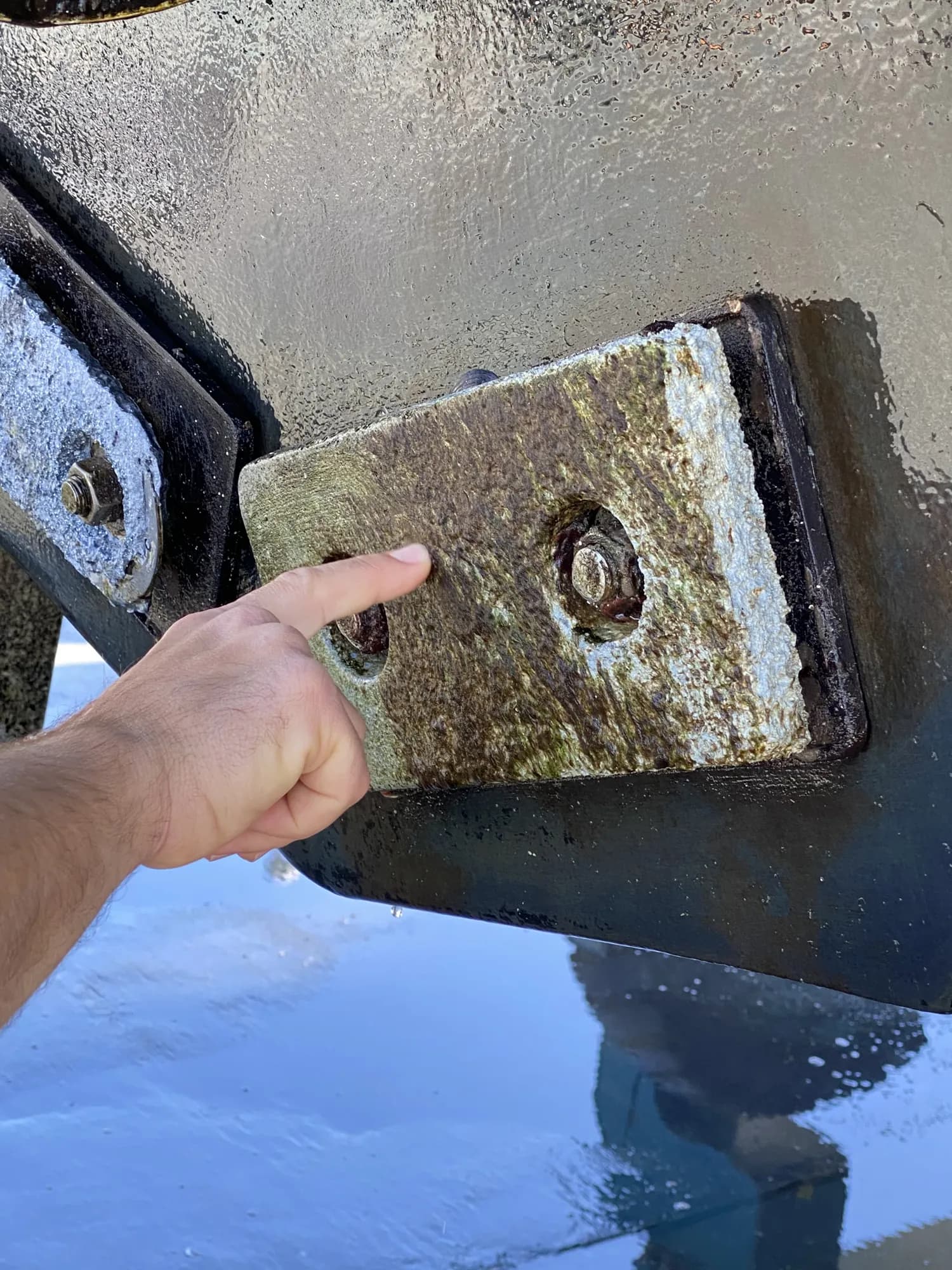
Hull anode pointed out with most of its mass still there. Catching anodes at this stage means swapping them on schedule, not in an emergency.

Closeup of a trim tab and its anode bolt during in-water inspection. Divers can confirm the bolt is tight and the anode still has solid contact without hauling the boat.

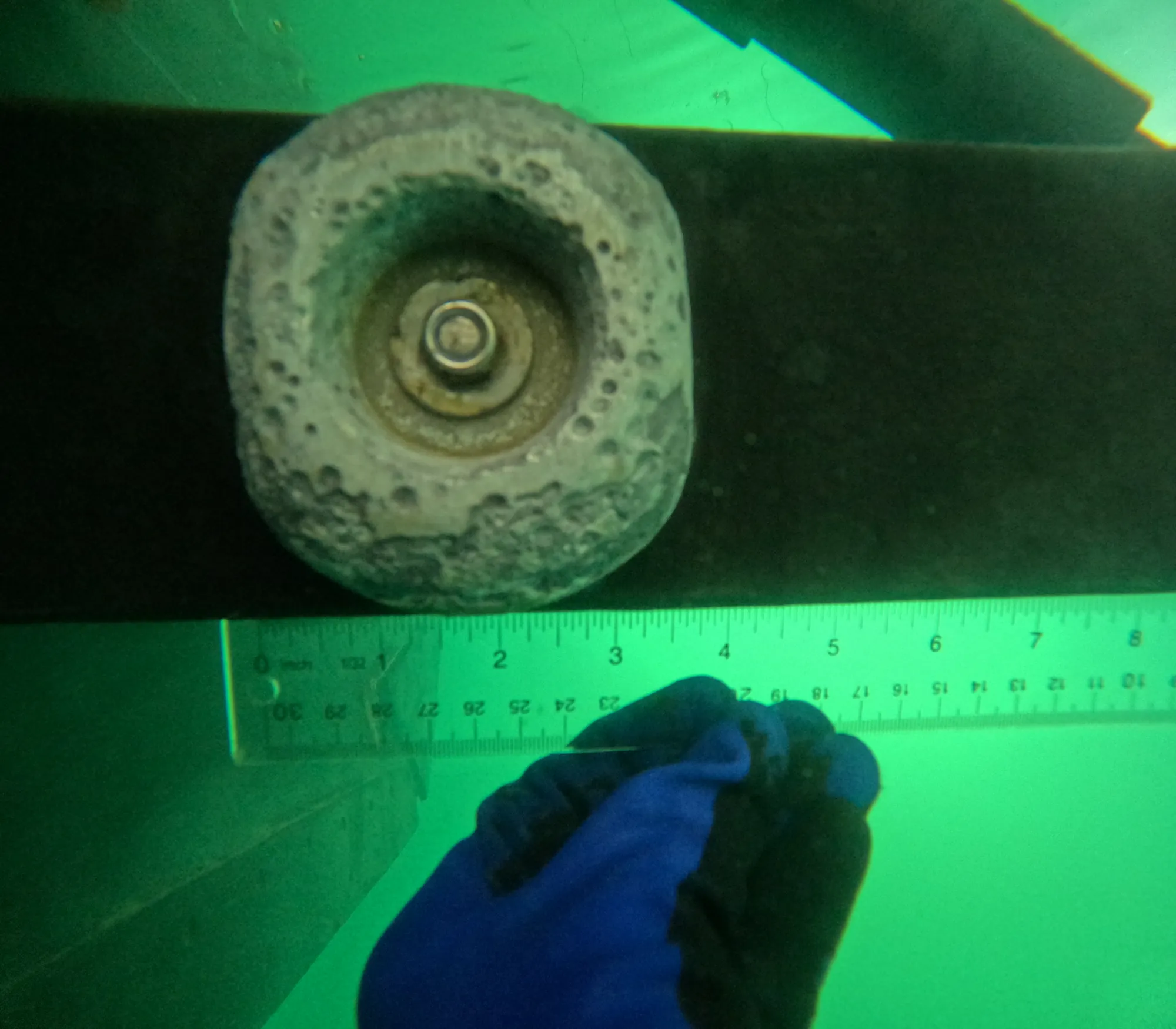
Shaft anode being measured underwater with a ruler. Measurement, not eyeballing, is how a diver decides between this service and the next.

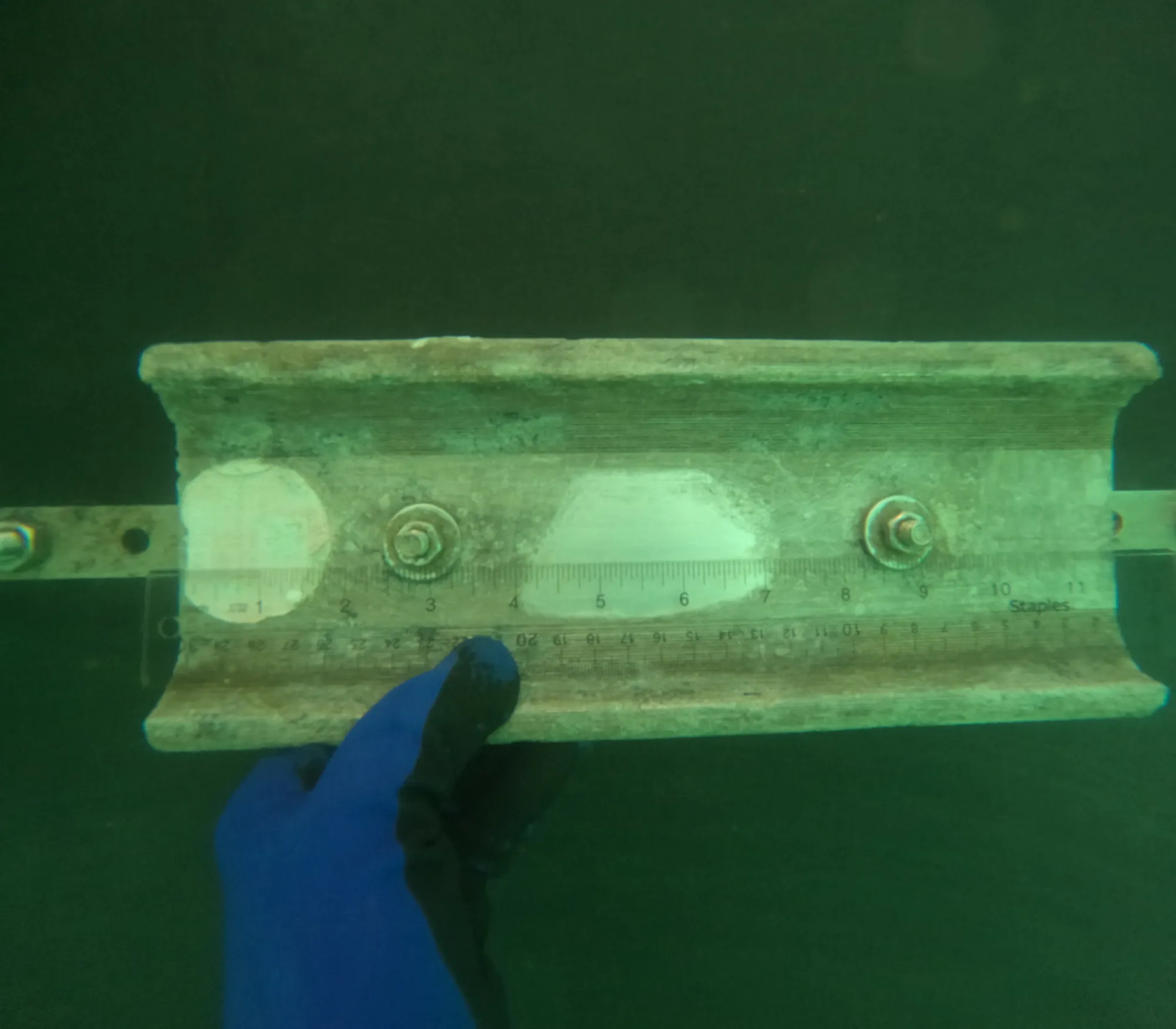
Hull-mounted anode at mid-life, ruler held against it. Pitted faces and visible wear on the back side are a sign it should be swapped out before the next interval.

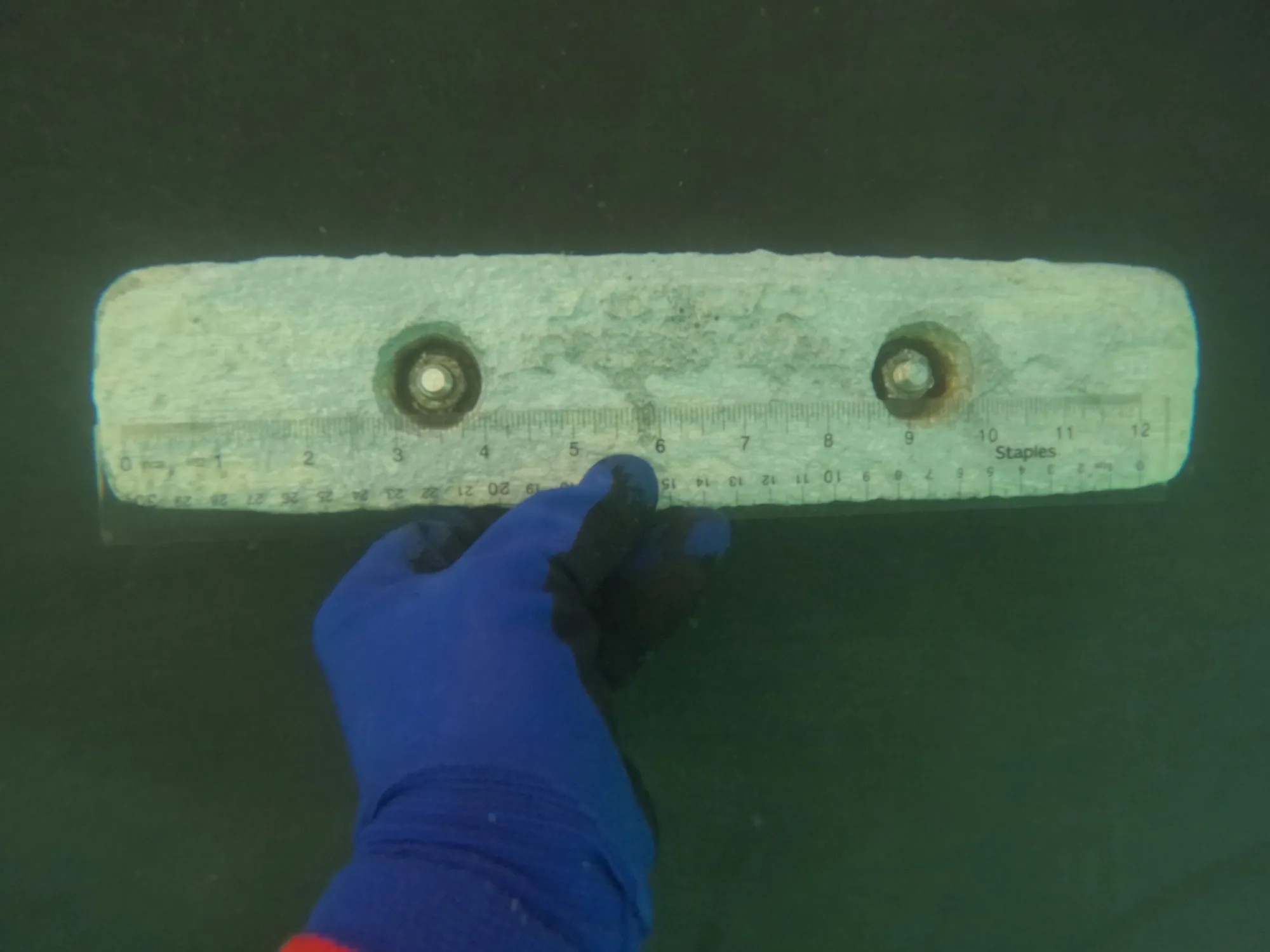
A fresh hull anode block being recorded for baseline thickness. Logging the starting size makes the next inspection much faster and more objective.

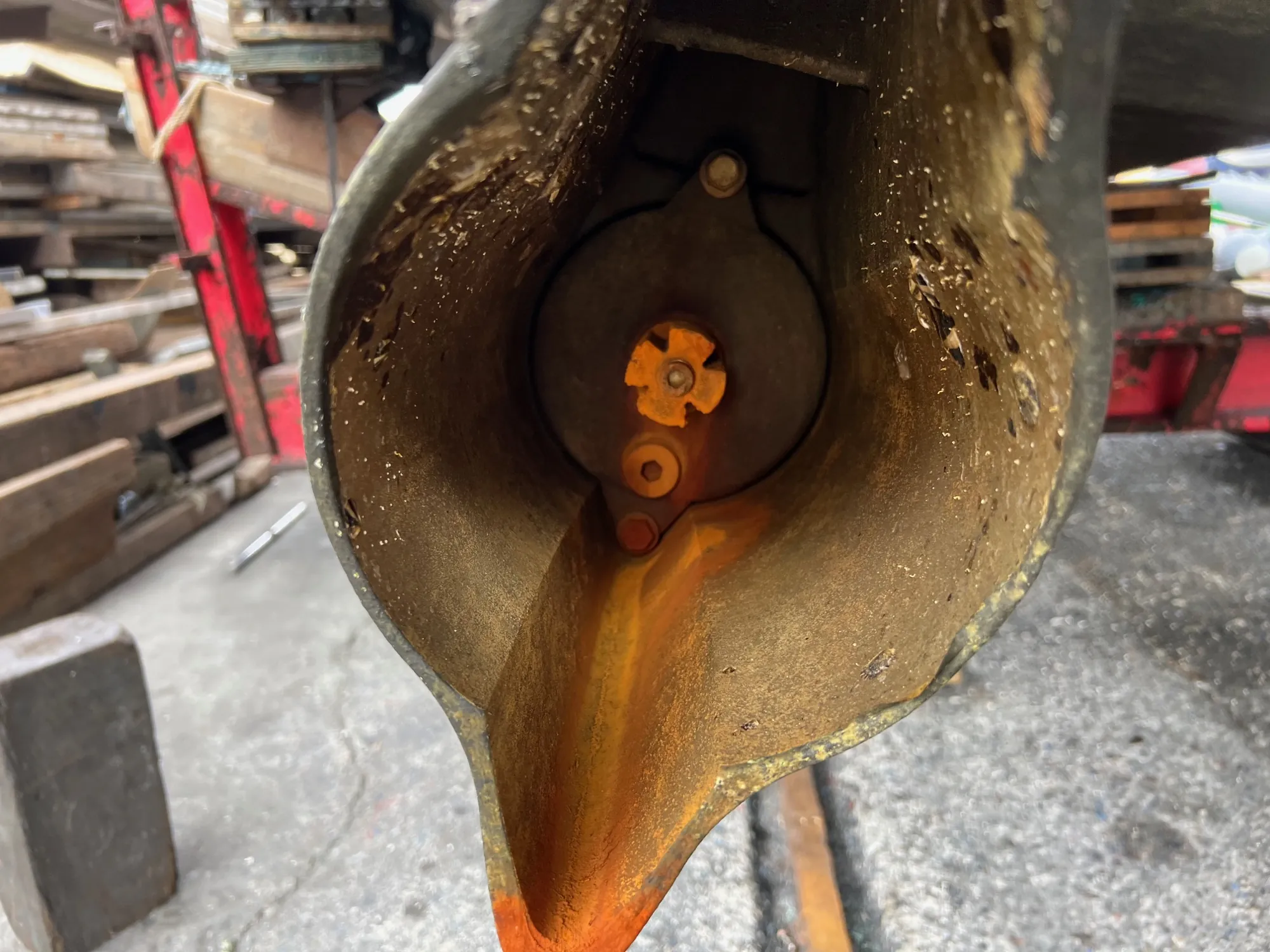
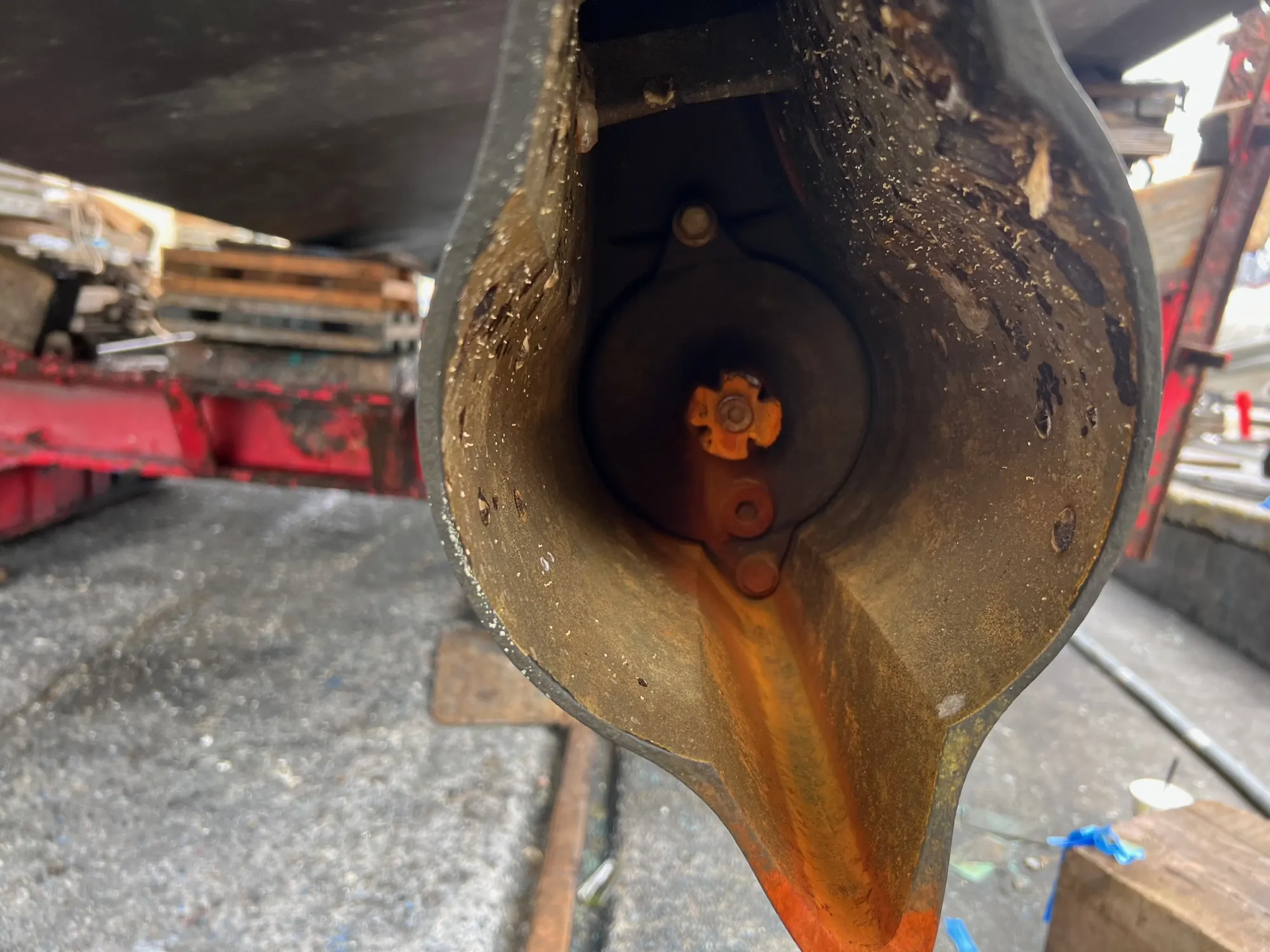
Looking up into a Volvo IPS drive housing to inspect the internal anode. Pod drives have anodes you cannot see from outside, which is why scheduled service is essential.

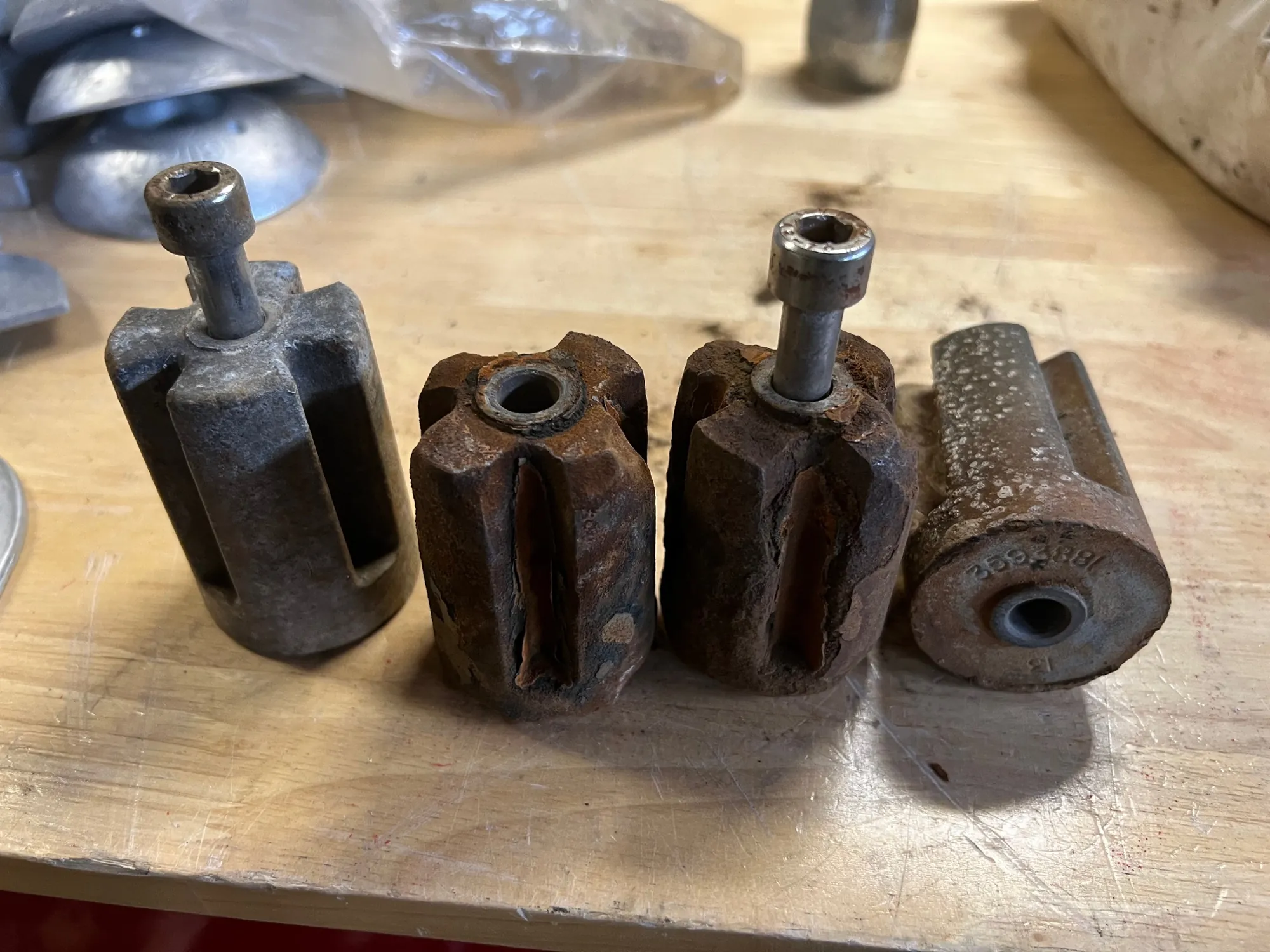
Anodes laid out side by side on the bench, from fresh to fully consumed. The center two have done their job, but they need to come out before they take the hardware with them.

Second view inside an IPS drive showing the depleted internal anode. Rust drainage on the housing is the early sign that the anode is no longer holding back corrosion.

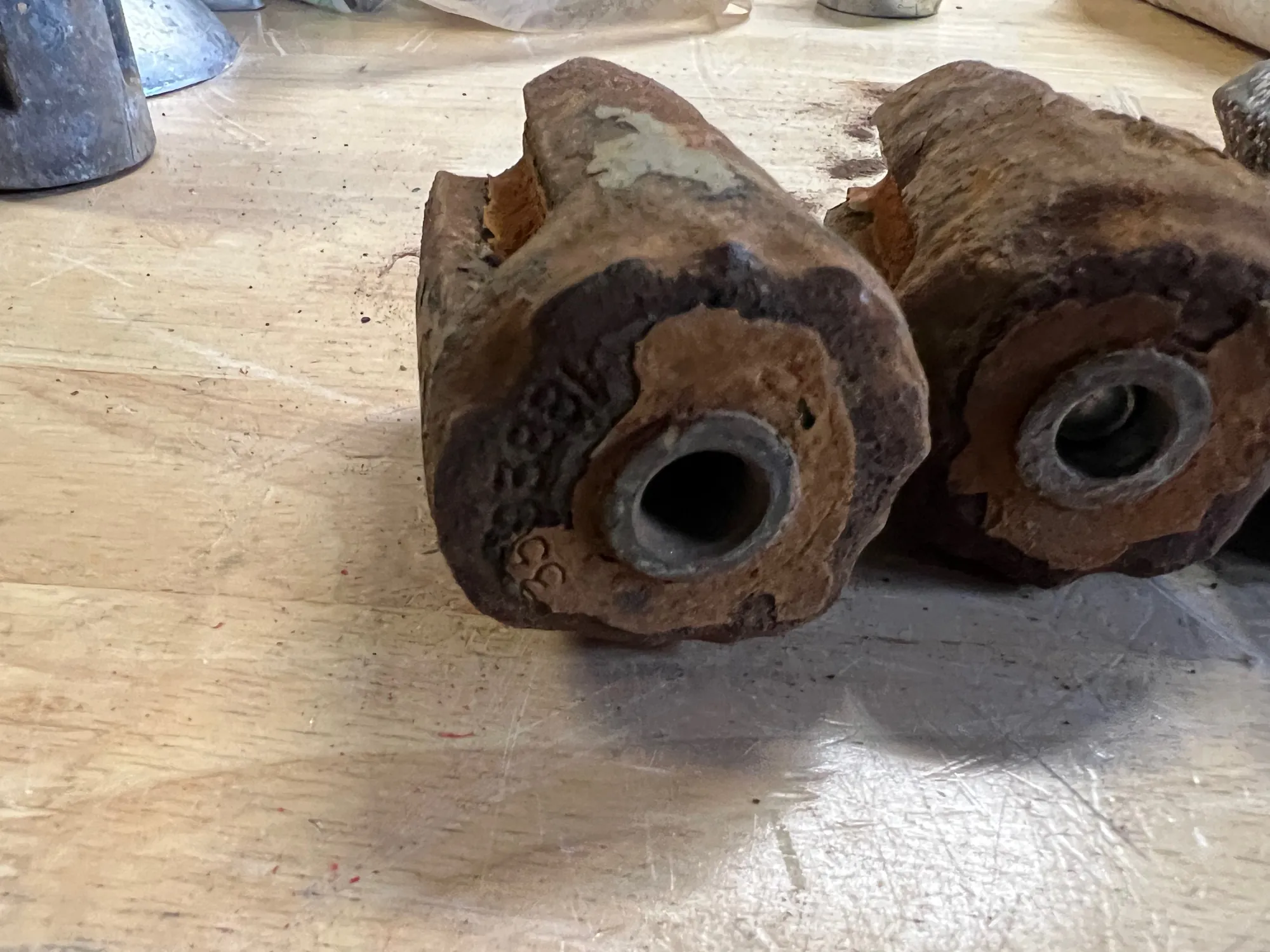
Two heavily worn anodes mid-replacement. The pitted, lumpy surface is what doing the job looks like, the orange staining is a hint of how long they were left in service.

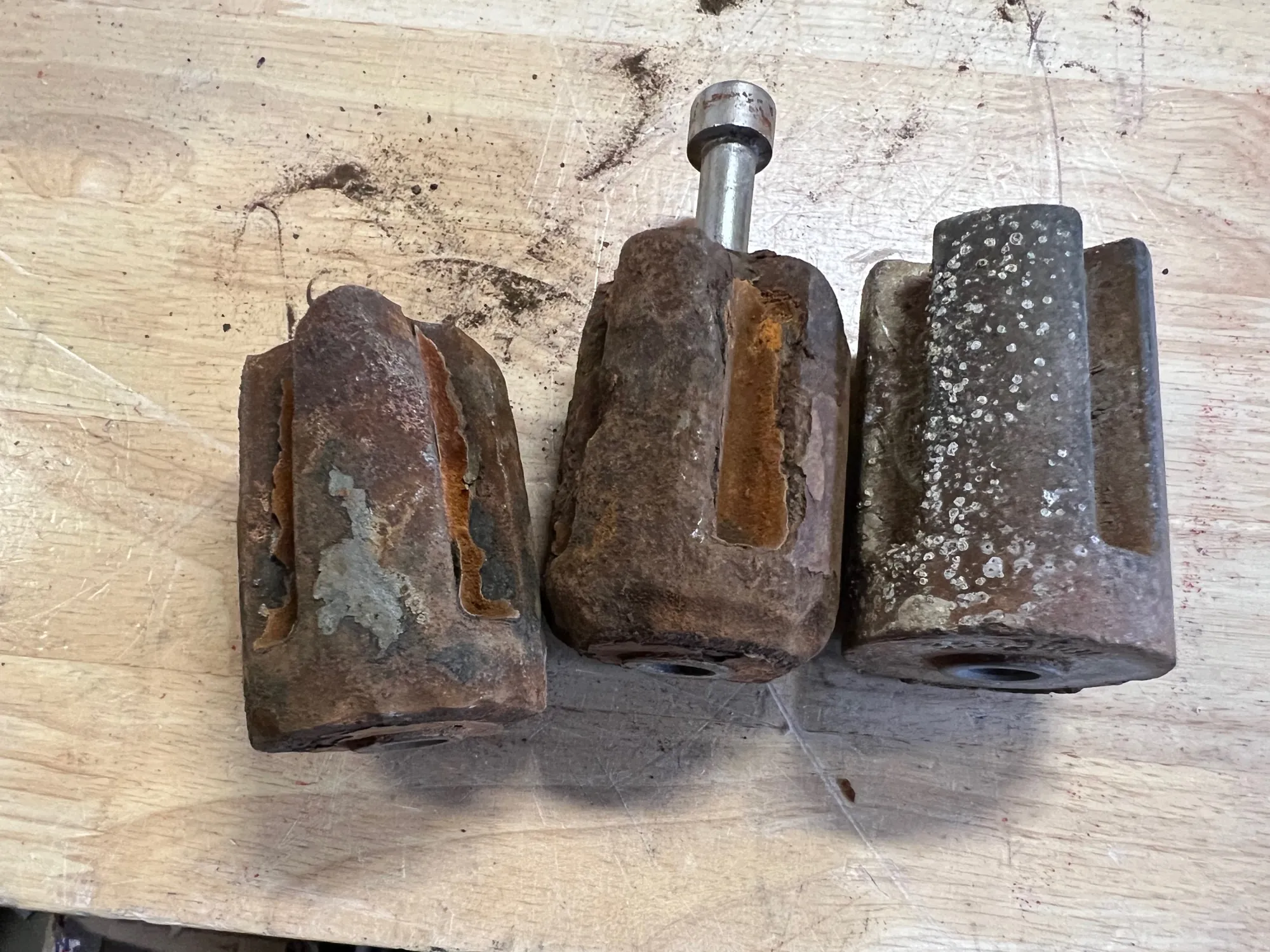
Three anodes at different points in their service life. Catching them at the middle stage, not the right-hand stage, is the goal of regular inspection.

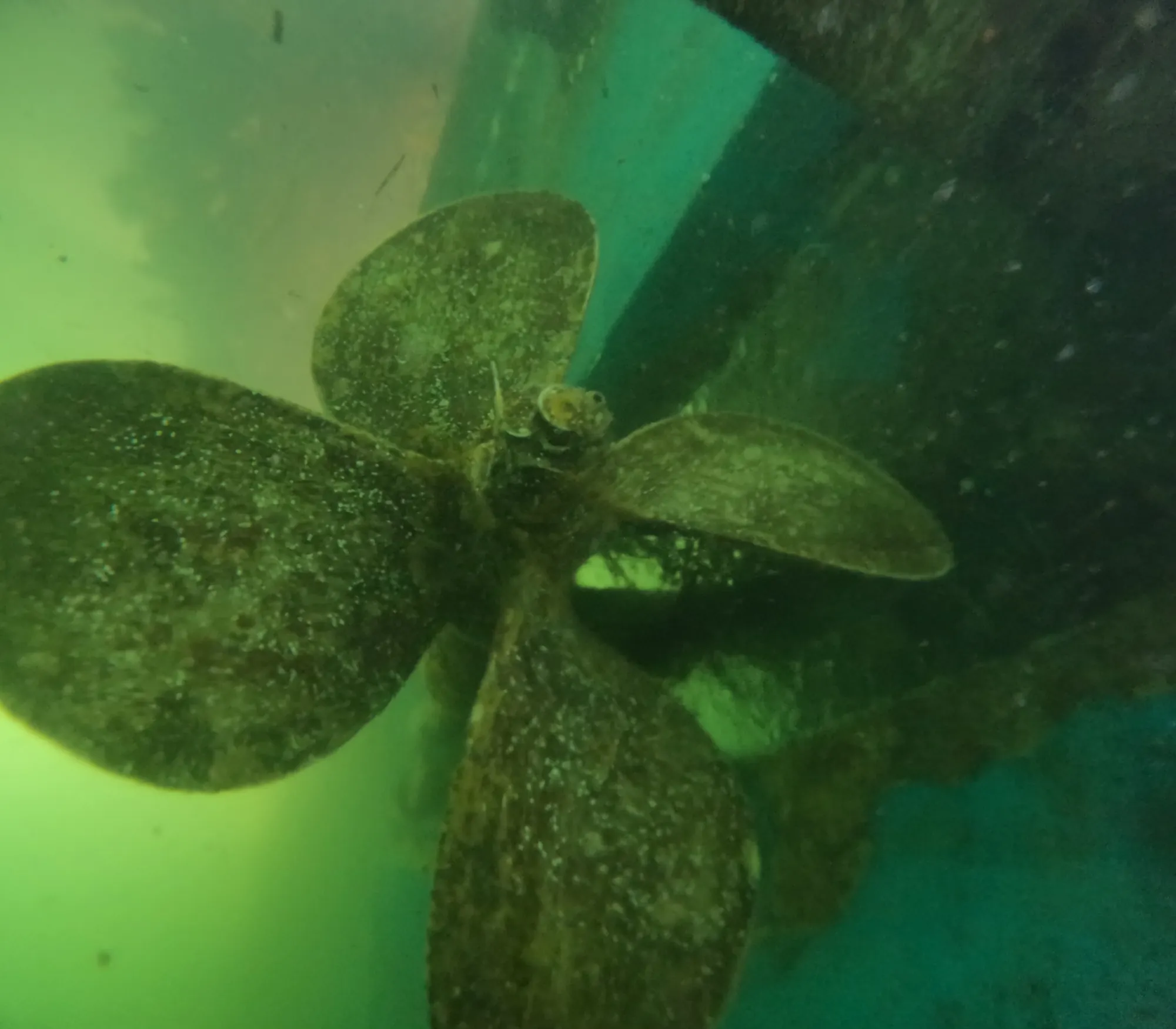
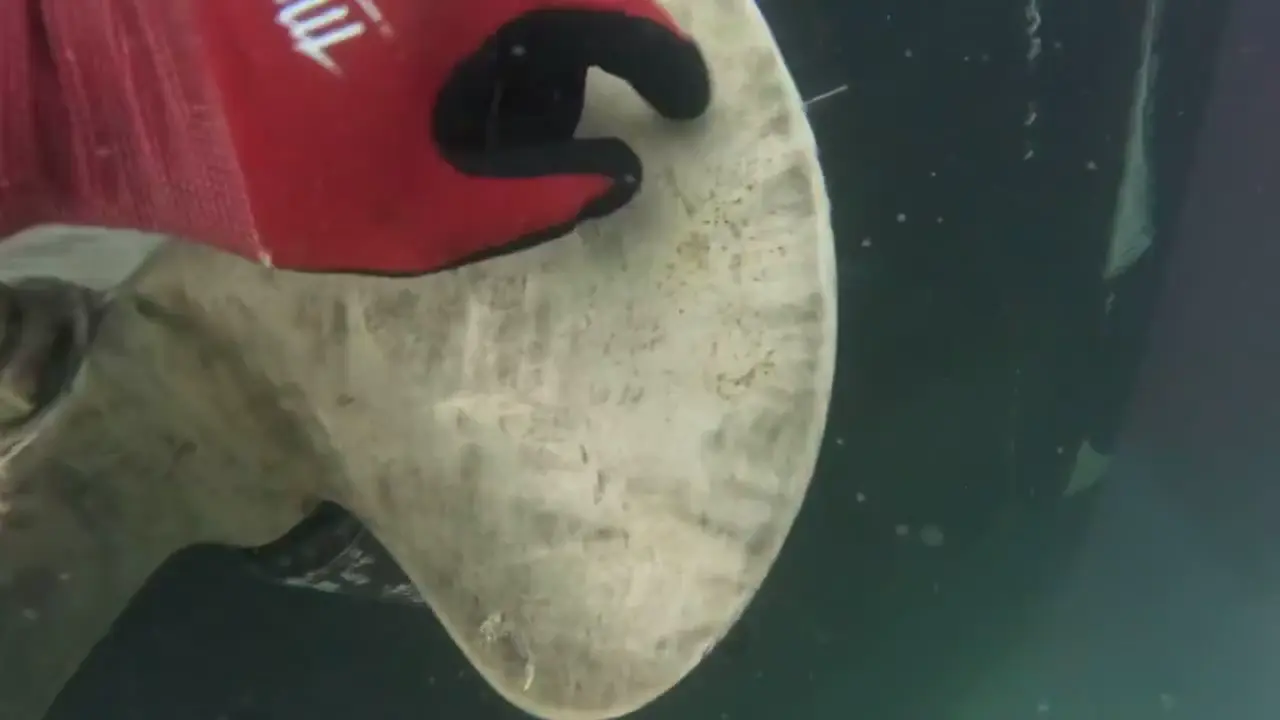
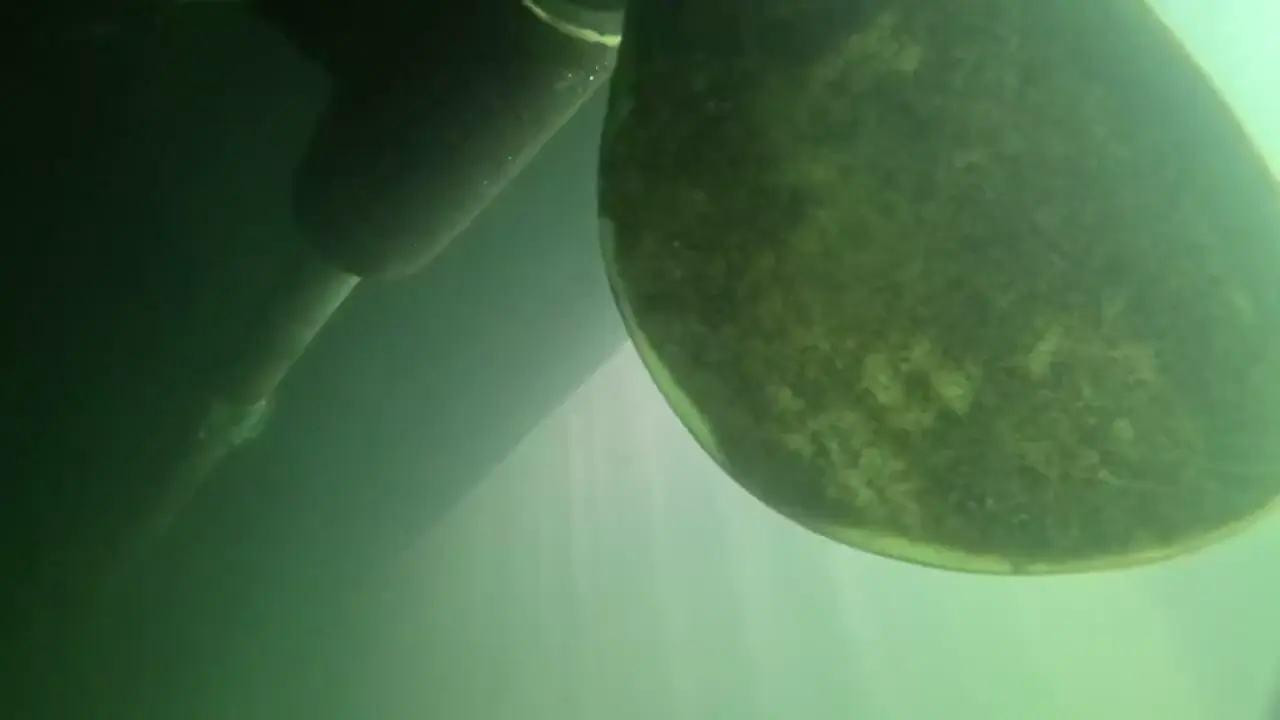
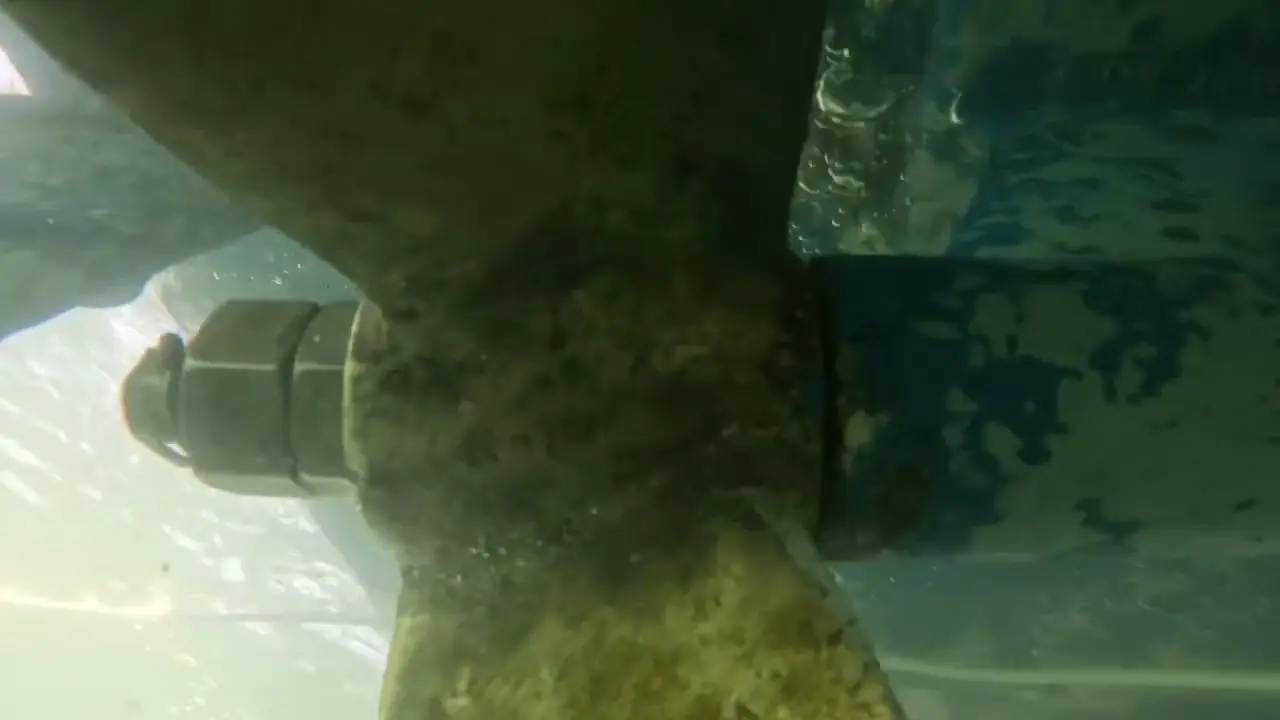
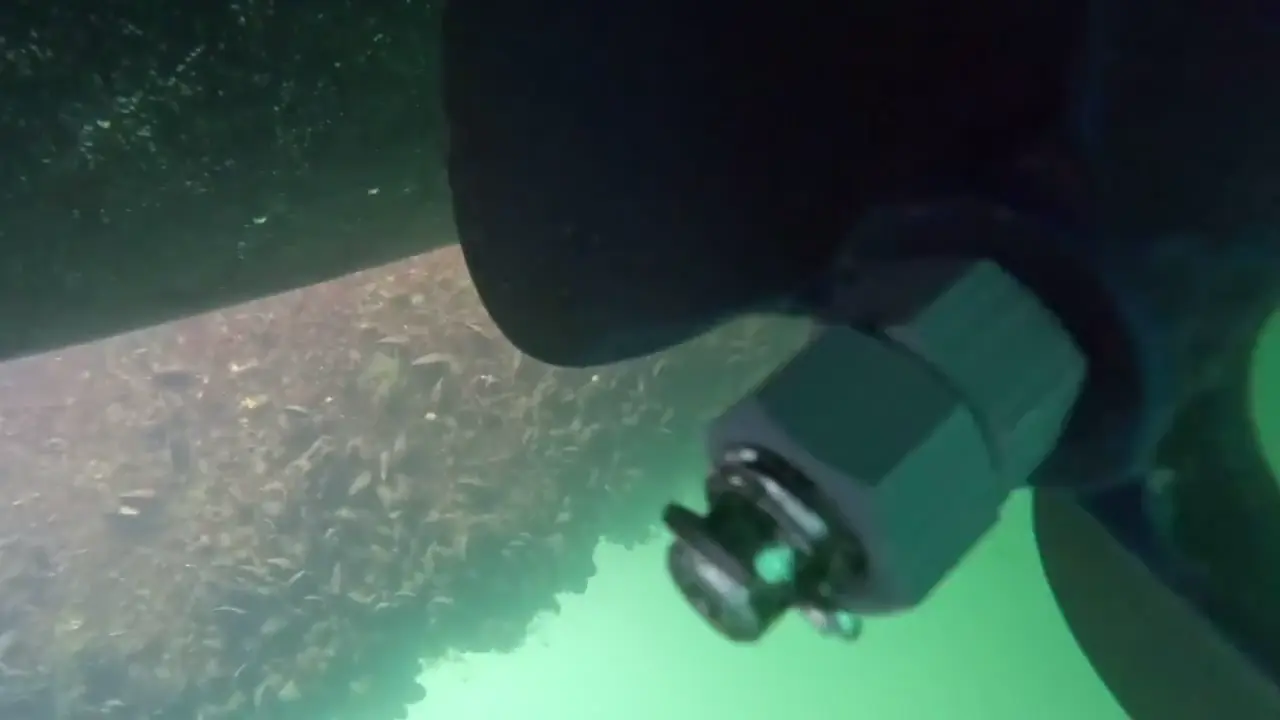
Bronze prop coated in soft growth and slime. Even a thin layer like this kills efficiency, the blades cannot move clean water and the engine works harder for less speed.

Twin outboard lower units, freshly cleaned, props in good shape. Routine attention here saves fuel and protects the gearcase from cavitation damage.

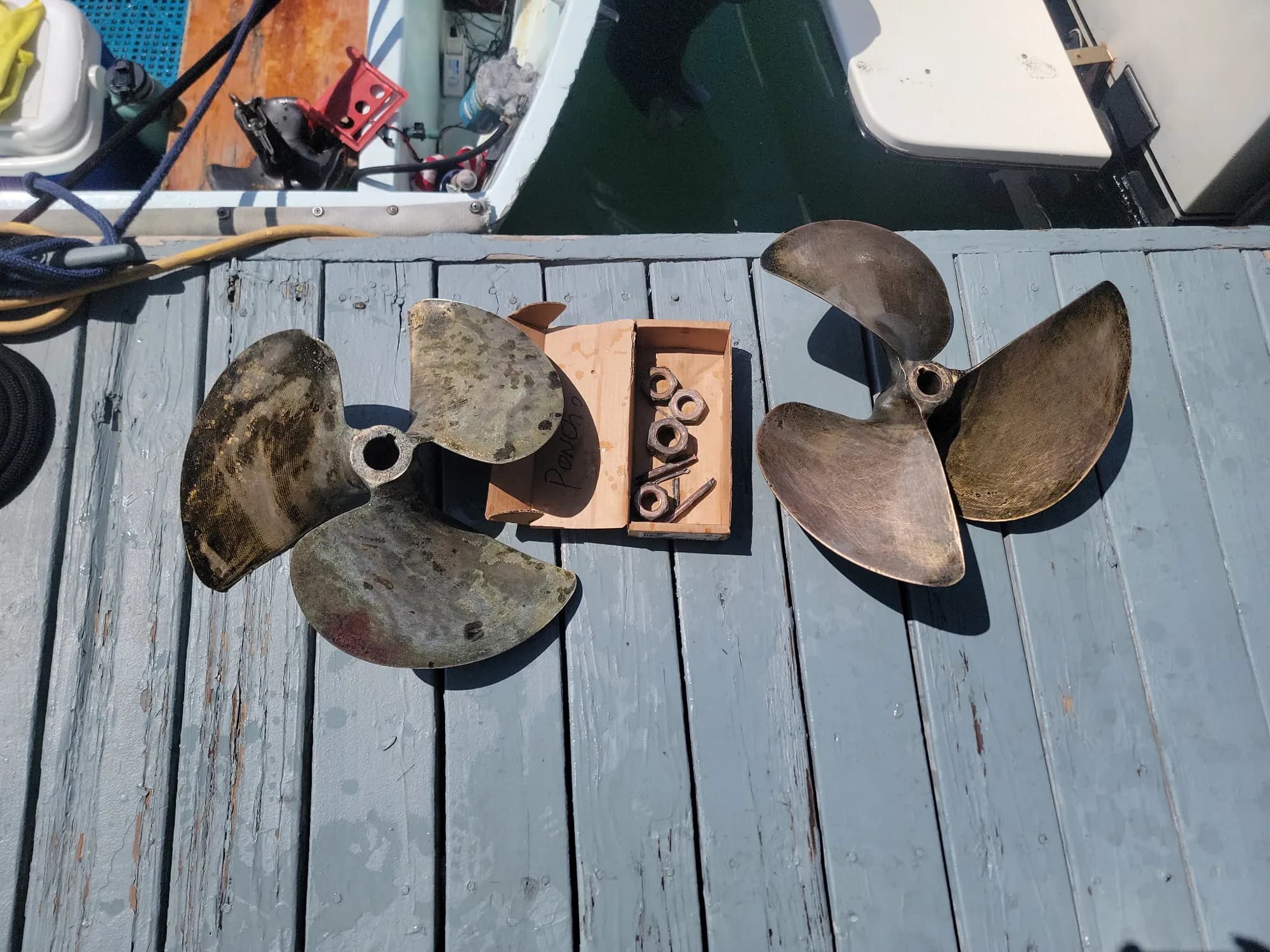
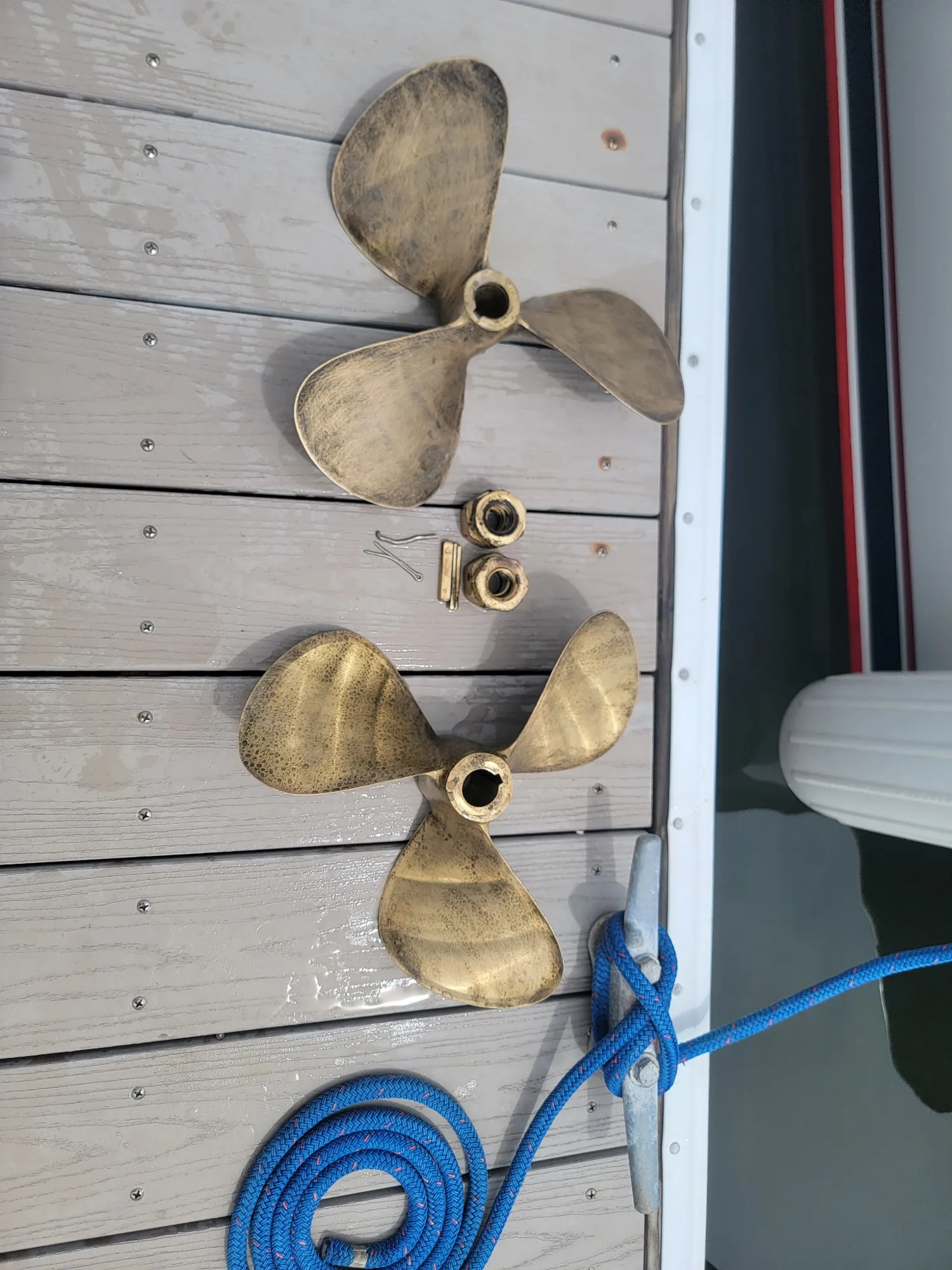
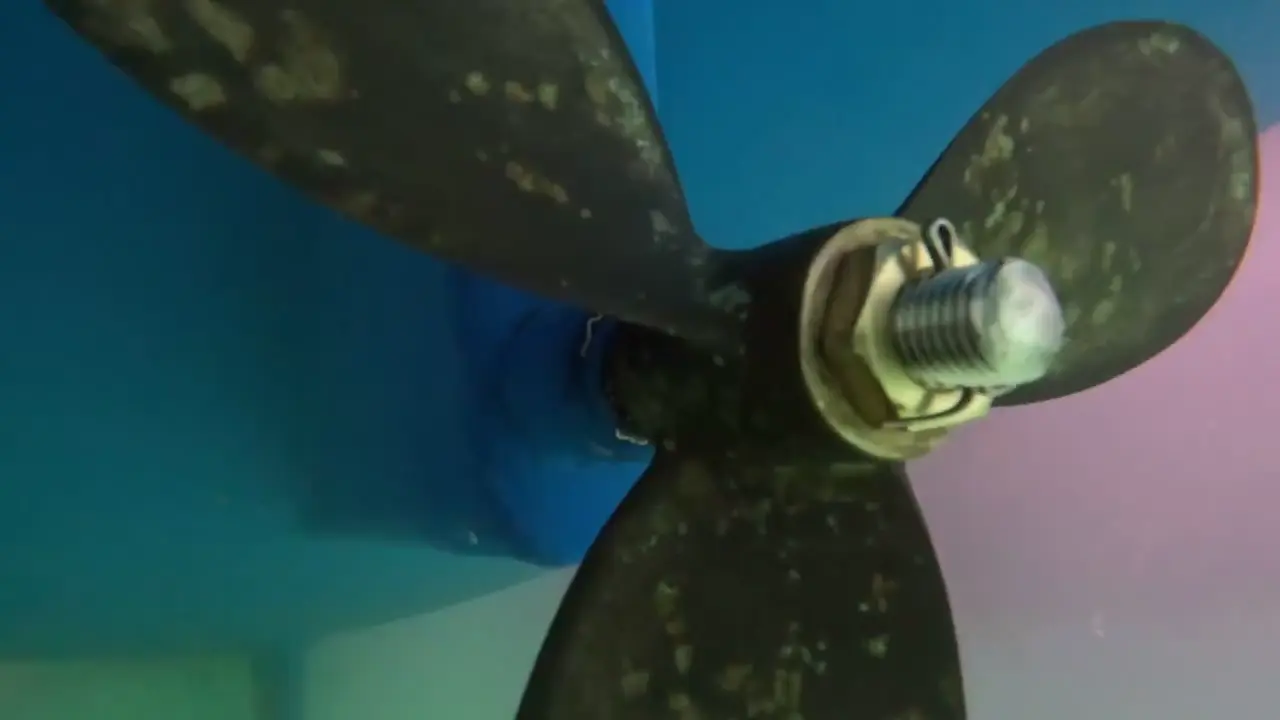
Three-blade bronze props off the boat with the prop nuts and zinc collar laid out. Hardware should always come off as a set so nothing gets reused that should not be.

Pair of bronze props with their prop nuts and cotter hardware on a teak deck. Clean condition here means the polishing schedule has been kept.

Bronze props polished smooth, hardware ready for reinstall. A polished surface stays cleaner longer because growth has less to grip.

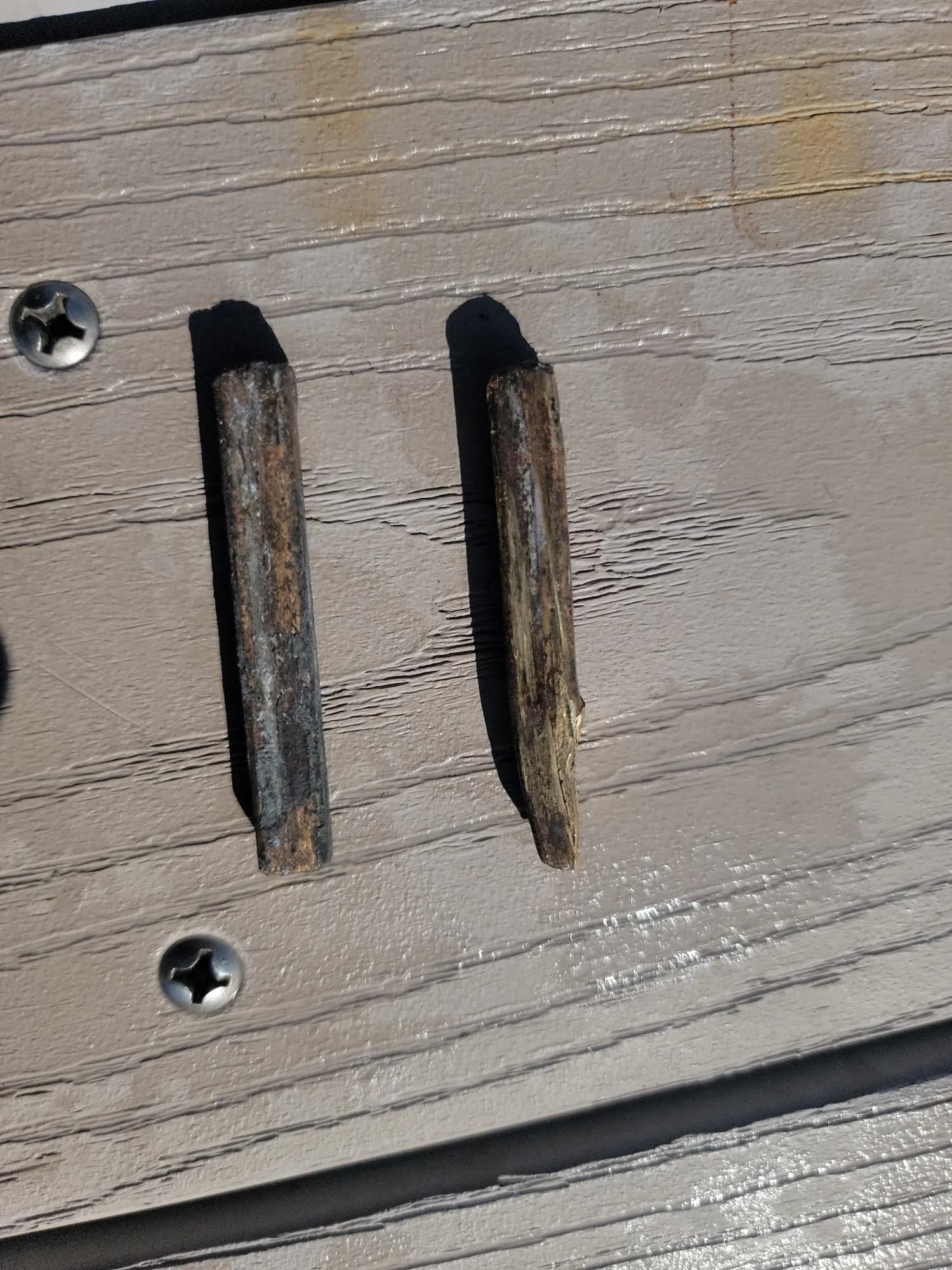
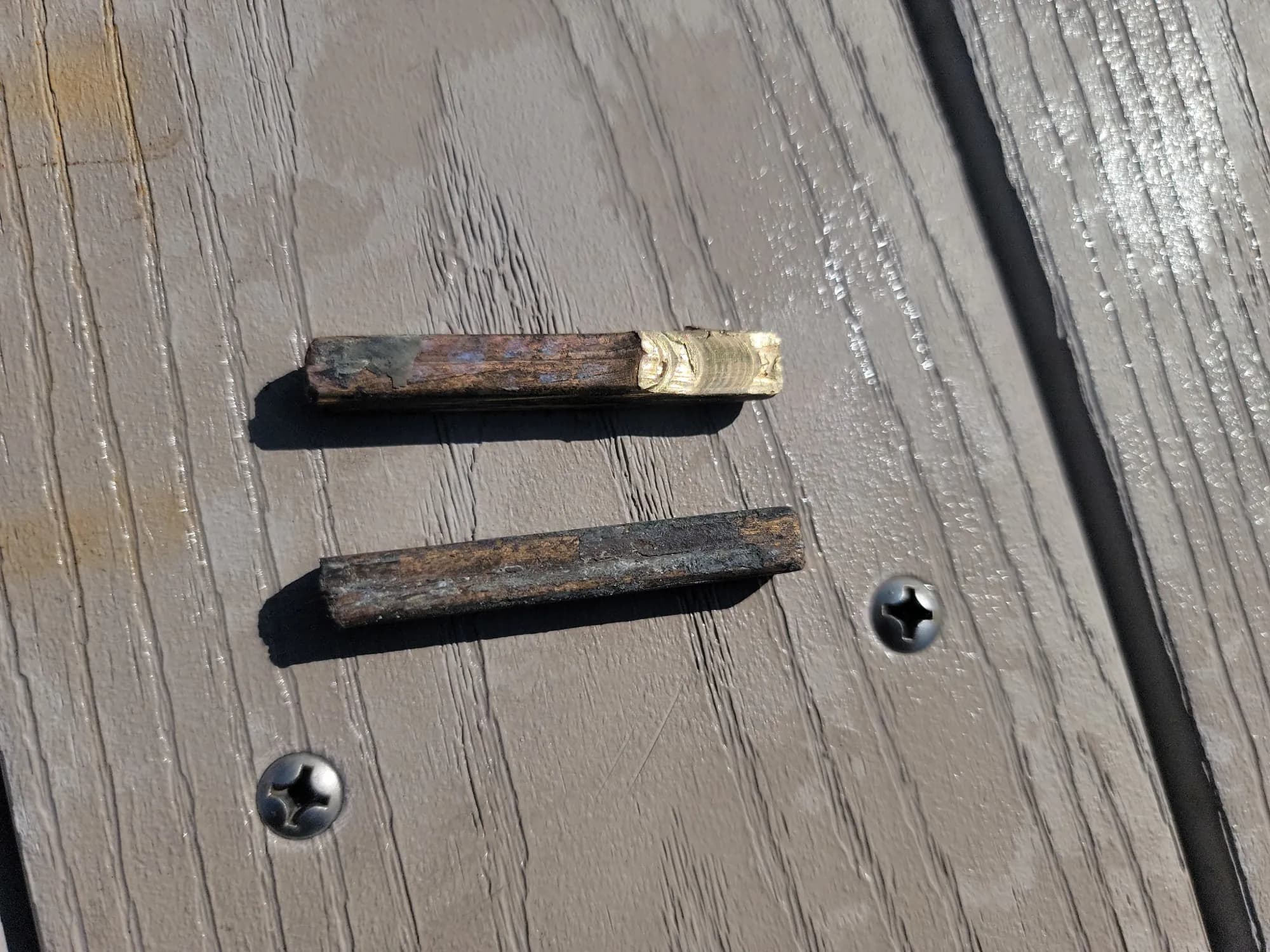
Two old prop-shaft drive keys with corrosion showing. A worn key can let the prop spin on the shaft, which destroys the keyway and ruins both parts.

Drive keys side by side, showing what wear looks like. Replacing the key is cheap, replacing the shaft after a slipped prop is not.

Two-blade bronze sailboat prop pulled and laid on the dock. Two-blade props are common on auxiliary sailboats and need the same polishing care as bigger units.

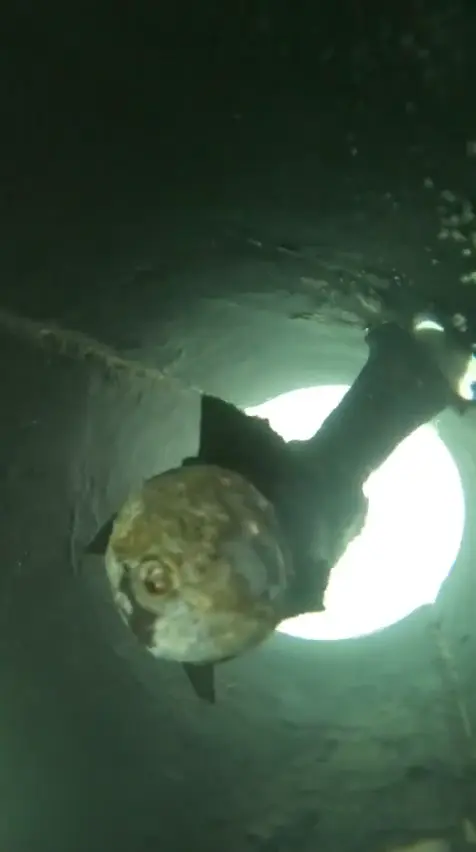
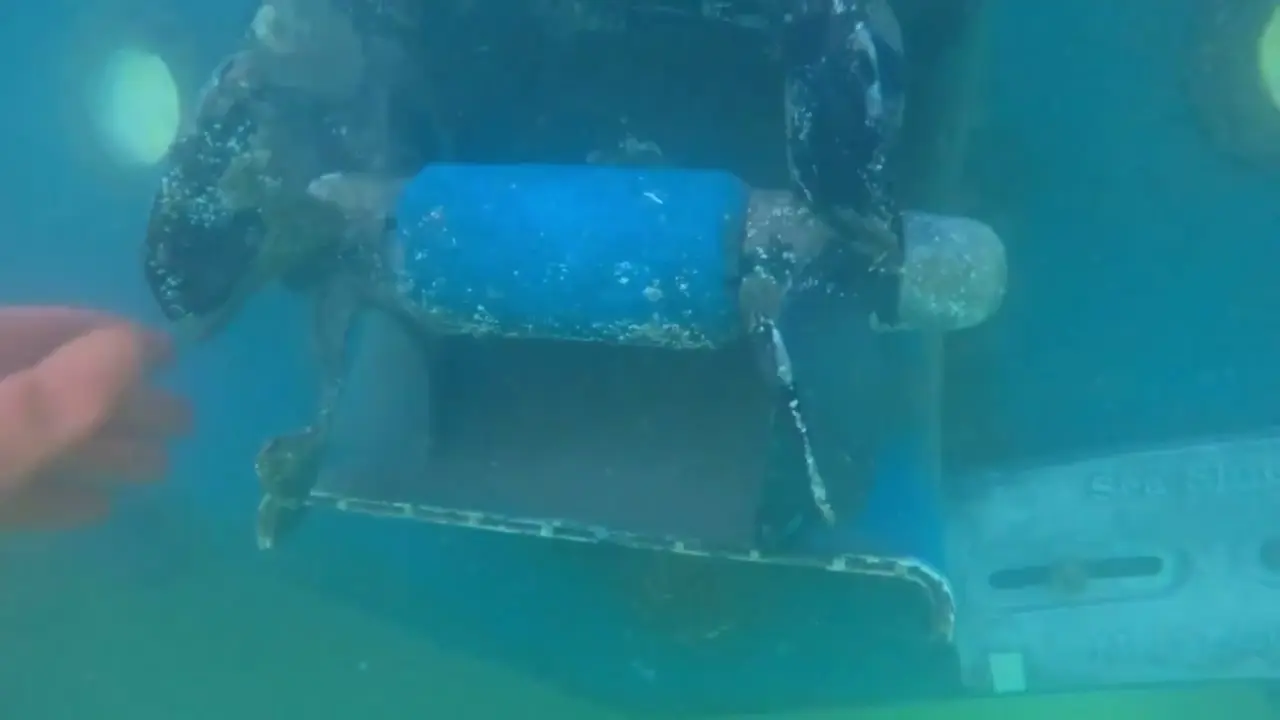
Looking through the bow thruster tunnel during service. Thrusters live in a tight space that traps growth and corrosion if it is not flushed out on schedule.

Bow thruster blades visible through the tunnel from the other side. Worn or fouled thruster blades show up first as poor docking performance.

Prop shaft pulled, the seal area completely corroded through. When the shaft seal lets go like this, water gets into the bearing and the cost of the repair multiplies fast.
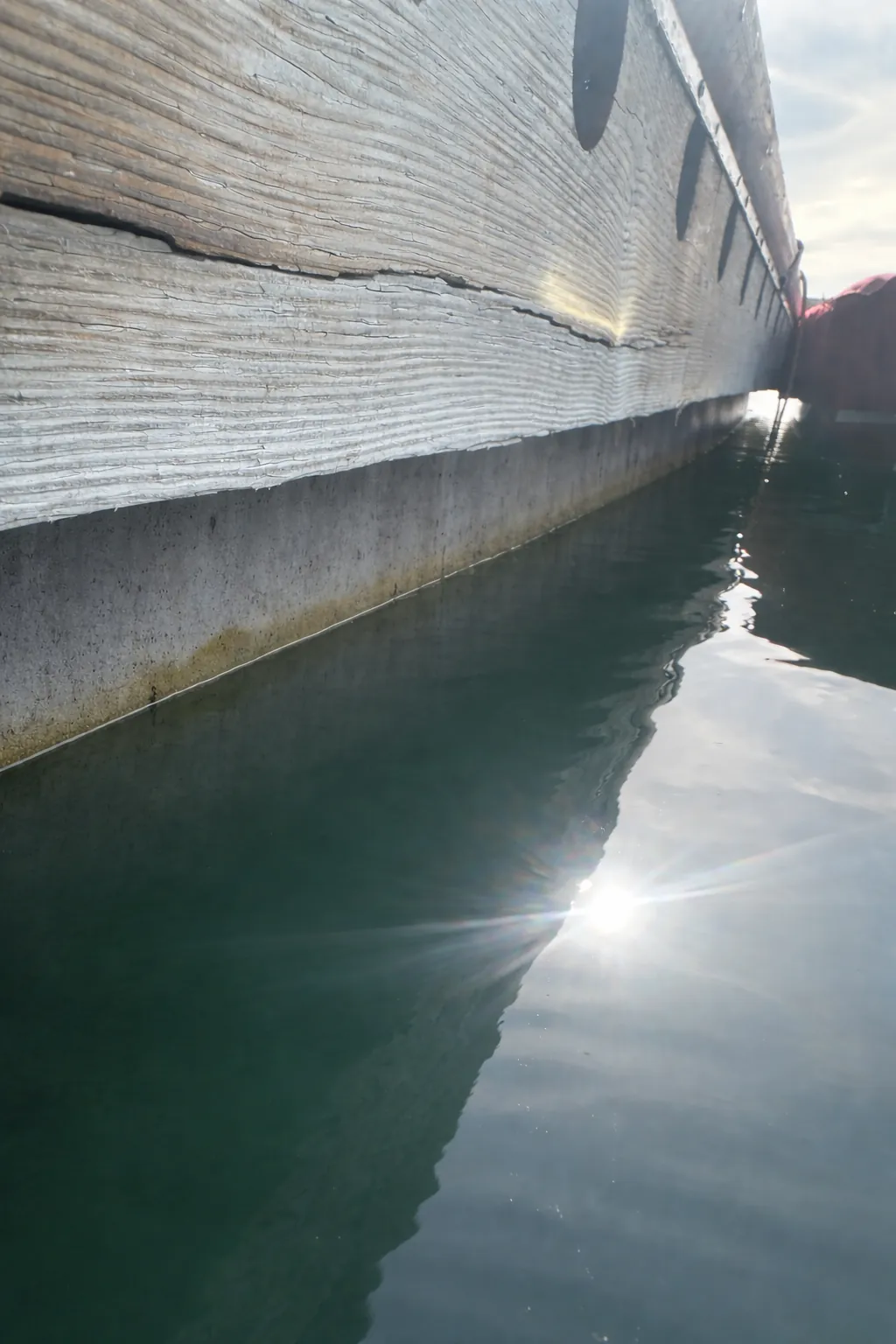
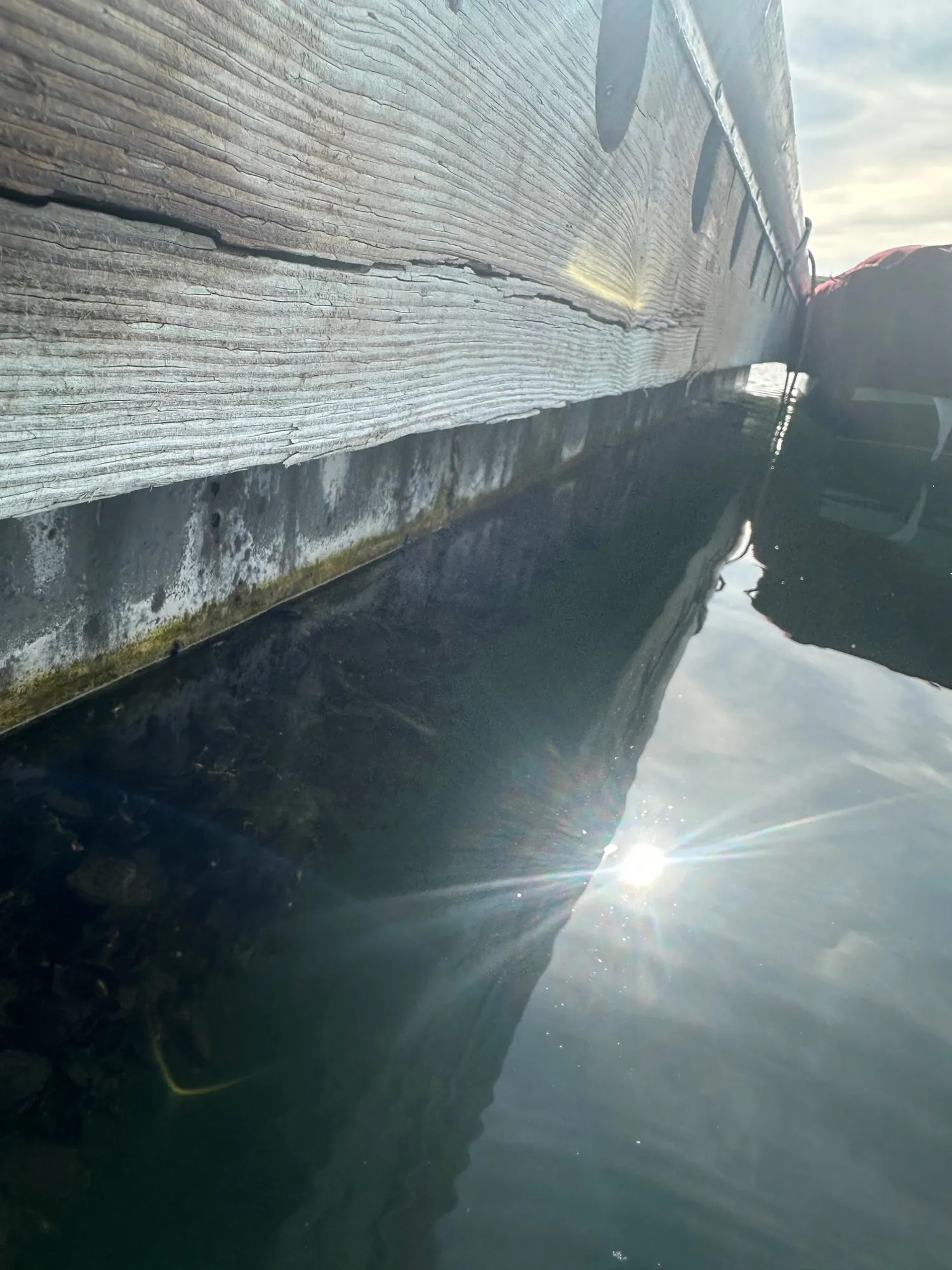
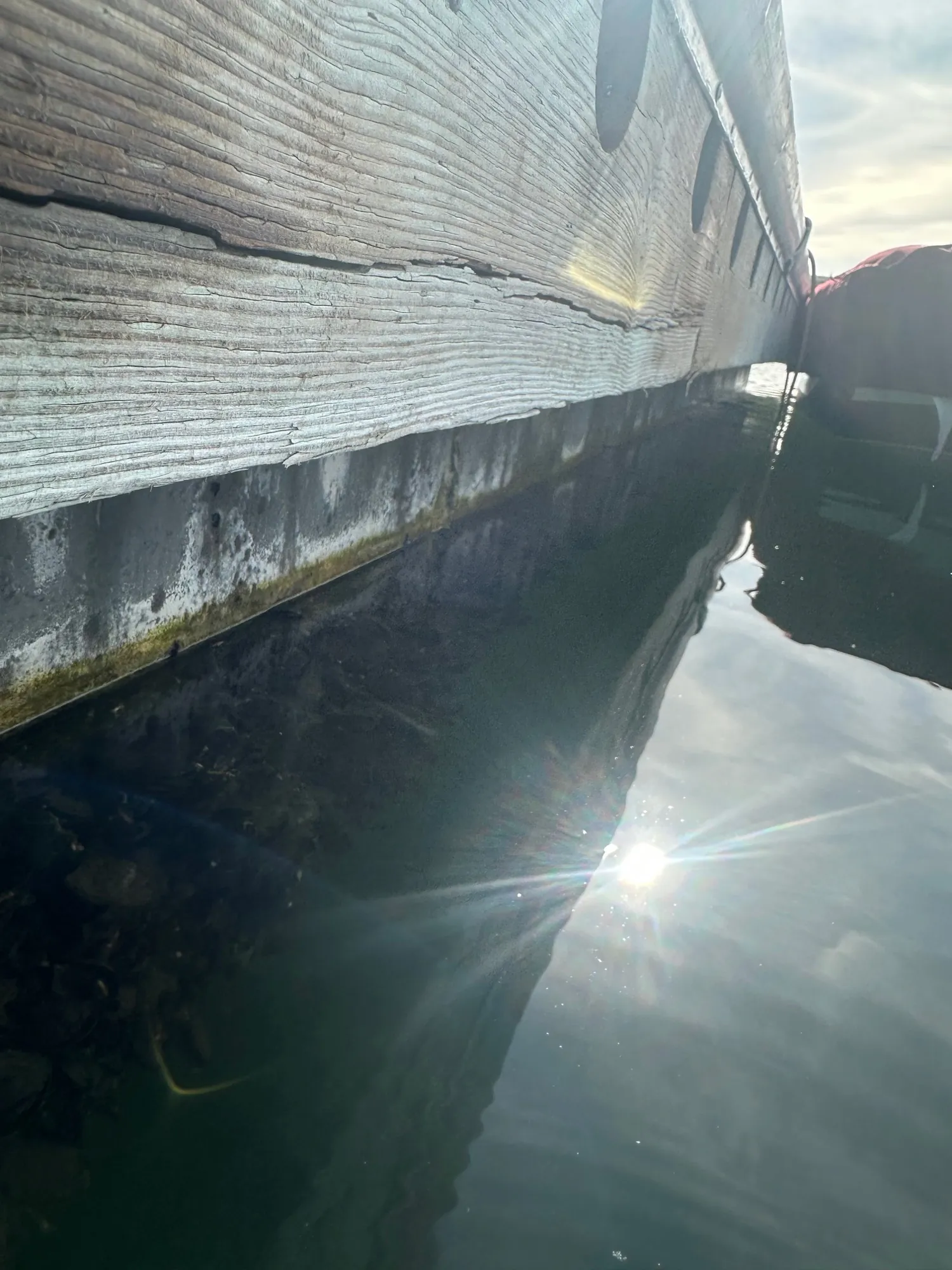
Concrete dock face with cracking along the top edge. Cracks at the cap let water under the surface, and freeze-thaw or wave action then opens them up further.

Dock damage assessment in progress. Catching cracks and surface damage early lets owners plan repairs on their schedule, not after a failure forces it.
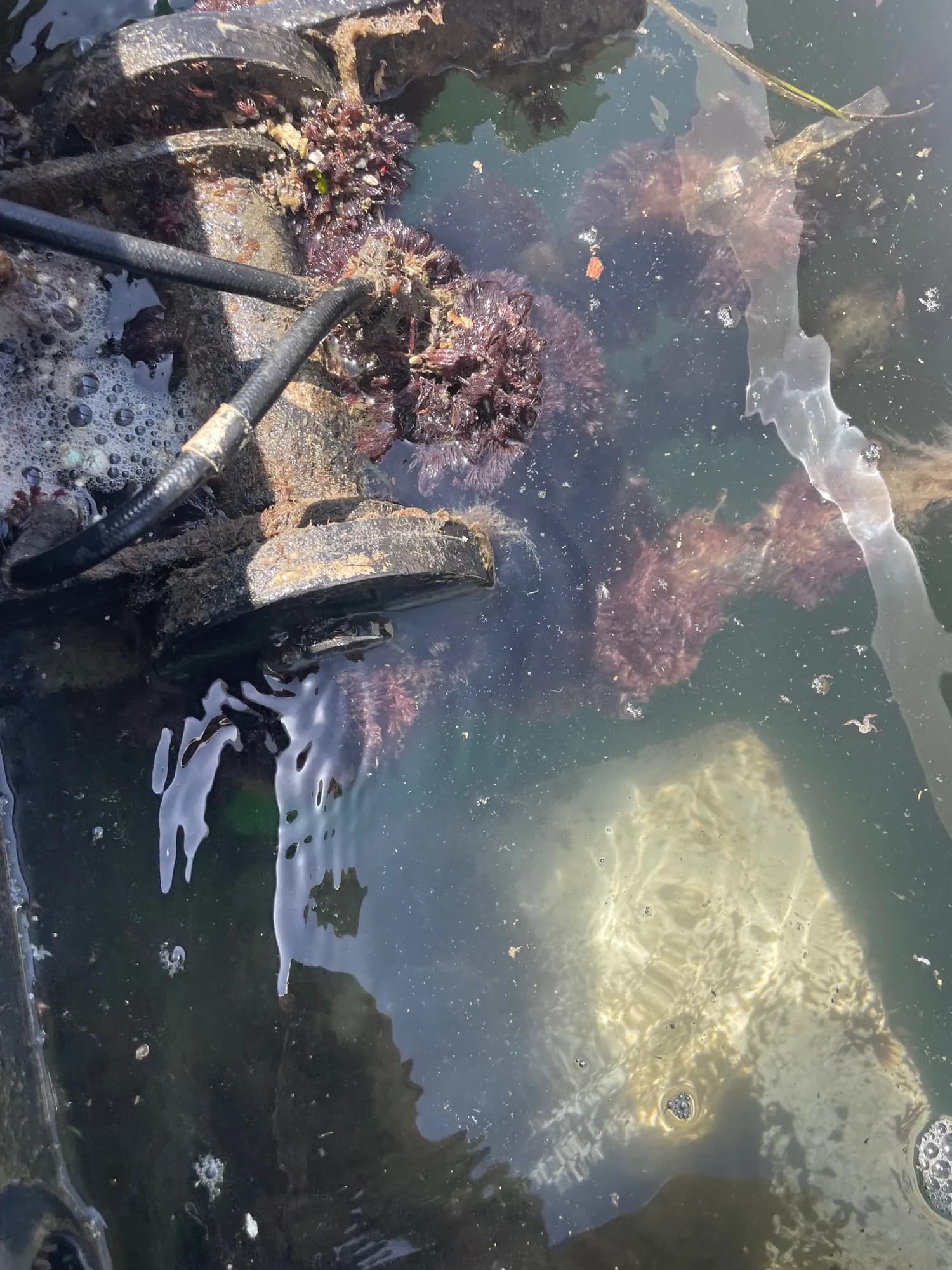
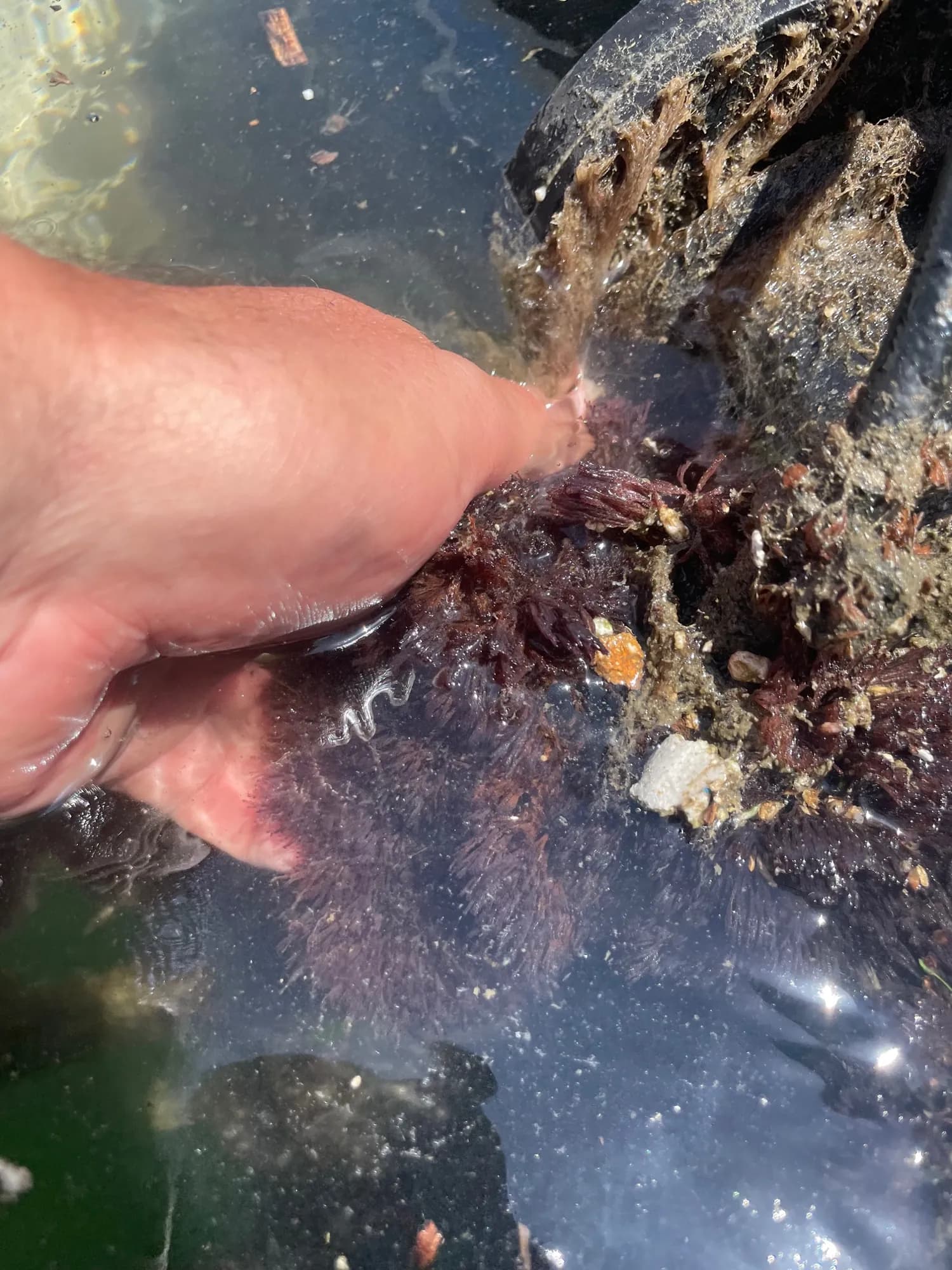
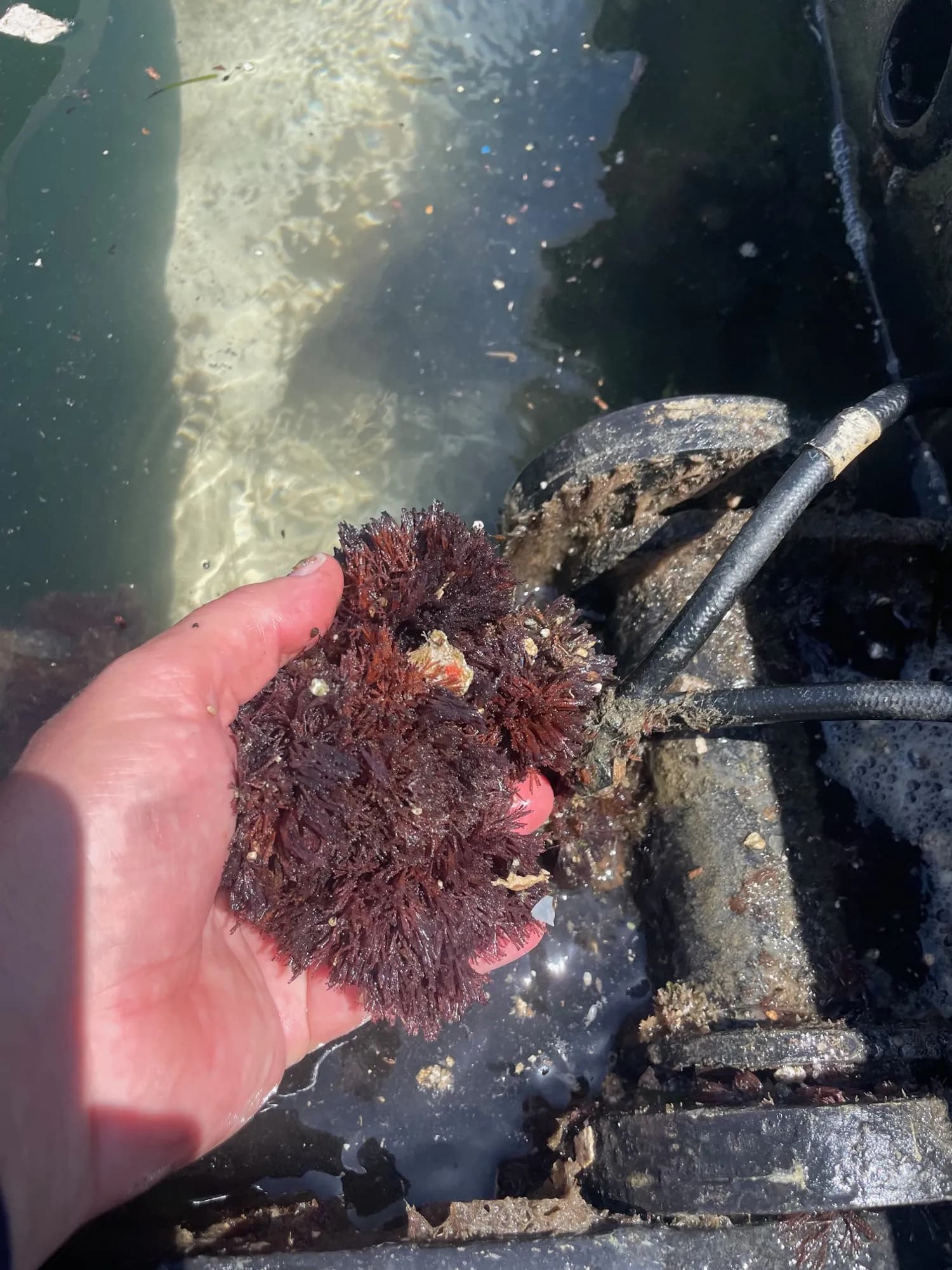
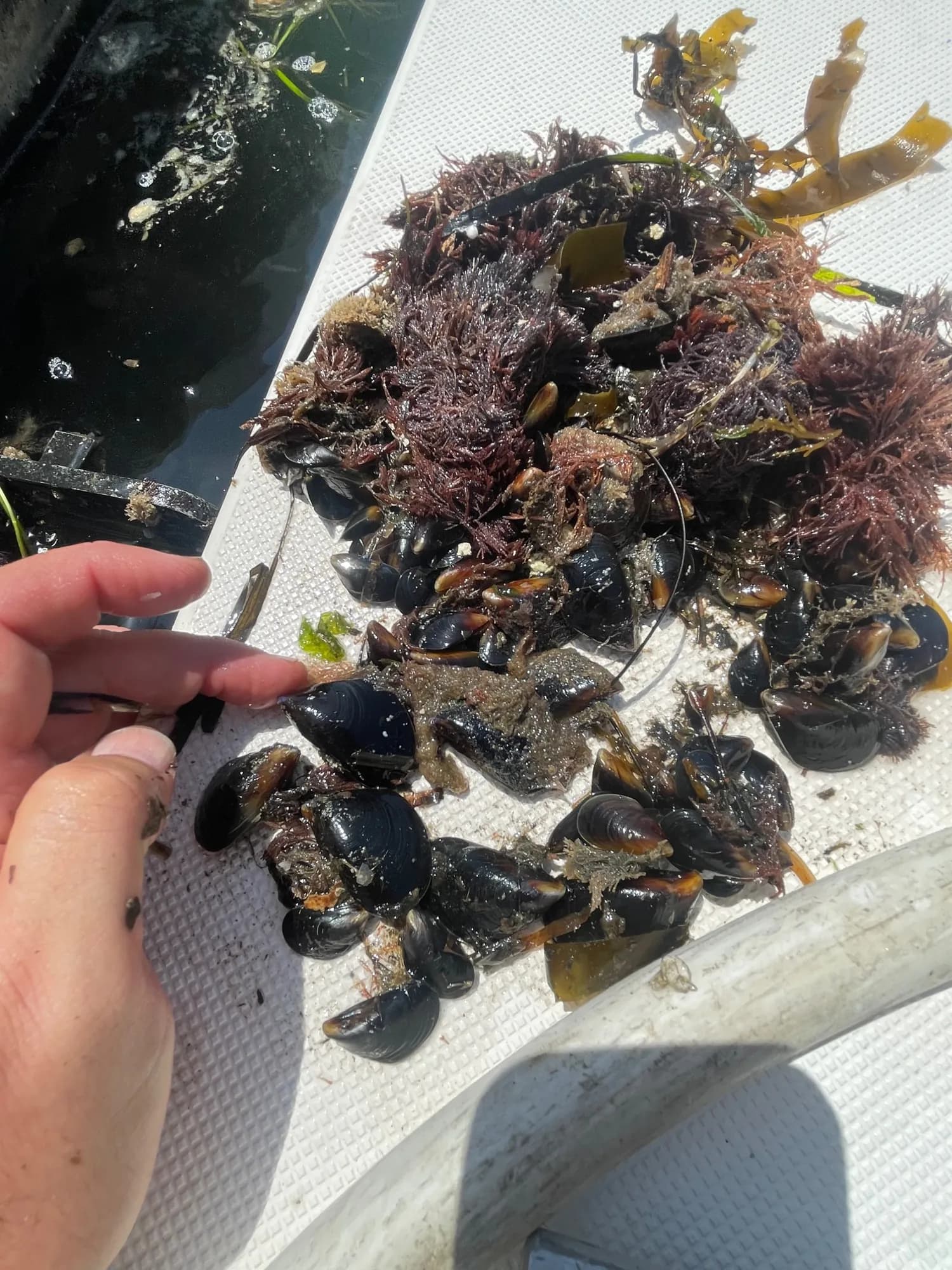
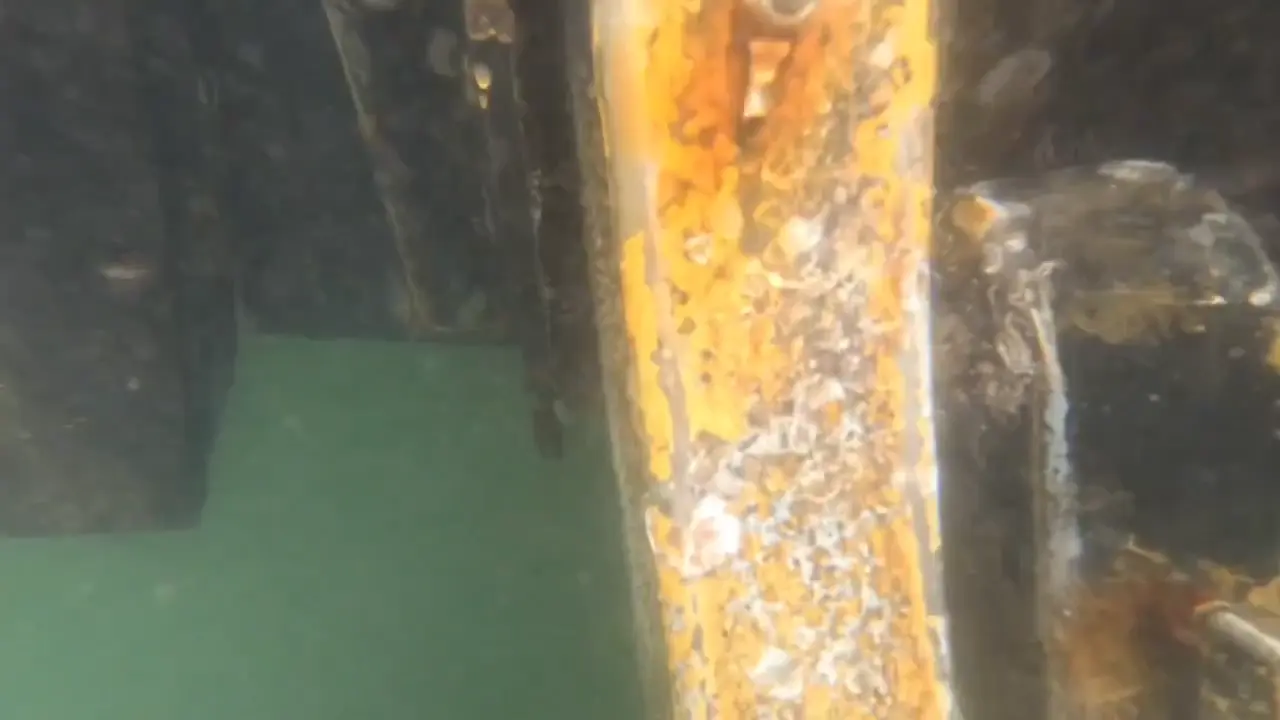
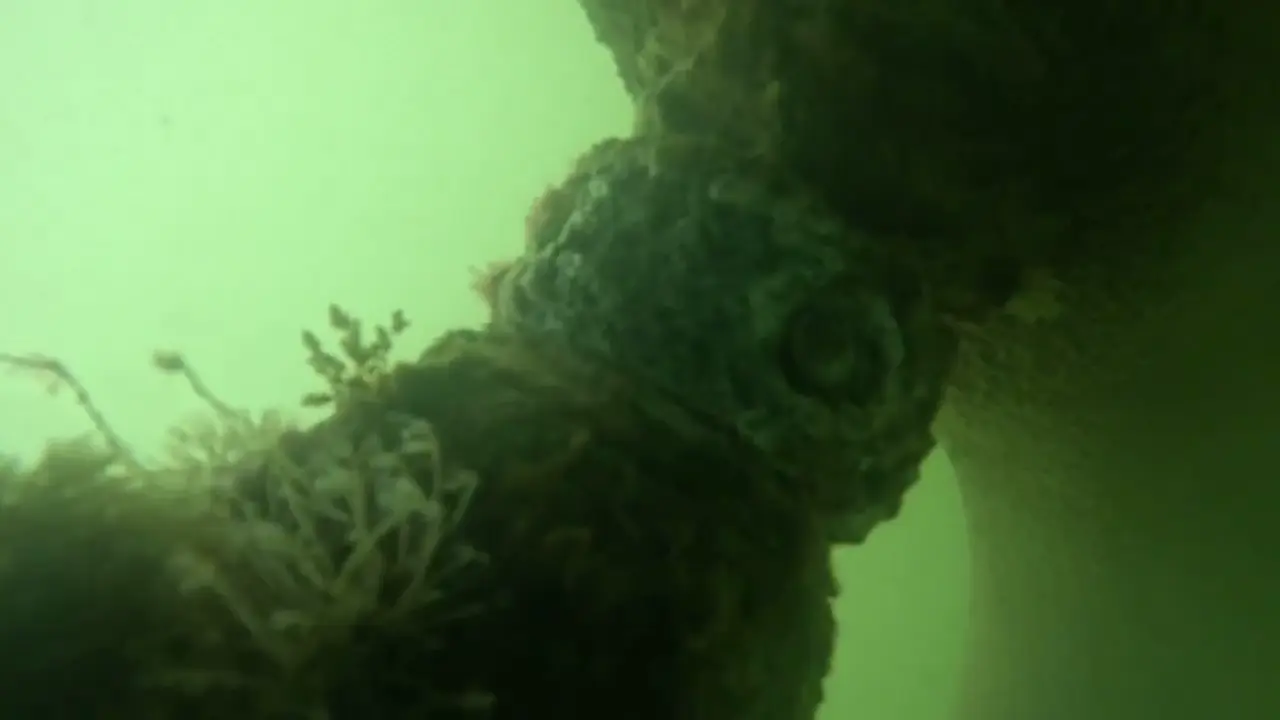
Underwater closeup of a fouled dock piling. Mussels, algae, and tube worms add weight and trap moisture against the wood, accelerating rot.
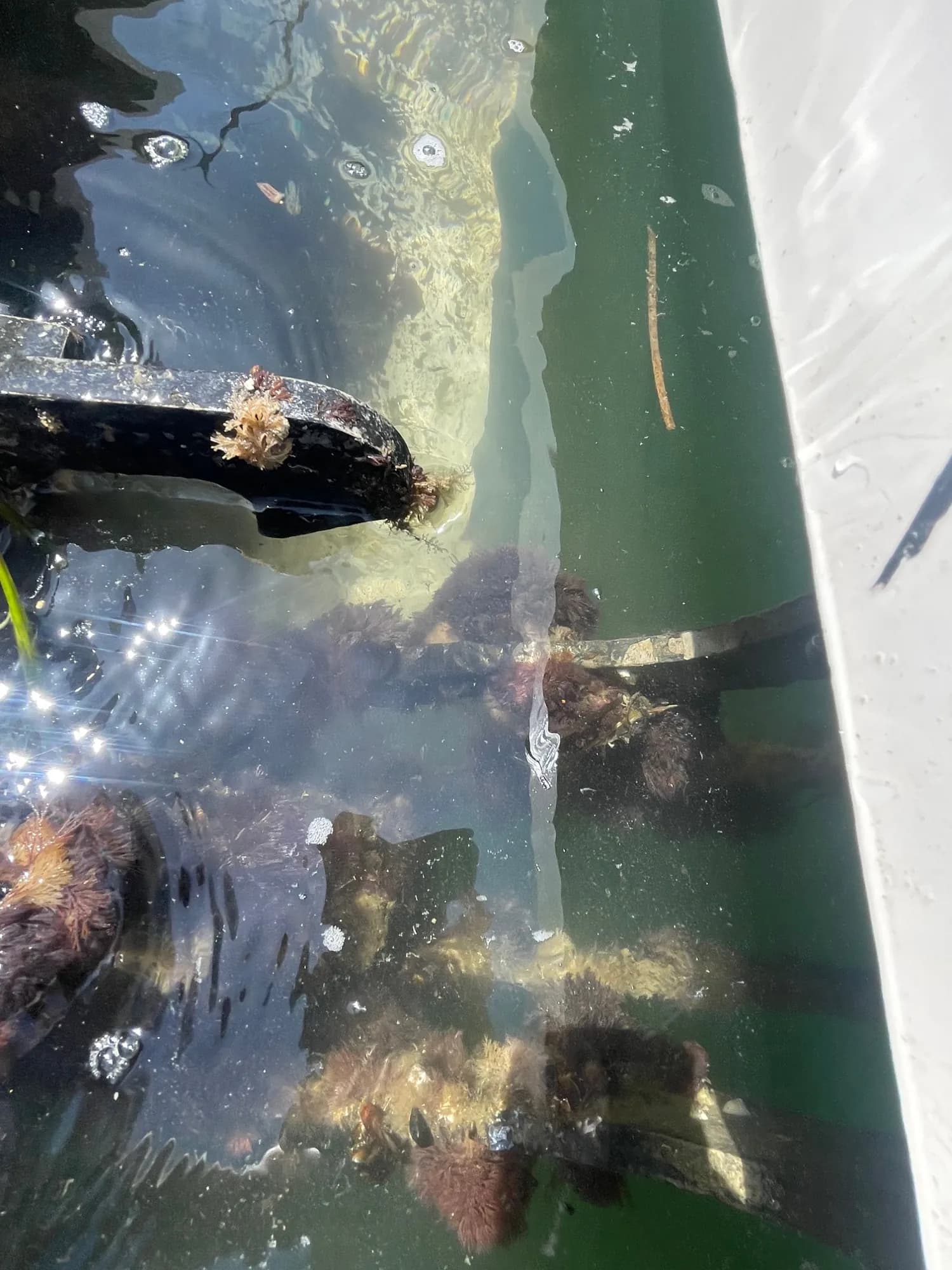
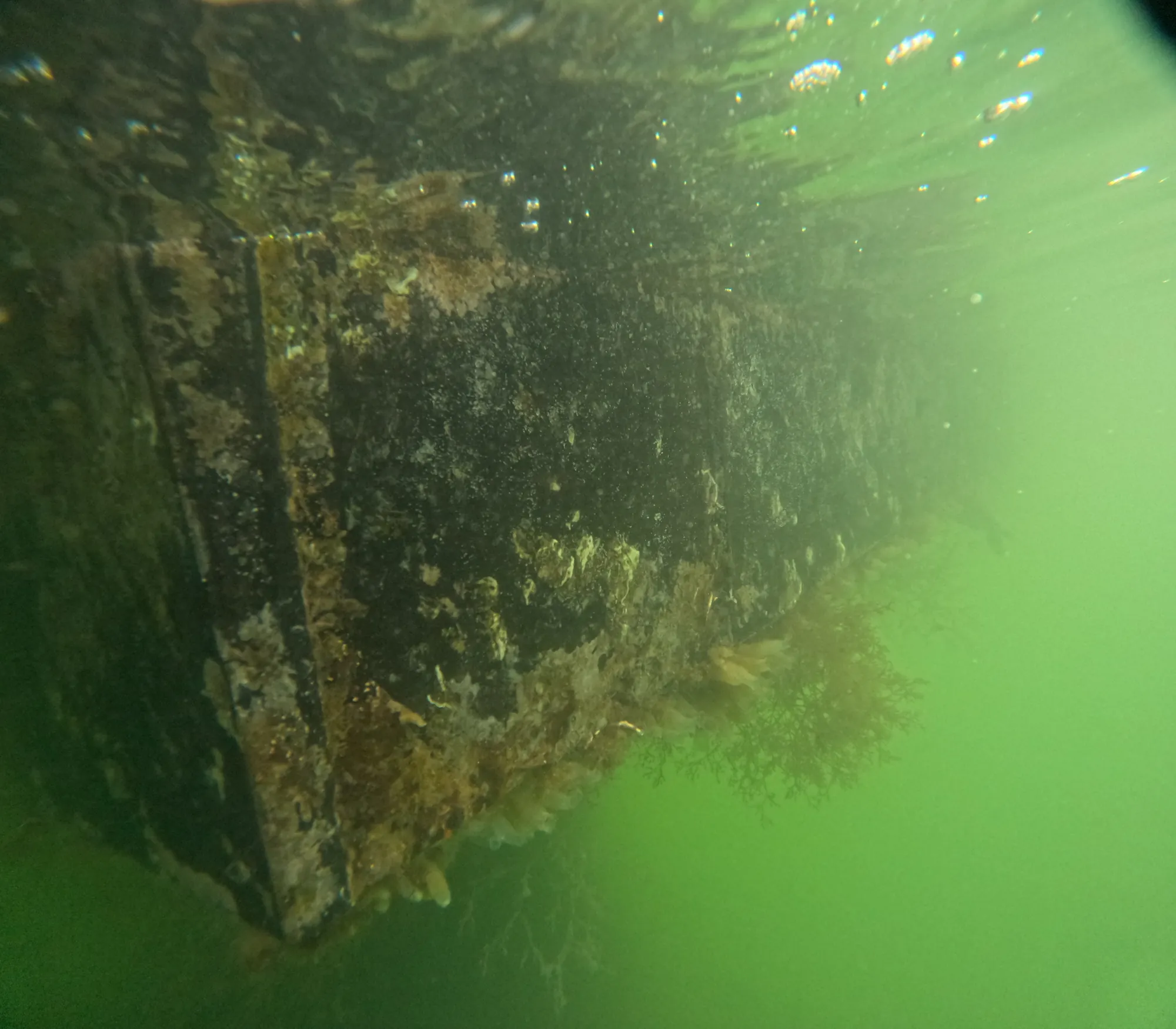
Long strands of marine growth hanging from the underside of a floating dock. Periodic underside cleaning keeps the dock buoyant and lets divers actually inspect the structure.

Underwater wood piling showing fouling near the surface. Wood pilings should be checked yearly for soft spots, especially in the splash zone.

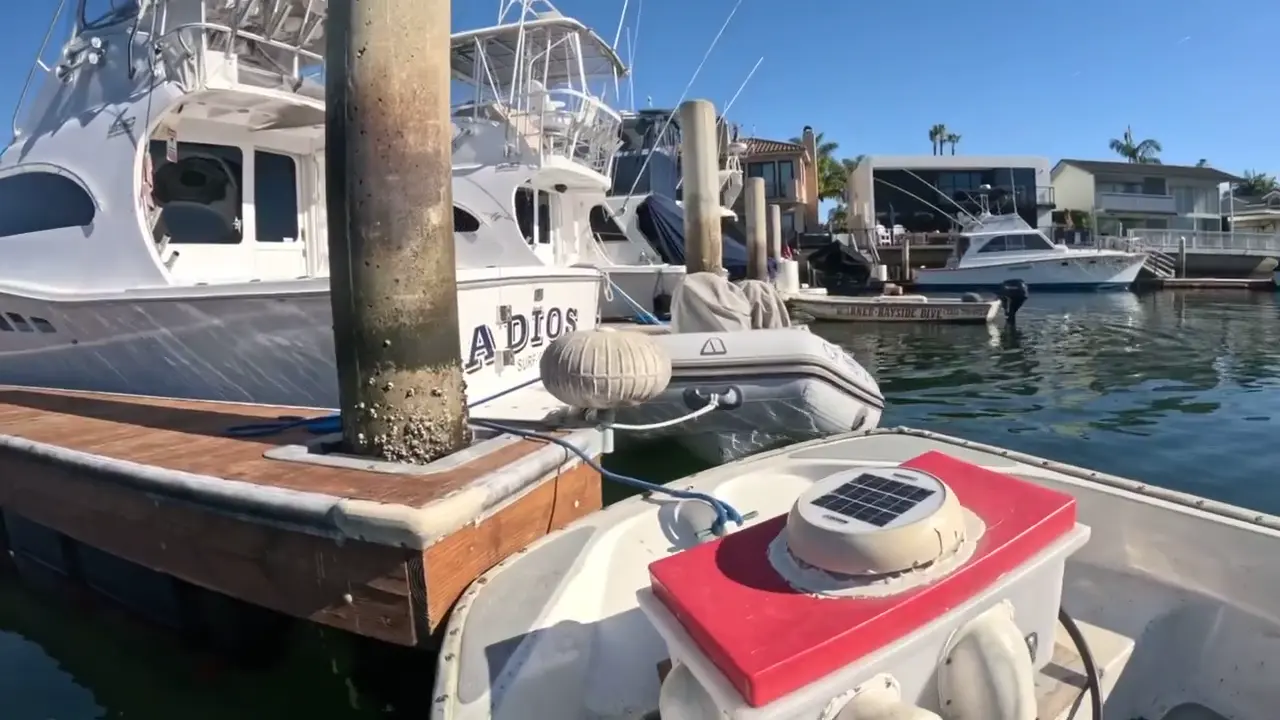
Split-level look at a dock piling, half above water and half below. The growth line is the gauge that tells you how recently the dock has been maintained.

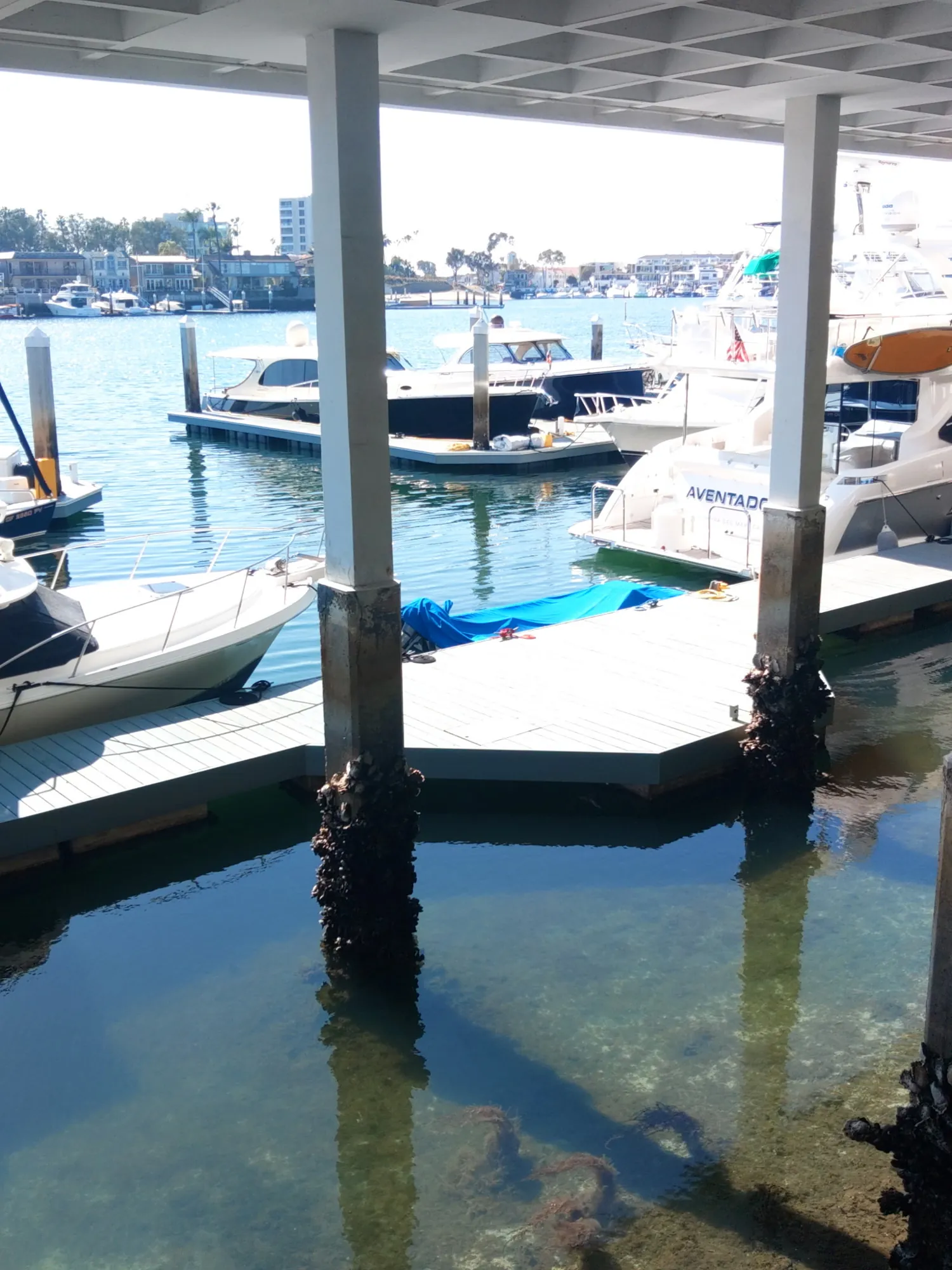
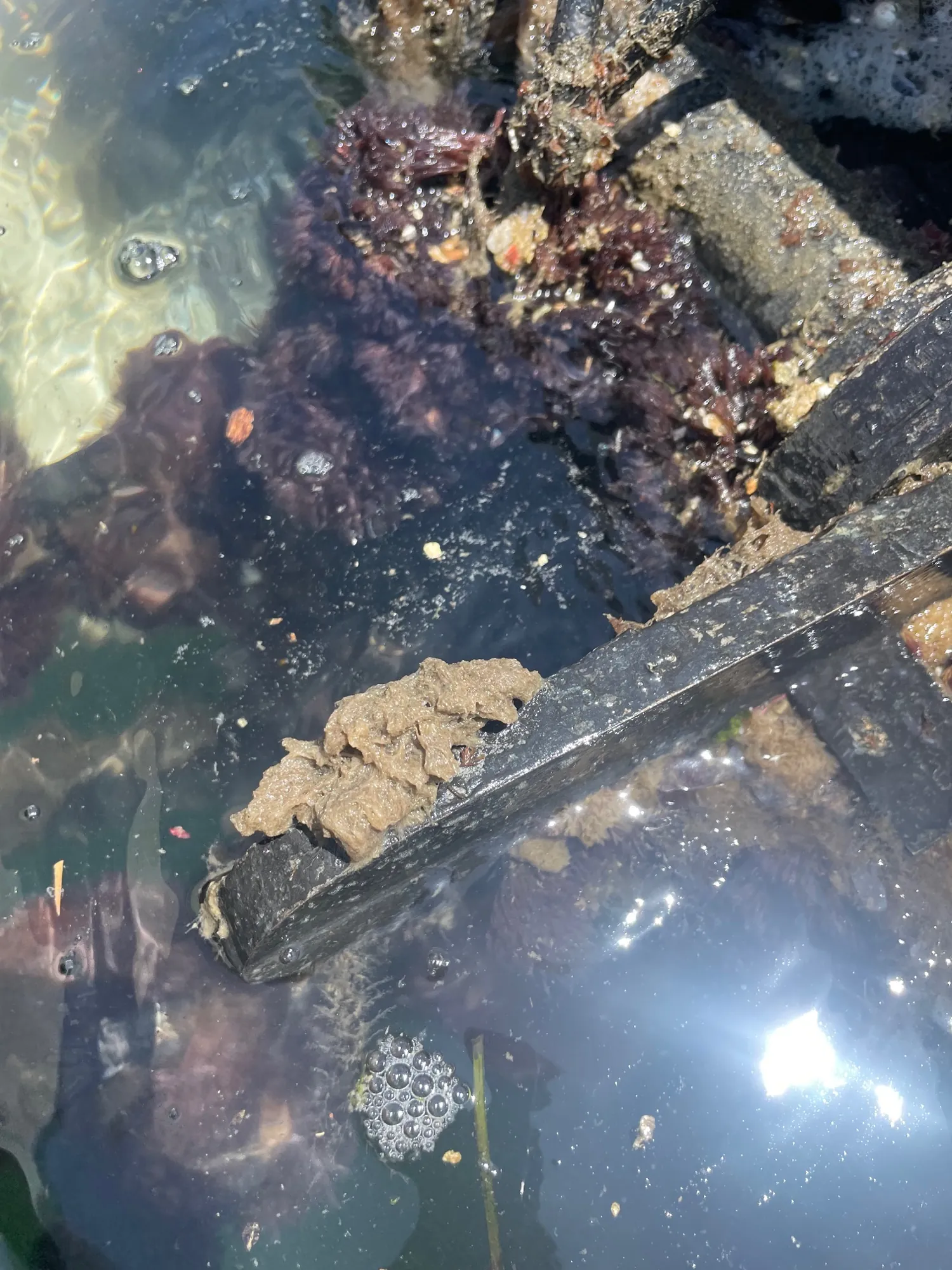
Dock pilings at the waterline, marine growth banded around them. The dark band is the working zone where the most damage to wood and concrete happens over time.

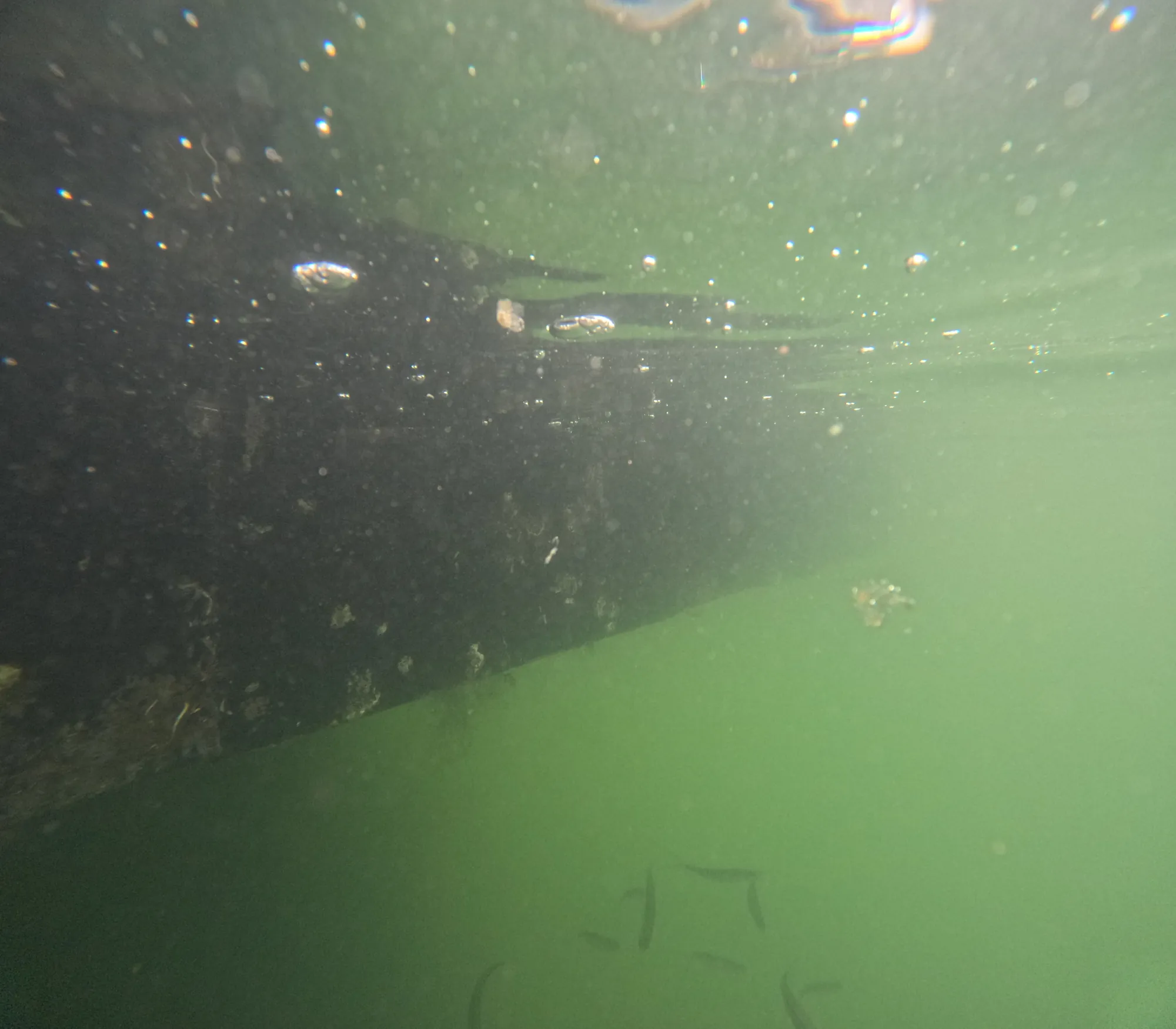
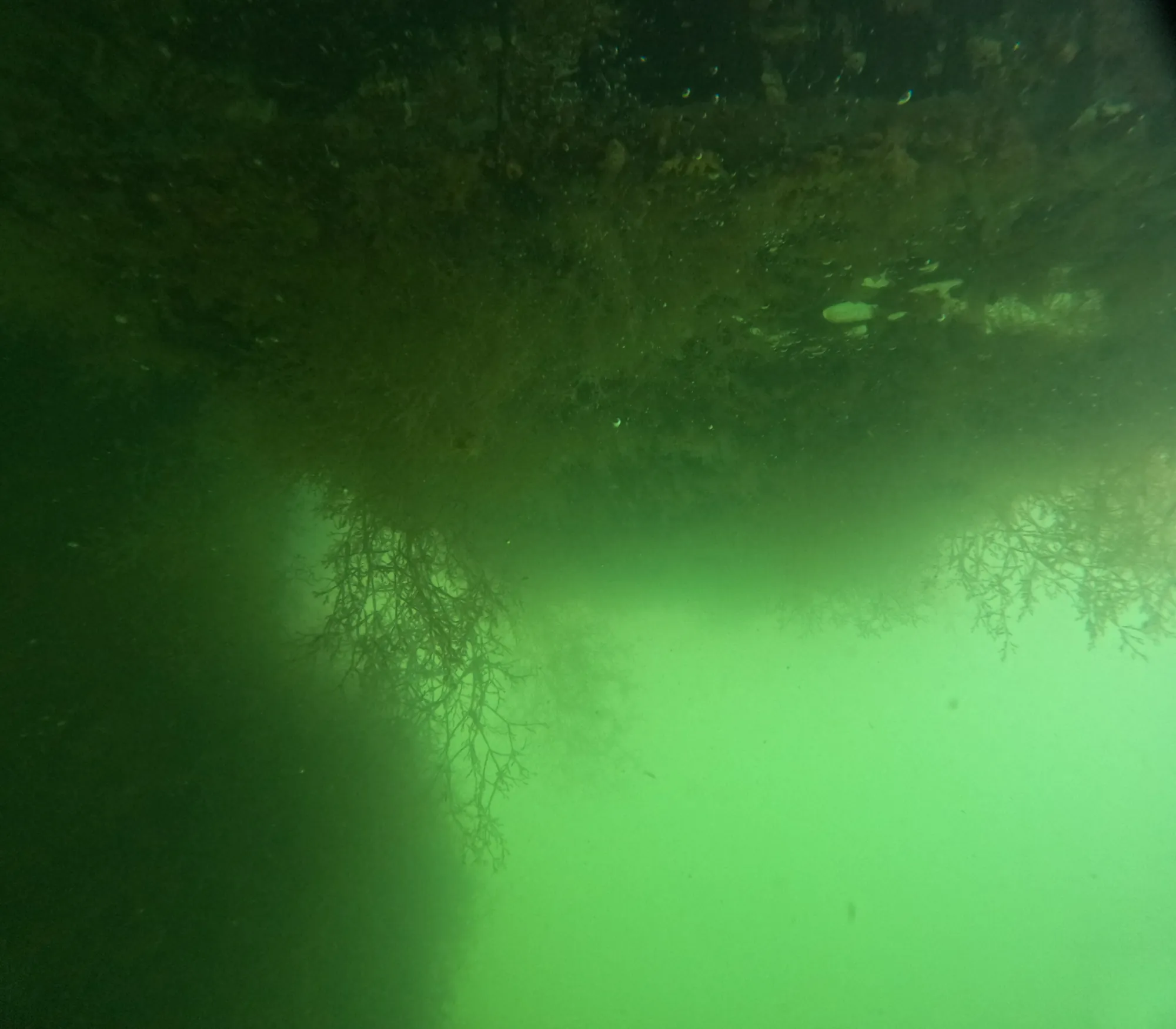
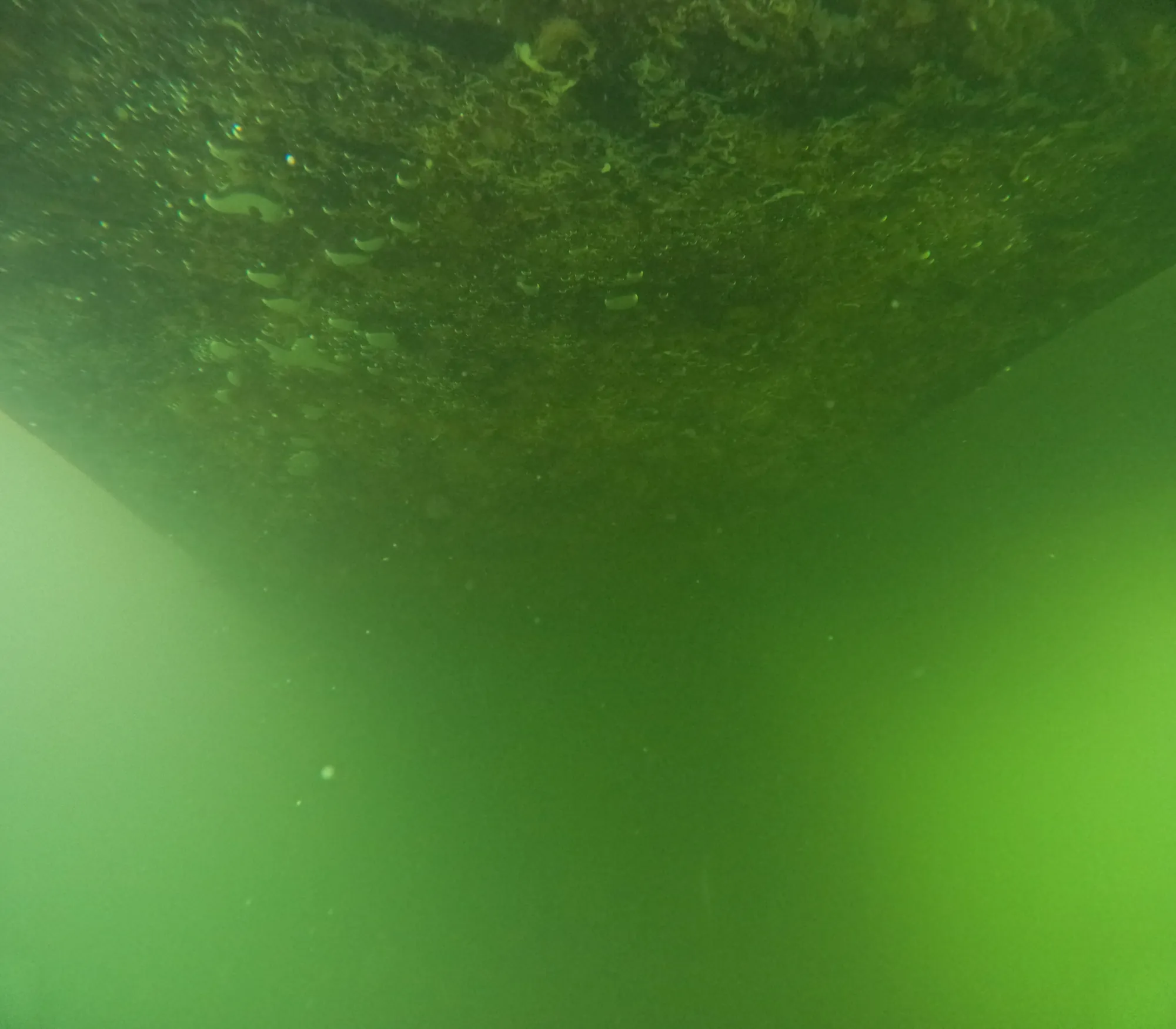
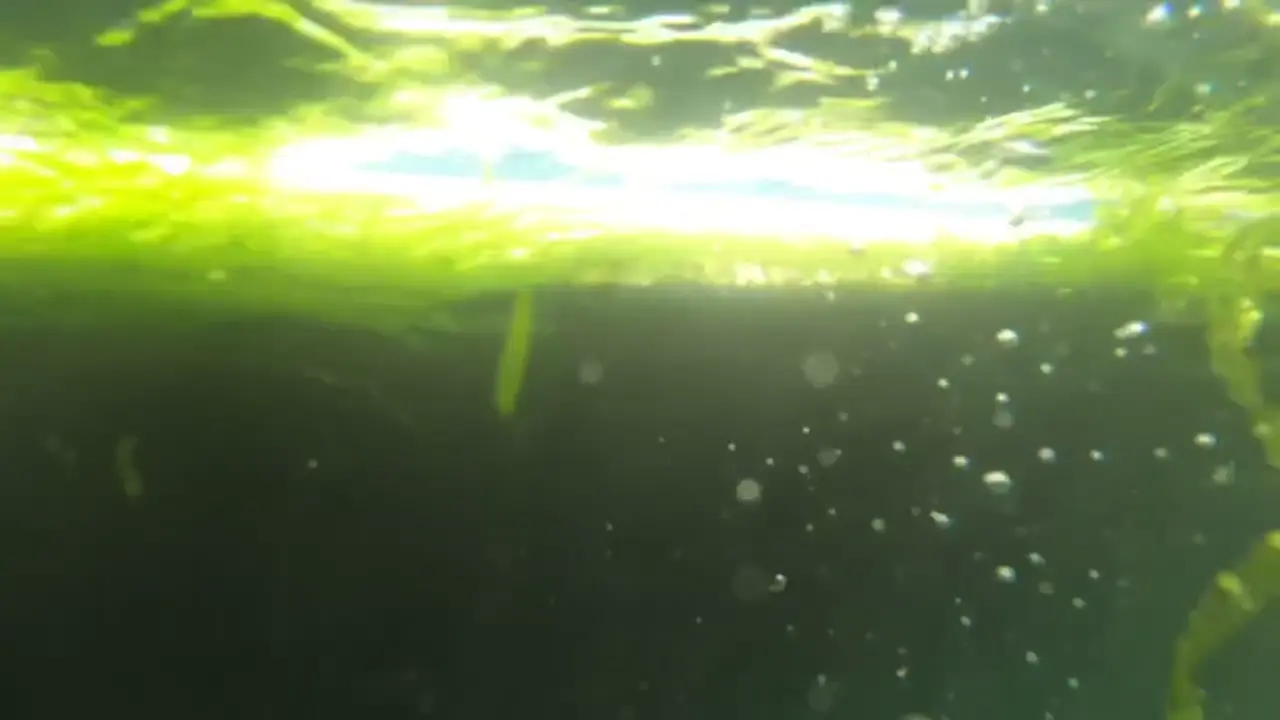
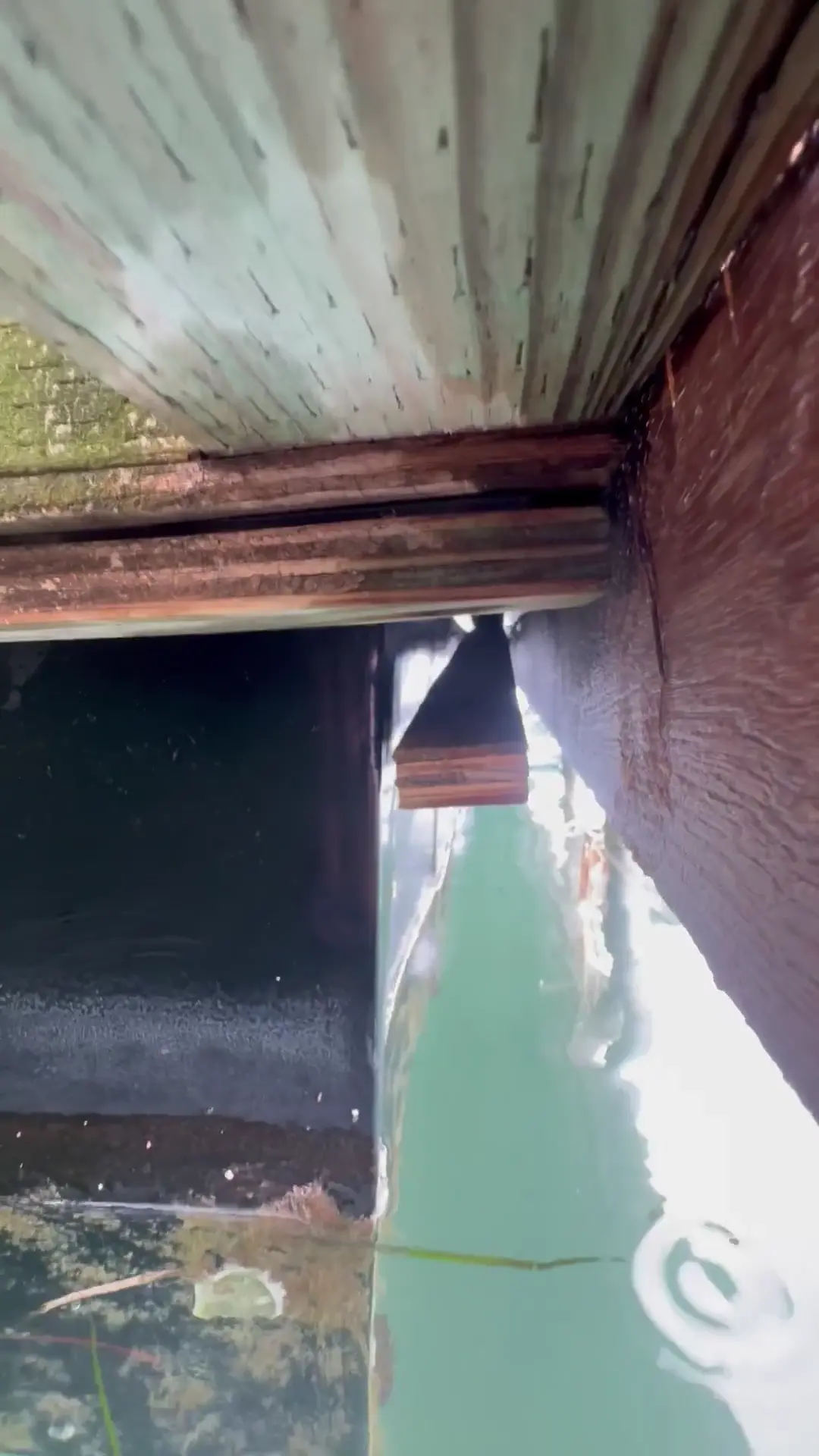
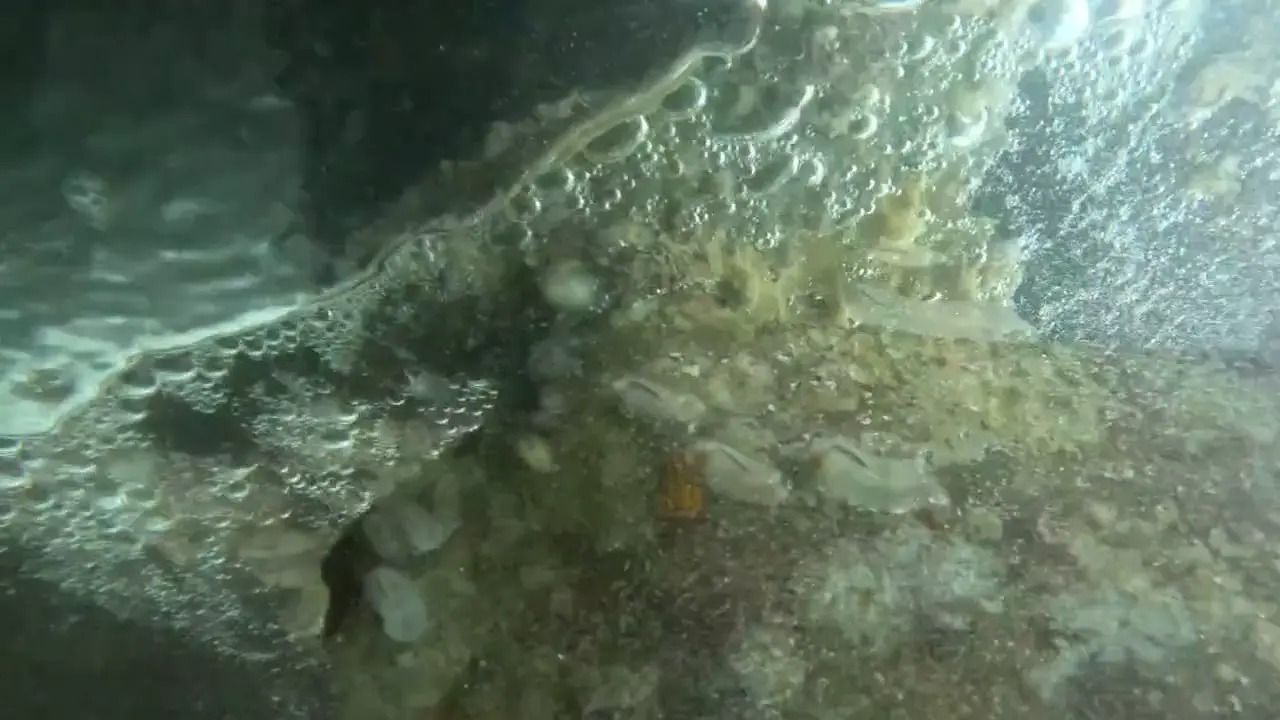
Looking up at the underside of a floating dock during an in-water inspection. Bubbles trapped in the growth are a sign of how thick the layer has gotten.

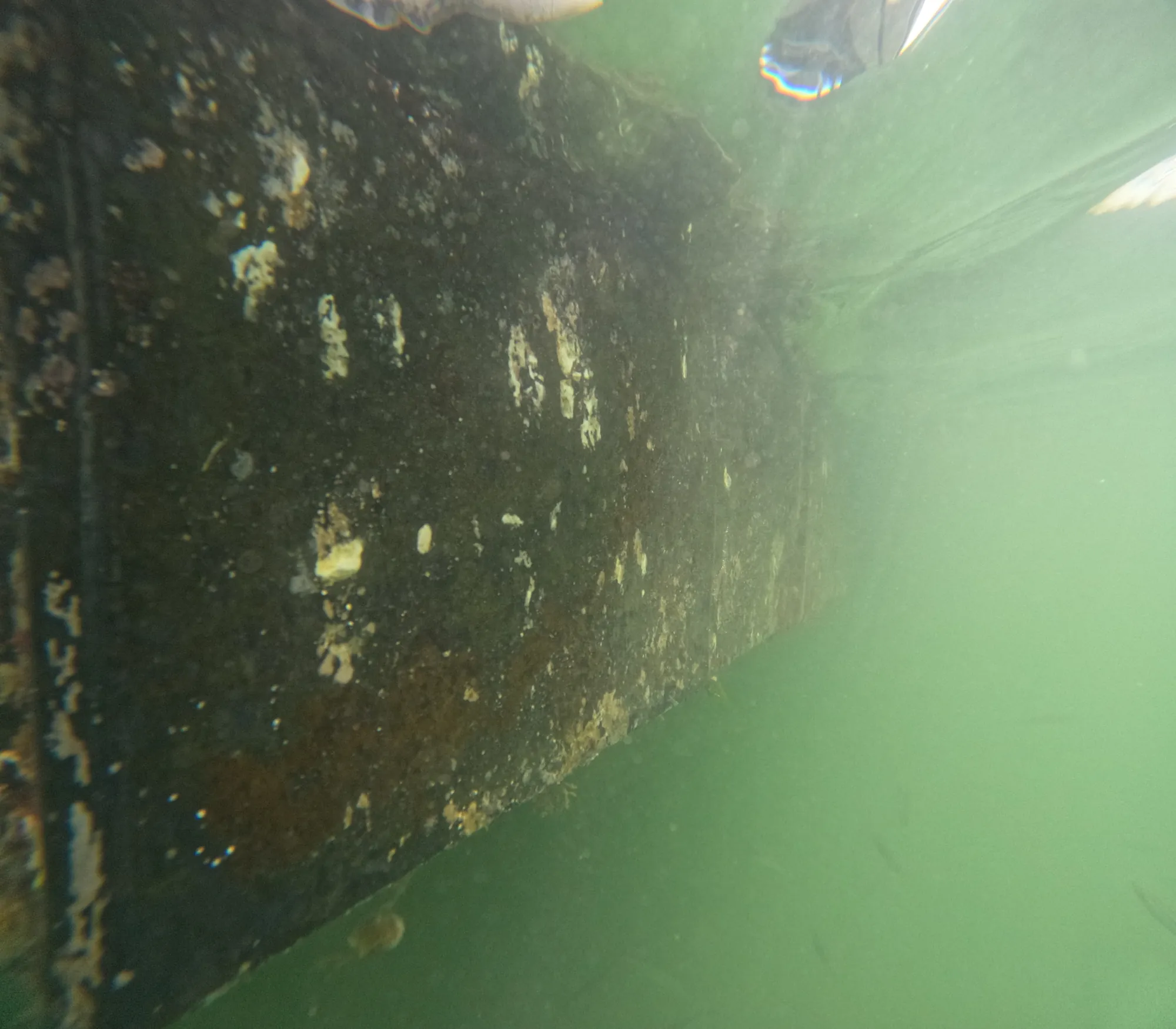
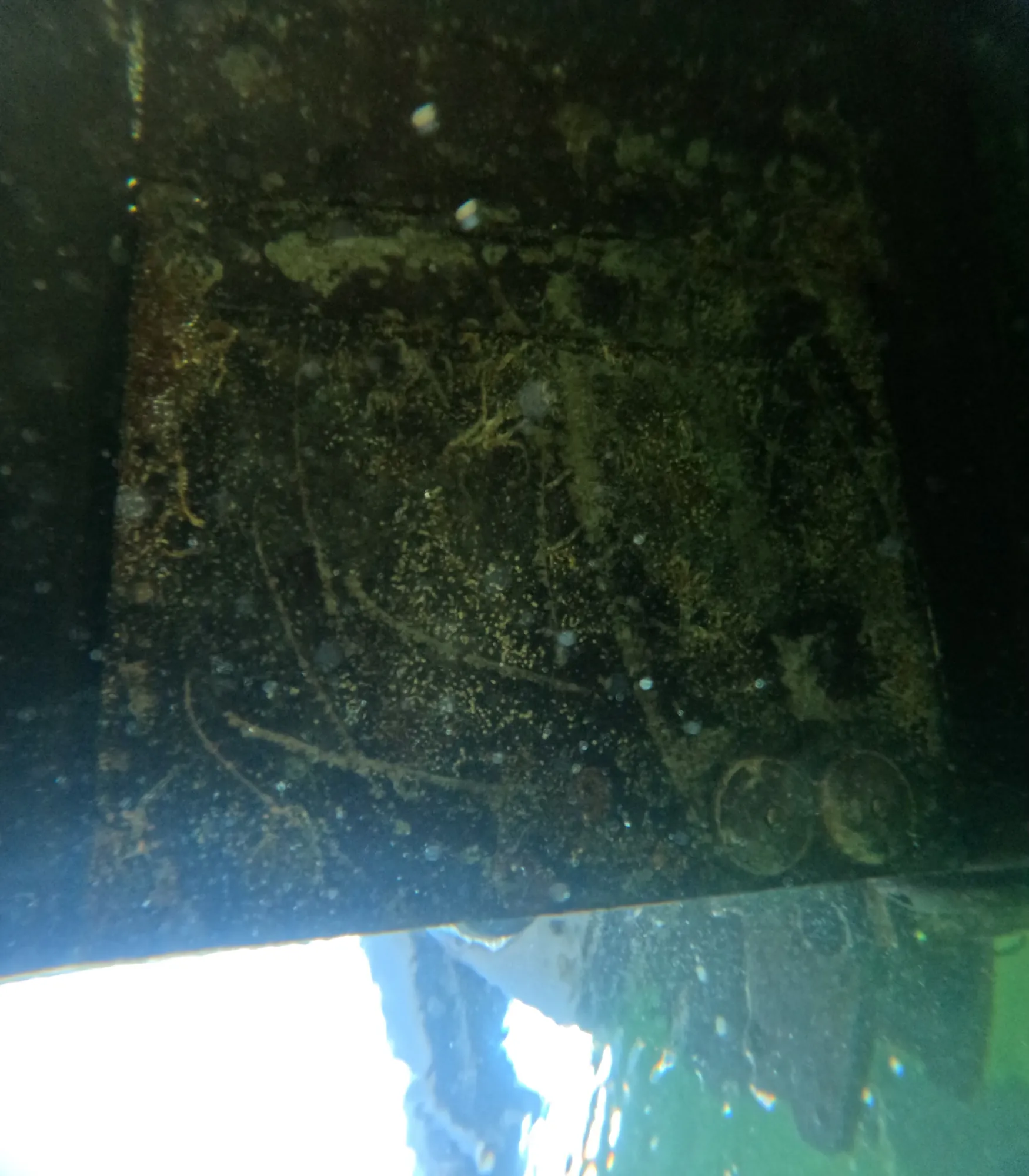
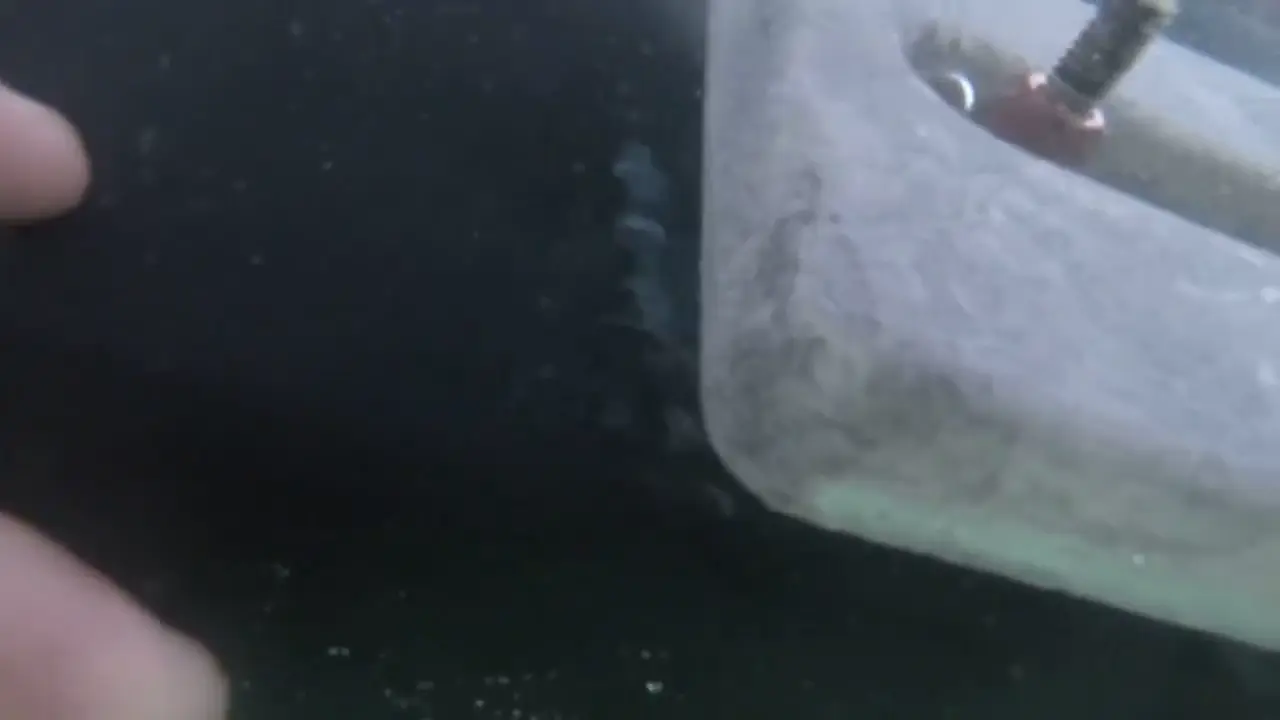
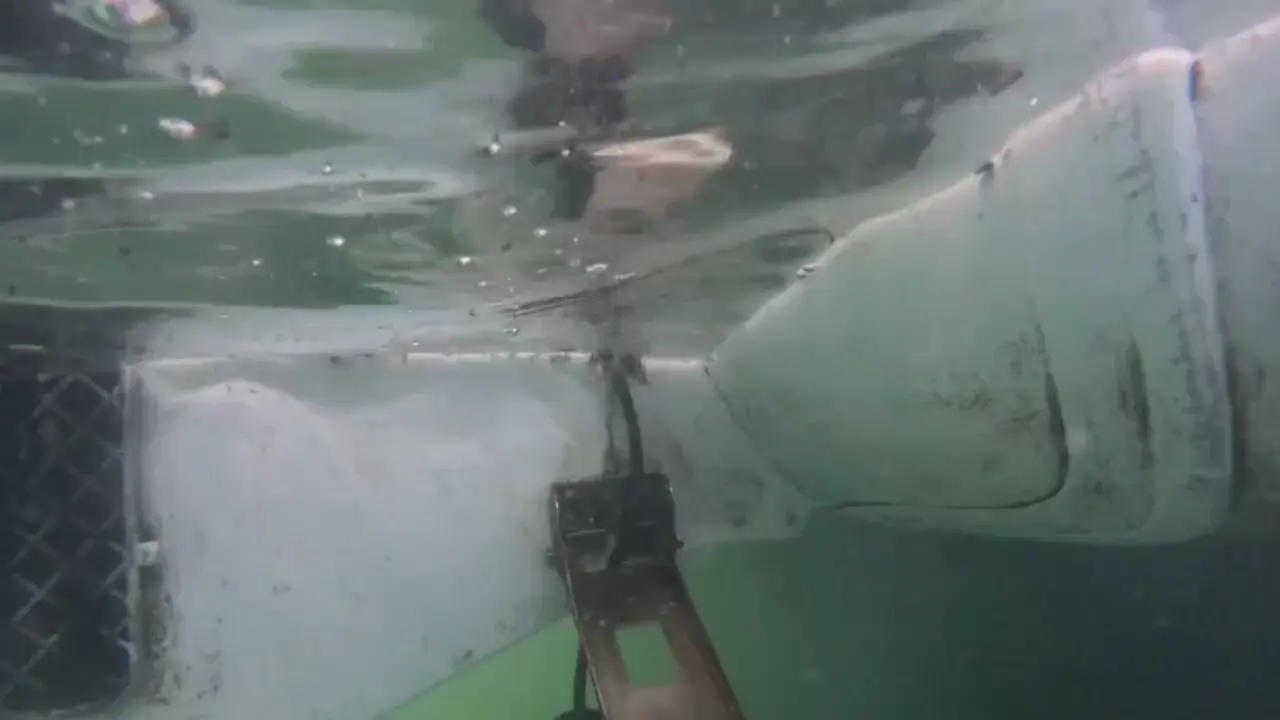
Side of a dock float underwater, panel still showing through under thin growth. Catching it at this stage means a quick clean rather than a full replacement.

Closeup of a heavily fouled piling underwater. Once growth is this thick, snorkel inspection alone is not enough, the piling needs a hands-on cleaning.

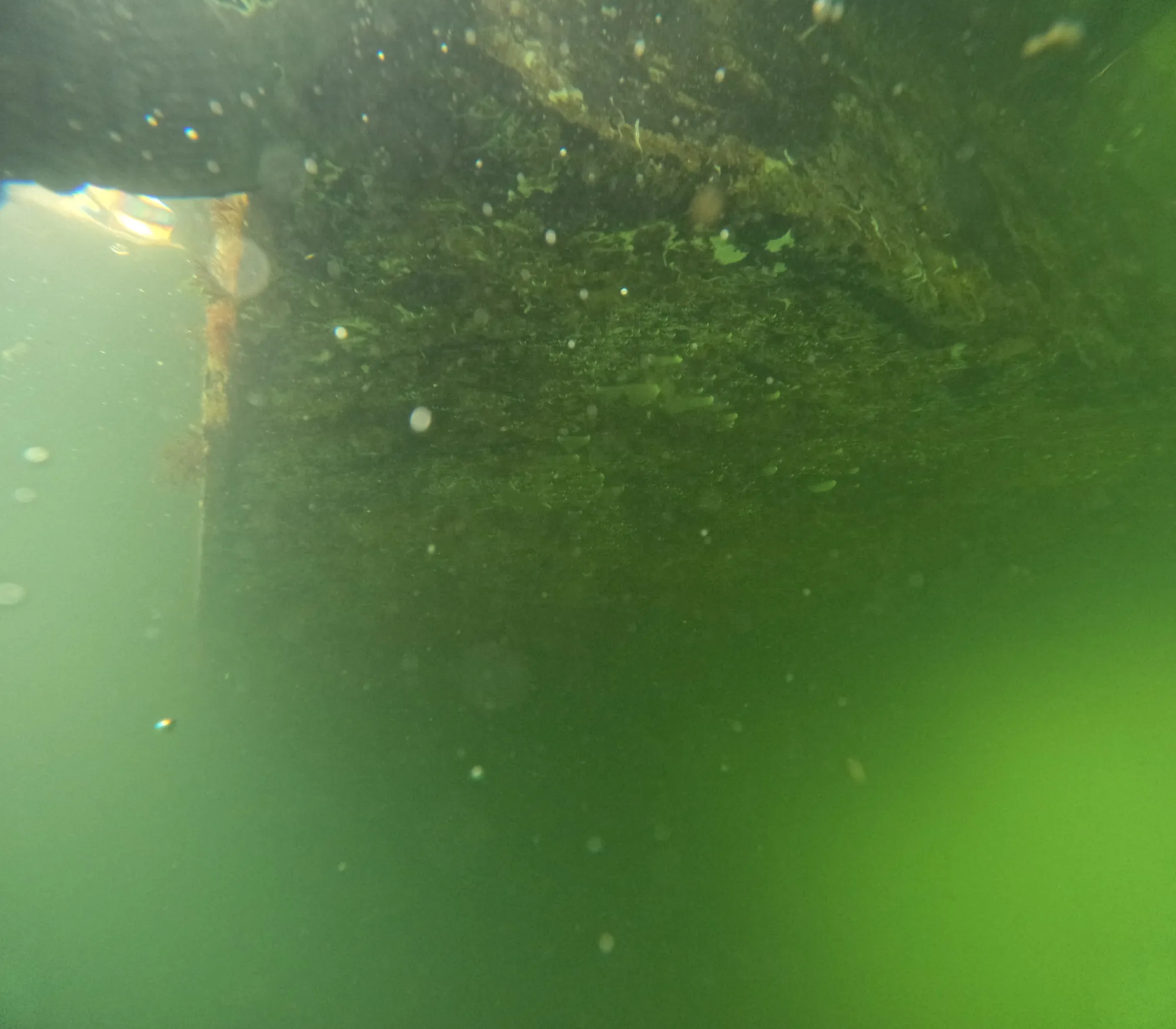
Side of a float covered in mature marine growth, diver fin in frame. This much weight on a float pulls it lower in the water, which is often the first thing the owner notices.
Our portfolio showcases the quality of our underwater maintenance work. Every service includes job-site documentation delivered directly to the vessel owner.